
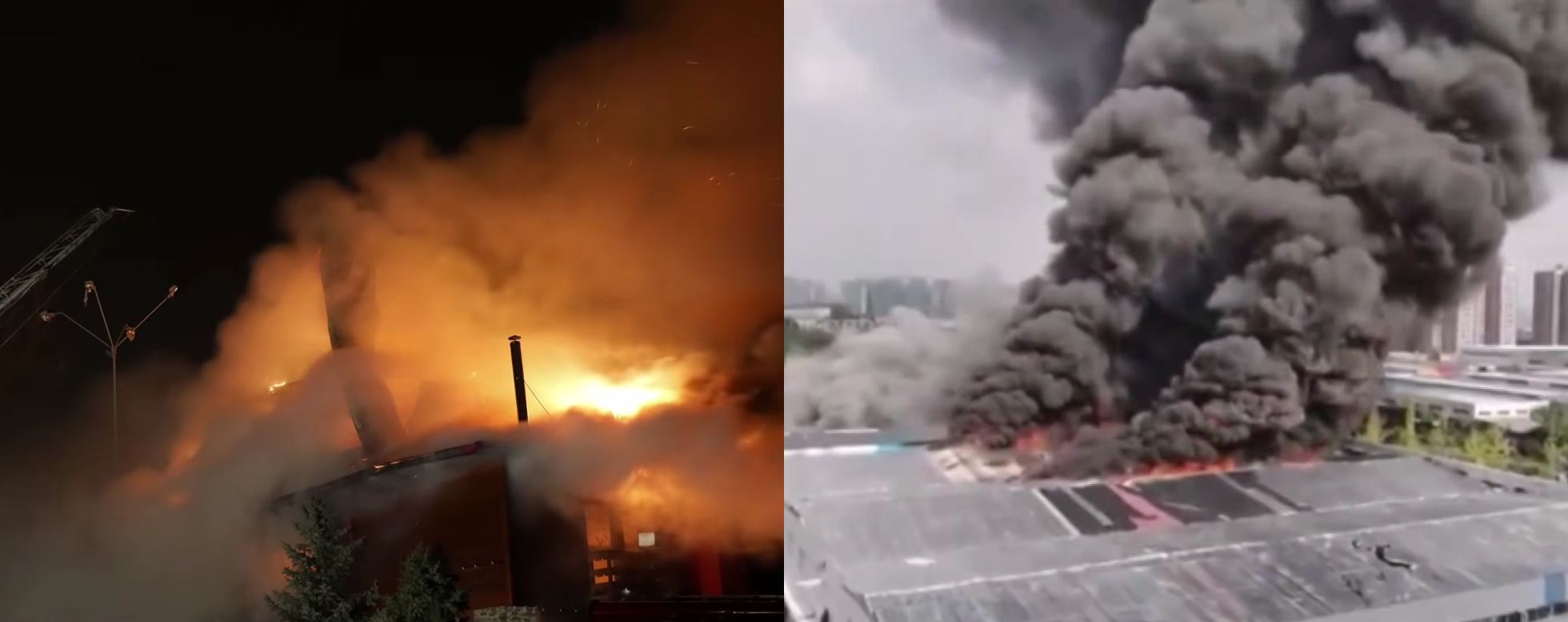
A recent social media post has ignited debate about labor conditions in China after a worker claimed to have set fire to a factory warehouse over unpaid wages.
According to sources, the individual stated he had agreed to a daily wage of 400 yuan but was denied payment after working five days at a facility in Tianjo Fuen. Left without money for food or transportation before the new year, he allegedly used a lighter to ignite the warehouse.
The post claimed the fire destroyed approximately 40,000 square meters of warehouse space, resulting in economic losses estimated at 4 billion yuan, roughly equivalent to $100 million. However, verification of these claims remains challenging.
Local residents reported that a fire did occur on February 12th in the region, but at a scrap recycling station where approximately 10 tons of waste paper and 1,700 boxes of beer bottles burned.
A Chinese affairs expert noted the difficulty in confirming such incidents, pointing out that authorities frequently suppress information about labor disputes.
The most notorious case involved a 27-year-old employee named Wen, nicknamed “Brother 800” by internet users. In May 2025, after being denied 800 yuan in wages, Wen set fire to the Sutran Jingyu textile company.
The blaze lasted 37 hours and caused tens of millions of yuan in damage. Before the incident, Brother 800 reportedly argued with management and threatened, “My life doesn’t matter, but I want you, the factory manager, to perish.”
These incidents have sparked national conversations about labor rights and legal protection. One commenter observed, “When wage earners seek legal help, the judges disappear. The labor department people are missing. But once Mr. Wen set fire to the factory, the police showed up and the judges appeared.”
Another internet user stated, “Before the fire, he searched everywhere for the law, but couldn’t find it. After the fire, the law searched everywhere for him.”
The problem has intensified as China’s economy continues struggling. Since early 2026, workers across the country have protested unpaid wages.
On February 4th, workers at Yale Exploration Shenzhen Company demonstrated after months of delayed payments. Security guards holding riot shields blocked their access. On February 8th, employees from multiple companies in Shanxi, Guangdong, and Sichuan demanded overdue compensation.
Videos from February 10th showed migrant workers in Sichuan kneeling and begging for their wages. In Weinan, Shanxi, workers blocked roads in protest. Authorities have responded by coining the term “malicious wage demands” and deploying armed police against demonstrators.
State media recently highlighted a judge who took five years to recover 700 yuan for a 71-year-old man. Internet users responded sarcastically: “Five years for 700 yuan, that’s unique in the world.”
The labor crisis extends beyond unpaid wages. With over 200 million gig workers in China, many people survive through odd jobs. At the Maochiawo labor market in Beijing, thousands gather daily seeking temporary work, but fewer than one in ten find employment. Some have resorted to selling personal information or even blood plasma for several hundred yuan per donation.
Medical commentator Tongqing Yuan warned about health risks associated with repeated donations without proper recovery periods, comparing the situation to Henan province’s 1990s blood plasma economy that led to widespread HIV infections.
US economist Li Hongqing commented, “So many businesses are closing. Foreign investment is leaving China all because the top leader Xi Jinping insists on eliminating all competitors. But in the end, it’s the Chinese people who are getting crushed.”