

A new survey reveals a concerning trend in early childhood development, with nearly one-third of children entering Reception class attempting to interact with physical books as if they were digital devices.
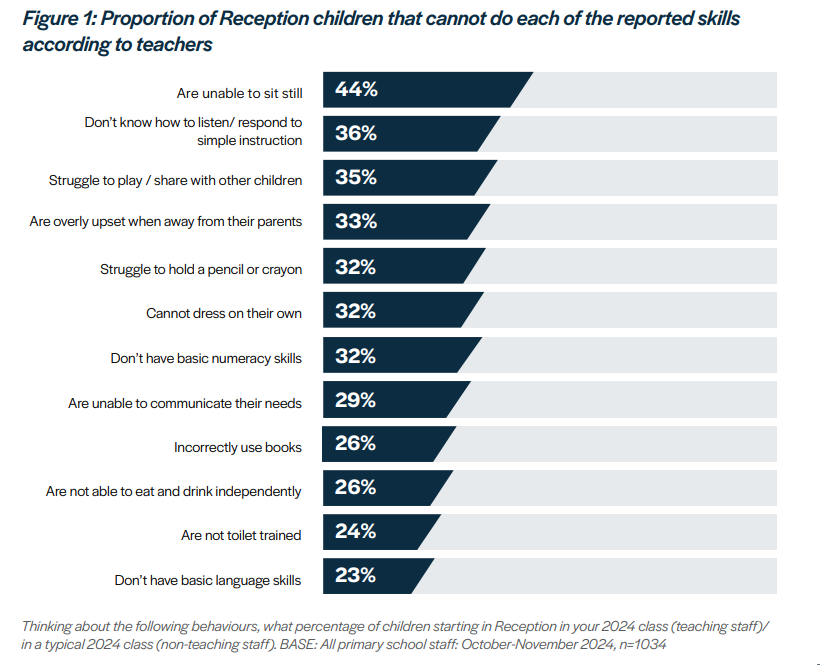
According to Kindred²’s School Readiness Survey5, 32% of Reception children incorrectly use books by swiping or tapping pages like smartphones or tablets. The findings highlight growing concerns about screen time’s impact on fundamental developmental skills as children begin their formal education journey.
The research, which surveyed over 1,000 teachers and 1,000 parents of Reception-age children, paints a troubling picture of school readiness in 2024. Beyond the issue with books, teachers report significant gaps in basic skills: 44% of children cannot sit still, 36% don’t respond to simple instructions, 35% struggle to play or share with peers, and 29% lack adequate language skills. Perhaps most startling, 26% cannot hold a pencil properly, and 24% are not toilet trained upon starting school.
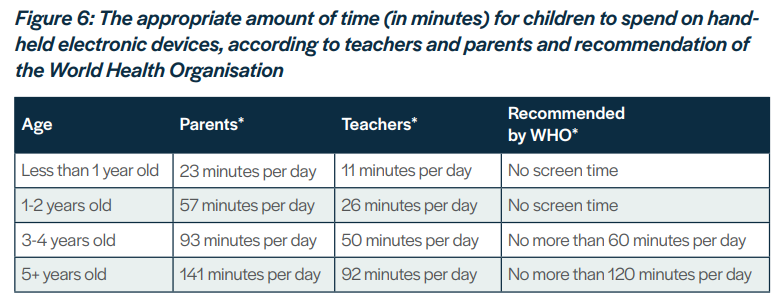
Teachers identify excessive screen time as a primary factor. Over half of educators surveyed believe children spend more than the recommended two hours daily on electronic devices, while 54% say parents themselves spend too much time on screens rather than engaging with their children.
The World Health Organization recommends no screen time for children under two and no more than one hour daily for ages two to four.
The disconnect between parent and teacher perceptions is significant. While 90% of parents believed their child was ready for school, teachers report that one in three children were not adequately prepared. Only 44% of parents think children should know how to use books correctly before Reception, and just 76% consider toilet training essential.
A reception teacher from the North-West shared their experience in focus groups: “I’ve got two children in my class who physically cannot sit on the carpet. They don’t have core strength. When I went to visit one of the girls in July, she’d never been to a nursery, she’d been sat in a corner sofa on an iPad so she hasn’t developed her core strength and it’s really affecting her whole development.”
Nearly half of teachers say the school readiness problem has worsened compared to the previous year. The impact extends beyond individual children, with 84% of teachers reporting that students lacking basic skills moderately or significantly affect overall class progress. Teachers lose an average of 2.4 hours daily supporting unprepared children.
The survey also revealed that 41% of parents had not heard about school readiness before their child started Reception, and 21% reported receiving no health visitor appointments before school began. These gaps in early support and information contribute to children arriving unprepared.
Two-thirds of teachers and 58% of parents agree that starting school without essential skills creates long-term consequences for academic achievement and future success. Schools have responded by allocating additional resources, with 50% dedicating more time to early language development and 44% providing specialized intervention staff.
The report calls for increased awareness and government funding, with 82% of teachers supporting additional financial support to improve school readiness outcomes.