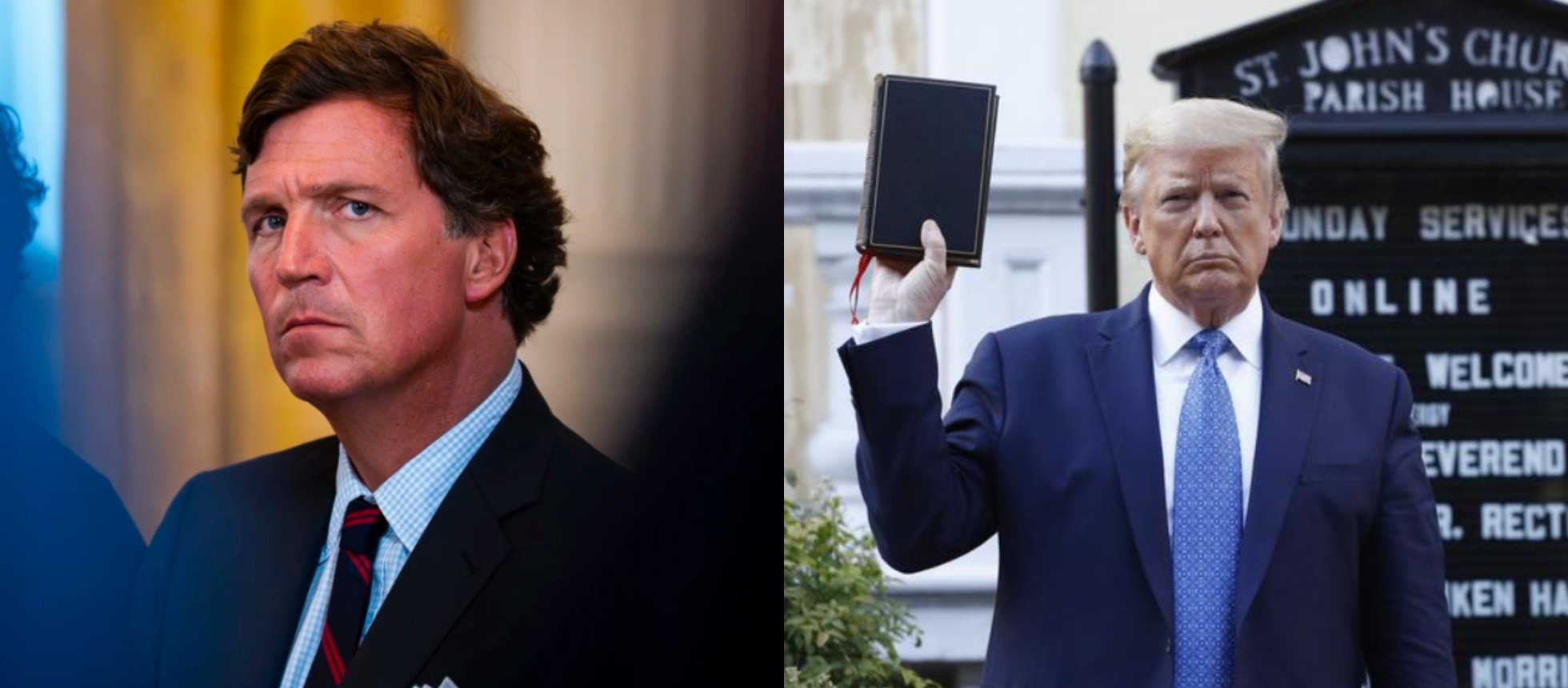
Tucker Carlson sat down with Jack Neel for a conversation that touched on spiritual warfare, artificial intelligence, and the current state of American politics. During the podcast, Carlson addressed something he had been sitting with since Inauguration Day: Donald Trump‘s complicated, and perhaps adversarial, relationship with traditional Christianity.
Carlson was present at Trump’s second inauguration and noticed something that bothered him deeply.
“I was right in front of him,” Carlson said. “And Melania was there with the Bible. And no one said anything about it. He intentionally didn’t” place his hand on it.
Carlson pointed out that Trump had done it the first time, and that the protocol is well established. His conclusion was simple: if you thought the Bible was meaningless, you would just put your hand on it and move on. The deliberate choice not to do so said something.
That memory resurfaced for Carlson on Easter morning when he checked his phone and saw posts from Trump that he found deeply offensive, not because of any particular political position, but because of the timing and tone.
“It was an intentional provocation,” Carlson said, describing it as disrespectful to the world’s largest religion on its most significant holiday.
When asked directly whether Trump had ever asked him to pray, Carlson did not hesitate. He said, “Absolutely not. Trump is hostile to traditional Christianity.”
He went further, revealing that Trump expresses frustration about Christians who oppose abortion, and does so frequently. He noted, “He is very annoyed by it. And opposition to abortion annoys him a lot. He’s mentioned it to me like 30 times.”
Carlson was clear about his own position: “I vehemently oppose abortion, just to be clear, because I think it’s ending a child’s life.”
He also raised concern about Christian leaders who align themselves too closely with political figures, arguing that the role of a spiritual advisor should be to elevate a leader toward something more Christ-like, not to become a political actor themselves.
“When religious leaders and powerful temporal leaders mix, it tends to corrupt the religious leader,” he said.