
Free to use under the Unsplash License
In a wide-ranging conversation on the Joe Rogan Experience, Nvidia CEO Jensen Huang challenged the prevailing narrative that artificial intelligence will lead to widespread job losses. Drawing from real-world evidence, Huang presented a compelling case that AI technologies are actually expanding employment opportunities rather than eliminating them.
Huang’s most striking example came from the field of radiology. He referenced a prediction made five years ago by AI pioneer Jeff Hinton, who famously declared that within five years, the world wouldn’t need radiologists because AI would sweep the entire field.
While Hinton’s prediction about AI adoption proved accurate—today nearly every radiologist uses AI in some capacity—the outcome regarding employment was precisely the opposite of what was expected.
“The number of radiologists has actually grown,” Huang explained, highlighting a fundamental misunderstanding about the nature of work.
The key insight is that a radiologist’s purpose isn’t merely to study images, but to diagnose disease. With AI handling image analysis more quickly and precisely, radiologists can study more images in multiple dimensions—3D and 4D formats that would be impractical without AI assistance. This efficiency allows them to serve more patients, improving hospital economics and creating demand for additional radiologists.
Huang extended this logic to other professions, using the example of autonomous vehicles and chauffeurs. While self-driving technology might eliminate some driving jobs, it won’t eliminate all chauffeurs, whose roles often extend beyond simply operating a vehicle. Some serve as protectors, while others provide personalized service that represents part of the overall experience. The technology will transform jobs rather than simply erase them.
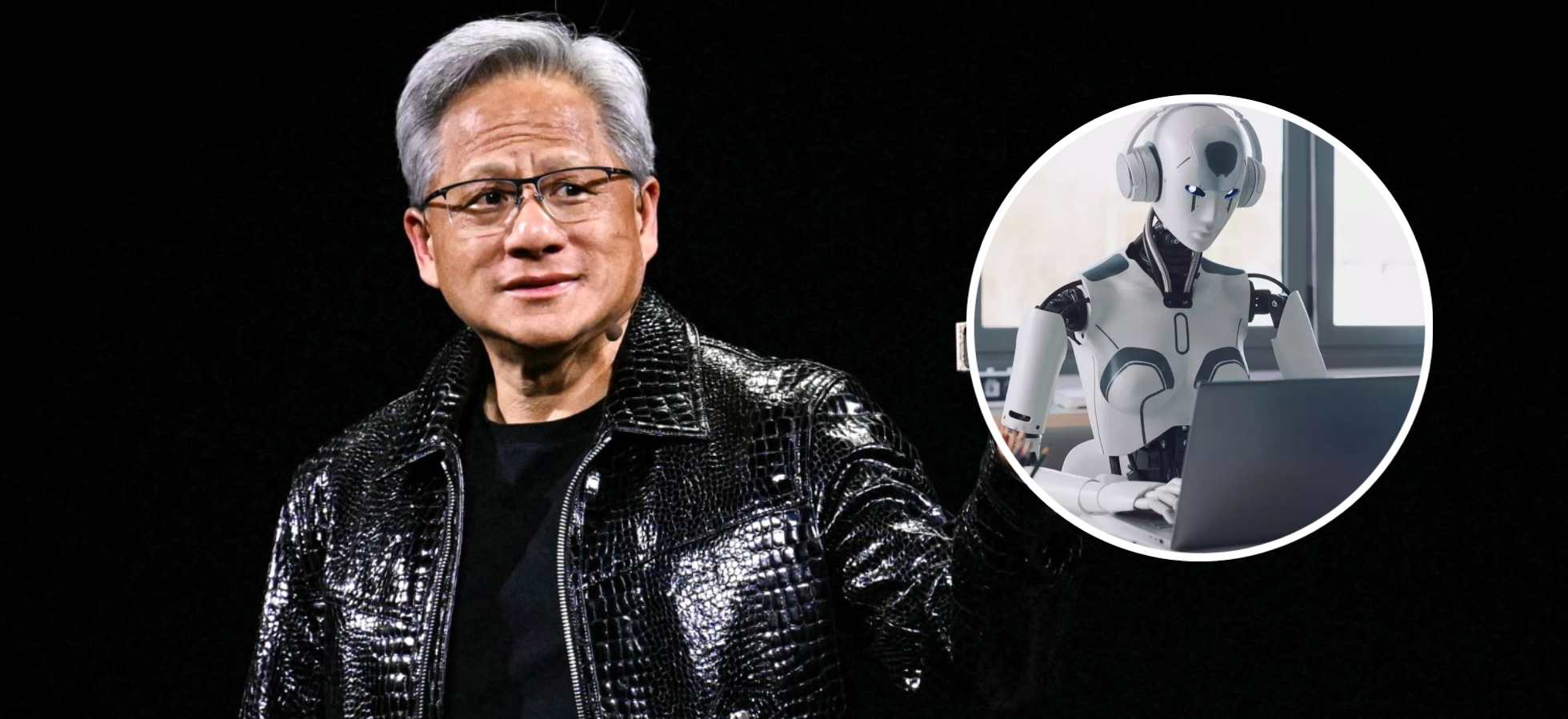
Looking toward robotics, Huang expressed enthusiasm about humanoid robots currently in development, noting they will create entirely new industries. “You’re going to have a whole industry of people taking care of robots,” he predicted, pointing to mechanics, manufacturers, and technicians who will maintain these machines. He even suggested the emergence of a robot apparel industry, as people will want to customize their robots’ appearance.
He stated: “When it happens, there’s a whole new industry of technicians and people who have to manufacture the robots, right? And so that that job never existed. And so you’re going to have a whole industry of people taking care of like for example, you know, all the mechanics and all the people who are building things for cars, supercharging cars, that didn’t exist before cars and now we’re going to have robots.”
The Nvidia CEO acknowledged that jobs defined purely by repetitive tasks face automation risk. However, he emphasized that when a job transcends its component tasks—when it serves a higher purpose—AI becomes an enhancement tool rather than a replacement.
This distinction between “doing the task” and “achieving the purpose” represents the critical factor in determining which roles AI will augment versus which it might replace.
Huang also addressed concerns about AI accessibility, arguing that the technology divide will narrow rather than expand. He noted that ChatGPT’s rapid adoption—reaching nearly a billion users—demonstrates AI’s unprecedented ease of use.
Unlike traditional software requiring specialized knowledge, AI interfaces accept natural language in any form, potentially democratizing access to powerful computational tools.
Throughout the conversation, Huang maintained that while AI represents transformative technology, its impact will be evolutionary rather than revolutionary.


