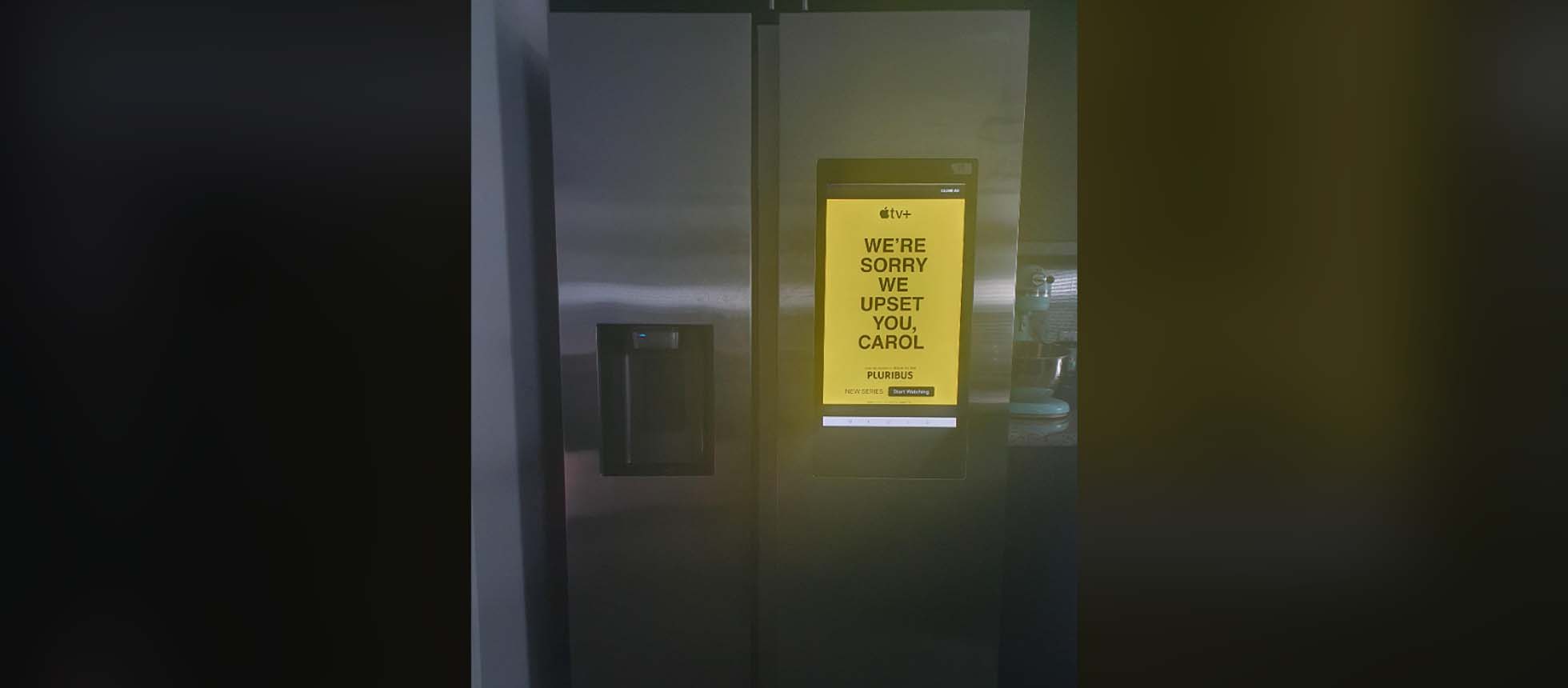
When Carol’s refrigerator began displaying a peculiar message seemingly addressed to her by name, she did not hesitate. Convinced she was experiencing a psychotic break, the woman who lives with schizophrenia called a taxi and took herself to A&E where she spent two days under medical observation.
The disturbing message read:
“WE’RE SORRY WE UPSET YOU, CAROL”
set against an eerie yellow background on the LED screen of her Samsung smart fridge. For someone who has experienced genuine psychotic episodes in the past approximately once every two years, the apparently personalized communication felt like a terrifying relapse.
Medical staff took her concerns seriously. During her hospital stay doctors reviewed and adjusted her antipsychotic medications believing they might no longer be providing adequate protection against hallucinations and delusions.
But Carol was not hallucinating. She was seeing a targeted advertisement for a television program called Pluribus which features a storyline involving a character who receives messages through various electronic devices. The marketing campaign had chosen an unconventional placement in the internet-connected screens found on modern refrigerators.
Carol’s brother discovered the truth days after bringing her home from hospital. While scrolling through Facebook he encountered the same advertisement and immediately recognized it as what his sister had described. When he showed her the image she confirmed it was exactly what had appeared on her fridge.
Legal experts who weighed in on the situation confirmed that the practice is permitted under UK law provided users have not specifically opted out of receiving advertisements. The Advertising Standards Authority does consider appropriate placement when evaluating complaints and concerned parties can submit reports for review.
For Carol the consequences extended beyond a frightening couple of days in hospital. The situation prompted medical intervention that might have been unnecessary including adjustments to medications that were in fact working as intended. Her support system now faces the task of informing doctors that the apparent symptoms were triggered by external technology rather than indicating a genuine deterioration in her condition.
The family has since been advised to disable the smart features on Carol’s fridge entirely which highlights a broader question about the trade-offs of connected home technology.
One observer noted the absurdity of the modern age with a simple observation. Discussing the ability to opt out of advertisements on a refrigerator represents a decidedly strange development in consumer tech.
For vulnerable individuals the proliferation of screens and internet-connected devices throughout the home presents challenges beyond those faced by the general population.