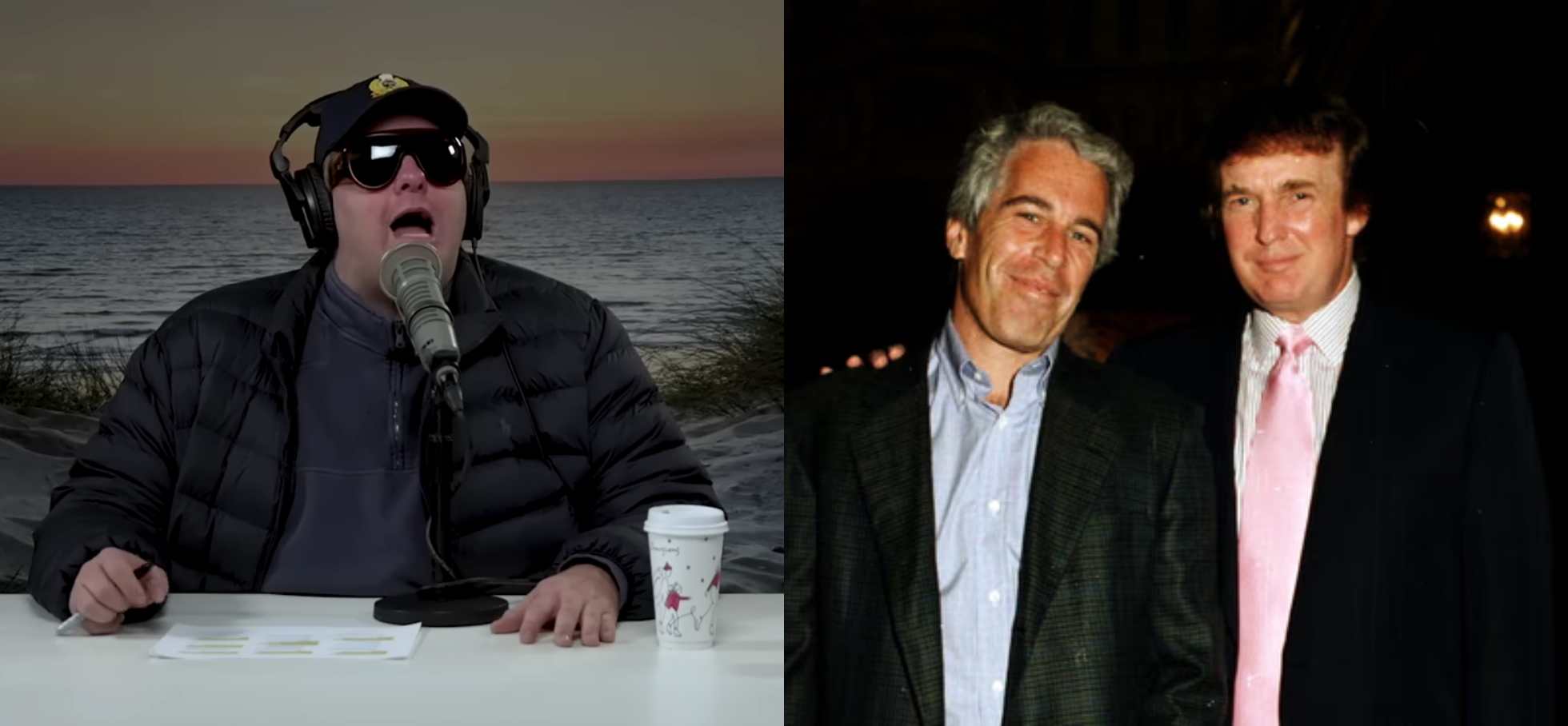
Comedian Tim Dillon has sparked conversation with his latest show, delivering a critique of the Trump administration that’s resonating far beyond his usual audience. The comedian, who previously supported Trump, now finds himself among a growing chorus of disillusioned voices questioning the direction of the current presidency.
During his recent episode, Dillon didn’t mince words about what he sees as calculated distractions from more pressing issues. “They’re not talking about Epstein,” he observed, pointing to unreleased documents and redacted information that continue to hang in the background of public discourse.
According to Dillon, the administration’s focus on spectacle—from bombing d**g boats to theatrical deportation operations—serves as convenient misdirection from uncomfortable topics like Epstein connections, economic struggles, and the concentration of power among tech giants.
He said: “And they’re not talking about whatever the hell else is in these documents that may or may not come out, redacted or unredacted. And they’re not talking as much about the economy and they’re not asking to have healthcare and they’re not asking what Palantir is doing and they’re not asking why five tech guys in AI control half the American economy in San Francisco. They’re not asking any of that. They’re just watching a boat blow up in the middle of the ocean.”
Dillon’s most cutting analysis centered on what he termed “performative cruelty.” He argues that the MAGA movement has “duped their hardcore followers so much that the only thing left now is performative cruelty.”
This observation struck a chord during the Breaking Points discussion, where hosts noted that even immigration hardliners feel frustrated by the lack of substantive progress, instead receiving what amounts to political theater.
The comedian’s theory suggests that when an administration fails to deliver on promises, it resorts to displays of force—bombing boats, dramatic raids—to demonstrate that government still exists and can project power. While the Breaking Points hosts debated whether this was intentional strategy or simply the administration’s preferred style, they acknowledged the underlying truth: substance has taken a backseat to spectacle.
The choice of Kristi Noem as Homeland Security Secretary exemplifies this approach. As noted in the discussion, Noem wasn’t selected for substantive expertise but rather for public relations—fitting Trump’s preference for “central casting” appointments that look the part rather than necessarily performing it effectively.
What makes Dillon’s critique particularly significant is his trajectory from Trump supporter to critic, emblematic of what some are calling a broader “vibe shift.” Even among those who wanted stricter immigration enforcement, the reality of pepper-sprayed children and chaotic street operations has proven discrediting rather than satisfying.