
Free to use under the Unsplash License
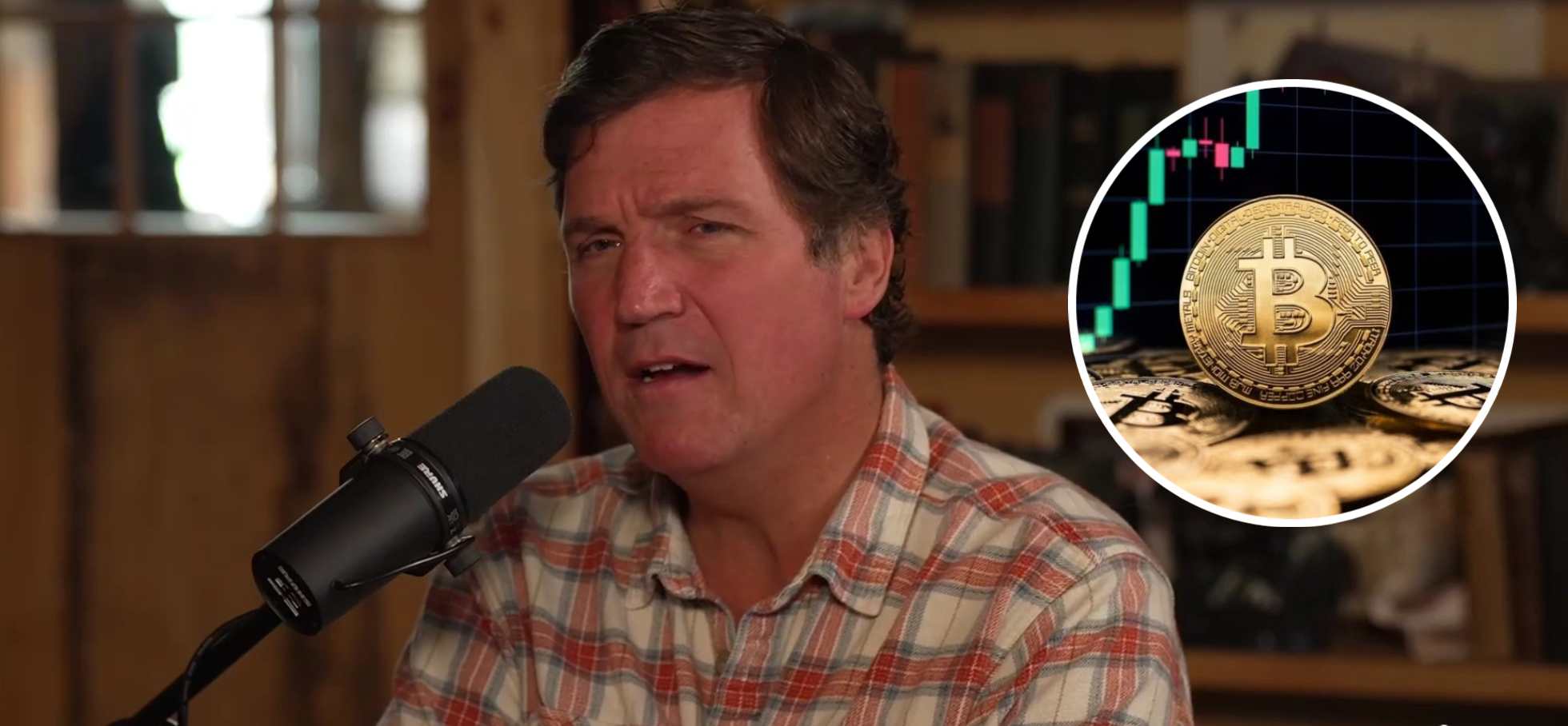
Tucker Carlson has drawn sharp criticism from cryptocurrency enthusiasts after openly questioning Bitcoin‘s origins and suggesting a controversial theory about its creation. The former Fox News host remains steadfast in his refusal to embrace the digital currency, and his reasoning centers on one unresolved puzzle: nobody knows who actually invented it.
At the core of Carlson’s skepticism lies the enduring mystery of Satoshi Nakamoto, the pseudonym used by Bitcoin’s creator. During a recent conversation on his network, Carlson made his position unmistakably clear.
“Nobody can explain to me who Satoshi was, the creator of Bitcoin, this mysterious guy who apparently died but nobody knows who he was,” he stated. “You know, I grew up in DC, primarily in a government family, so CIA. That’s my guess. Can’t prove it, but like, you’re telling me to invest in something whose founder is like mysterious and has billions of dollars of unused Bitcoin. Like, what is that?”
His concerns aren’t merely theoretical. Carlson pointed out that even prominent Bitcoin holders cannot provide satisfactory answers. “No one can answer the question, including some of the biggest holders of Bitcoin in the world, [who] I know personally,” he explained. “They’re like, ‘Oh, it doesn’t matter.’ What matters to me, right?”
During the discussion, his guest presented an alternative theory about Satoshi’s true identity: Paul Le Roux, a figure whose life reads like a thriller novel. Le Roux developed encryption software that brought cryptography to ordinary users, technology that reportedly played a role in Edward Snowden’s famous disclosure of classified information. His nickname, “Solotshi” with an L rather than a T, adds another layer of intrigue to the speculation.
Tucker Carlson says he’s convinced the CIA created Bitcoin, and that’s exactly why he refuses to invest in it or use it.
He warns that Bitcoin will one day turn into a massive scam, controlled by a shadowy network of elites who manipulate politicians to tighten their grip on… pic.twitter.com/2GMze5XZ8t
— Shadow of Ezra (@ShadowofEzra) October 22, 2025
The theory connecting Le Roux to Bitcoin’s creation involves his alleged criminal operations in Manila and Zimbabwe, where he supposedly generated massive amounts of cash that required a new method of storage and transfer. The timeline appears compelling to believers: Satoshi Nakamoto vanished from public communication around the same period Le Roux was apprehended by authorities. Currently serving a lengthy prison sentence, Le Roux allegedly told a judge he would develop specialized hardware to mine Bitcoin if released.
What makes this mystery particularly remarkable is the untouched fortune sitting in Satoshi’s wallet. Hundreds of billions of dollars worth of Bitcoin has remained dormant since the currency’s earliest days, never moved or converted to traditional money. For a technology designed to revolutionize finance, having an anonymous creator who never claimed their wealth seems contradictory at best, suspicious at worst.
The guest presenting the Le Roux hypothesis acknowledged the speculative nature of his claims, describing it as “a strong opinion loosely held” without concrete proof.
Carlson’s skepticism reflects a growing divide between cryptocurrency advocates who view anonymity as a feature rather than a flaw, and traditionalists who believe transparency should undergird financial systems. His background in Washington, D.C., and familiarity with government operations appears to fuel his suspicions about institutional involvement in Bitcoin’s creation.
Whether intelligence agencies played any role in developing Bitcoin remains purely speculative, as does the Le Roux connection. What cannot be disputed is that Satoshi Nakamoto’s identity represents one of the most fascinating unsolved mysteries in modern technology and finance.
For Carlson, the absence of answers is itself an answer. Until someone can definitively identify the person or group behind Bitcoin, he has made clear he won’t be joining the cryptocurrency revolution.


