
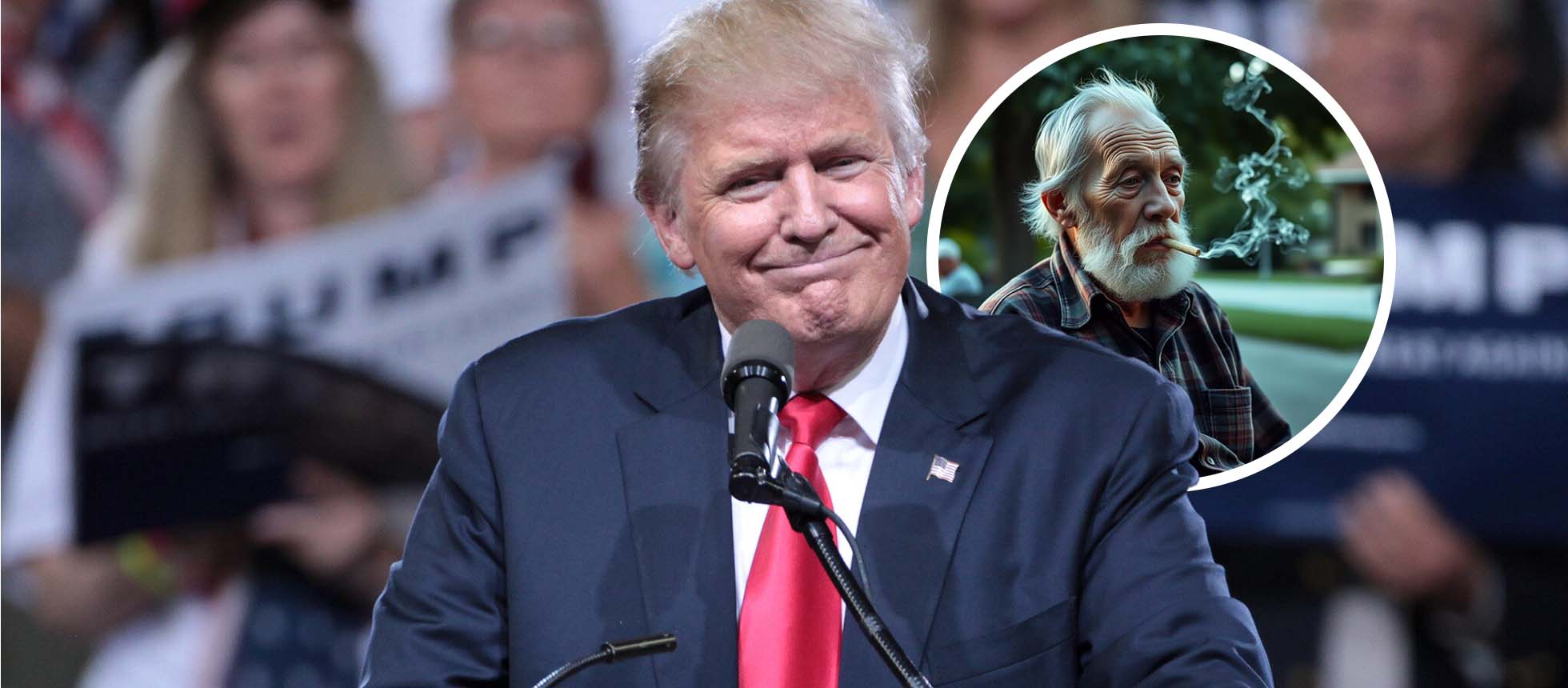
President Donald Trump signed an executive order on Thursday creating a trial program that would allow Medicare to pay for certain cannabis-derived products for older Americans, marking a significant shift in how the federal government approaches medical treatment options for seniors.
The order responds to a growing trend among older adults who have increasingly turned to weed-based alternatives to manage age-related health concerns such as chronic discomfort, sleep difficulties and anxiety. Research from NYU released this summer found that 7% of Americans aged 65 and older reported using weed within the past month in 2023, up from 4.8% in 2021 and 5.2% in 2022. That represents an increase of nearly 46% over two years.
The executive order serves two main purposes. First, it formally moves weed into Schedule III under the DEA, placing it alongside medications such as Tylenol with codeine rather than Schedule I, it establishes a framework that would allow Medicare to cover cannabidiol, commonly known as CBD, products.
Trump said the decision reflects growing recognition that cannabis can have legitimate medical uses when properly regulated. He also suggested that weed could help reduce reliance on opi*ids, which he described as potentially dangerous.
The Centers for Medicare and Medicaid Services did not immediately respond to the announcement. Under the current framework, however, Medicare coverage would apply only to CBD products and not THC. CMS administrator Mehmet Oz said coverage could begin as early as April of next year, with no cost to beneficiaries whose physicians recommend the products.
Federal health agencies have recently shown greater willingness to reconsider cannabis policy. Last month, CMS proposed a rule that would allow Medicare Advantage plans to offer coverage for CBD products. Health and Human Services Secretary Robert F. Kennedy Jr. has previously expressed support for cannabis decriminalization.
Oz noted that Medicare Advantage insurers, which cover roughly 34 million Americans, are prepared to assess CBD coverage. If the trial produces positive results, CMS could consider expanding access to additional medical conditions and potentially to Medicaid recipients.
Trump had previously promoted Medicare coverage for CBD in a video posted to Truth Social in September, signaling his interest in the policy months before signing the executive order.
Medical experts remain divided on CBD’s therapeutic value. Dr. Peter Grinspoon of Harvard Medical School has written that CBD may provide a relatively low-toxicity option for treating anxiety, insomnia and chronic discomfort, while stressing that more research is needed to clarify its effects and appropriate uses.
At the same time, scientific research has raised concerns about long-term safety. FDA-funded studies have identified potential liver toxicity with prolonged CBD use. Other research suggests CBD can interact with certain medications and may pose risks for male reproductive health and for people who are pregnant.
Advocacy groups welcomed the trial as a step toward aligning federal policy with medical practice. Steph Sherer, president of Americans for Safe Access, said the program reflects growing acceptance of cannabis as a therapeutic option and pointed to HHS’ 2023 recommendation to reclassify weed. She described the CMS proposal as an early but meaningful opening within the healthcare system.
Industry representatives echoed that view. Don Williams, chair of the New York Medical Cannabis Industry Association, said insurance coverage for cannabinoid therapies makes sense for older patients, noting that such treatments are often less expensive and potentially less harmful than many commonly prescribed medications.
Not all medical professionals supported the initiative. Dr. Jordan Tishler, president of the Association of Cannabinoid Specialists, criticized the focus on CBD while excluding THC. He argued that THC has decades of human research supporting its safety and effectiveness, while many other cannabinoids lack comparable evidence.
Tishler described the initiative as more symbolic than substantive, warning that selectively covering cannabinoids with limited clinical data could undermine the program’s stated goals.
The executive order arrives amid broader momentum toward federal weed policy reform. Reports indicate that the administration plans to reclassify weed from Schedule I to Schedule III under federal law, which would represent one of the most consequential regulatory changes in decades.
Currently, weed is classified alongside heroin under the Controlled Substances Act. Schedule I status denotes a high potential for misuse and no accepted medical use. Reclassification would place weed in a category that includes substances such as ketamine, anabolic steroids and testosterone.
One of the most significant effects would be on tax policy. Because weed is classified as Schedule I, businesses are subject to Internal Revenue Code Section 280E, which prevents them from deducting standard business expenses despite paying federal income taxes. This restriction has pushed many companies to the brink financially.
Reclassification would also ease barriers to medical research, which has long been constrained by federal rules. Researchers have argued that Schedule I status makes meaningful study of potential therapeutic uses extremely difficult. Under Schedule III, weed could be studied for medical purposes under guidance from the National Institutes of Health, though the change would not legalize weed nationwide or allow pharmacies to dispense it.
The broader legal environment remains fragmented. While federal law still prohibits weed, two dozen states, three U.S. territories and the District of Columbia have legalized or decriminalized it in various forms. Federal enforcement can still carry serious consequences, including loss of eligibility for firearm purchases, certain housing assistance, visas, federal employment and military service.
States that have legalized weed have generated substantial tax revenue from regulated sales, much of which is directed toward public health initiatives, local budgets and treatment programs, according to industry analysts.
The current move follows a recommendation issued during the Joe Biden administration, when the Department of Health and Human Services advised the DEA to reclassify weed to Schedule III. That recommendation was not acted upon at the time.
If implemented, reclassification could eventually allow interstate commerce and remove long-standing research obstacles, though the DEA would retain authority over how the change is applied. Congress continues to influence policy through legislation, as seen in recent spending bills that restricted certain hemp-derived products despite earlier allowances under the 2018 Farm Bill.
The proposed shift stands out as a rare point of alignment among business interests, public health advocates and criminal justice reformers, all of whom argue that existing federal restrictions have produced more harm than benefit.


