
Free to use under the Unsplash License
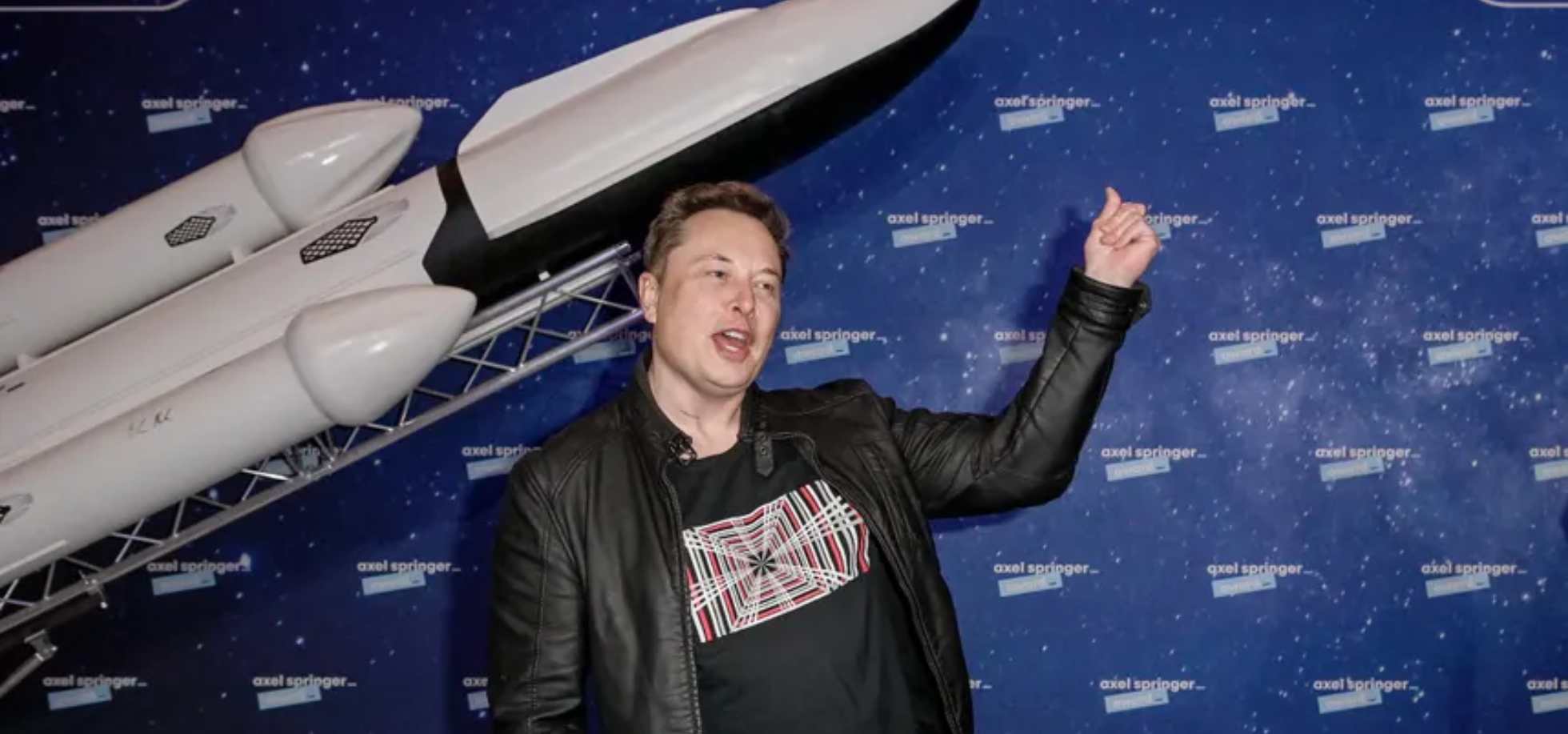
SpaceX achieved an $800 billion valuation in late 2025, surpassing OpenAI as the world’s most valuable private company. With plans for a 2026 IPO at a $1.5 trillion valuation, Elon Musk has introduced his latest ambitious vision: launching 100 gigawatts of solar-powered AI satellites into orbit annually.
According to Musk, within five years, operating data centers in space will become cheaper than maintaining them on Earth.
Sources suggest that the proposal faces immediate technical challenges. A startup called StarCloud, backed by Y Combinator and Nvidia with $34 million in funding, has outlined plans for a 5 gigawatt space data center. This would be 25 times larger than Earth’s current largest facility. Their blueprint requires solar panels spanning 4 kilometers by 4 kilometers, roughly the size of lower Manhattan, along with radiator panels measuring 2.8 kilometers square.
The cooling problem presents a fundamental obstacle. On Earth, data centers use water-cooled systems that transfer heat to the surrounding environment. Space offers no such option. As a vacuum, outer space cannot conduct heat, making it function like a thermos. StarCloud proposes using radiation cooling with liquid ammonia pumped through panels that release heat as infrared energy. However, this system would require kilometers of piping to reach distant radiator sections while being assembled piece by piece in orbit.
Construction itself poses another barrier. The structure cannot launch intact and must be built modularly using what StarCloud calls “space buses.” These vehicles, designed to transport and assemble multi-ton structures in orbit, do not currently exist. No flight-proven system can autonomously connect power, cooling, and data interfaces repeatedly across thousands of operations.
Radiation presents additional complications. Without atmospheric protection, high-energy particles from the sun damage sensitive electronics. The International Space Station uses older, radiation-resistant chips rather than cutting-edge technology. Nvidia’s GPUs, with their densely packed transistors, remain highly vulnerable. Shielding adds substantial mass without fully resolving the issue.
StarCloud’s cost projections reveal disconnect from reality. They claim their space data center would cost $8.2 million per 40 megawatts over 10 years, compared to $167 million for an Earth-based facility. This assumes solar cells at 3 cents per watt, based on terrestrial pricing. Space-grade solar panels actually cost around $350 per watt. Their 40 megawatt requirement would total $14 billion, not the $2 million they projected. They also assume zero cost for radiator systems and cite an Elon Musk tweet as their source for launch cost estimates.
A recent facility tour showed StarCloud operating from what appears to be a residential building with office space limited to a few desks. Their equipment consists primarily of off-the-shelf hardware store components.
SpaceX has offered even less detail than StarCloud while promising 100 gigawatts annually. Musk previously predicted humans would reach Mars by 2021, a timeline that passed without progress. His new space data center narrative follows a similar pattern of grand statements without supporting evidence or realistic timelines.
The concept ignores practical maintenance realities. Earth-based data centers employ constant technician support for hardware failures. Space-based facilities would require dedicated launches for each repair, using specialized robotic systems that remain theoretical. Hardware failures would accumulate permanently, degrading capacity over time.
With SpaceX generating $15 billion in revenue after 20 years of operation, the proposed $1.5 trillion IPO valuation represents 100 times annual revenue. Musk suggests the company could eventually reach a $100 trillion market cap, equivalent to current global GDP. These projections rely on technologies that do not exist and cost assumptions that contradict basic physics and engineering realities.


