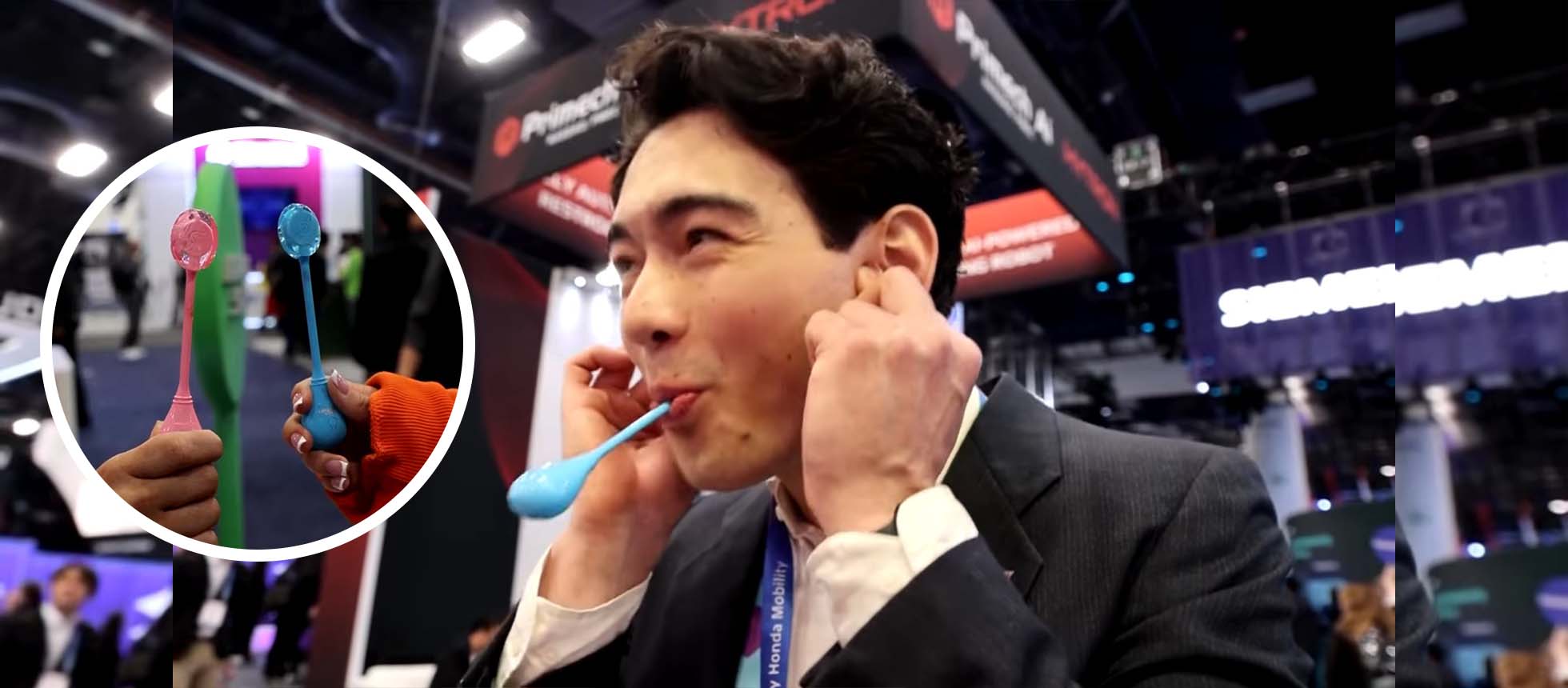
At CES 2026 amid rows of smart devices and connected gadgets one product drew attention for an entirely different reason, the Lollipop Star, an AI powered single use candy that merges electronics with something meant to be eaten.
The Lollipop Star is not a conventional sweet. It is a disposable electronic lollipop that plays music through vibrations conducted through the jaw, an effect the company markets as music you can taste. The device uses bone conduction technology to transmit sound while the candy is consumed creating an audio experience tied directly to chewing.
The design raises immediate concerns. A company representative told reporters :
“You can’t reuse the sticks after the candy is long gone, and you can’t recharge it.”
Once the candy is finished the entire unit including its lithium ion battery is discarded.
Nathan Proctor, writer and repair director at PIRG addressed the environmental implications at CES where Woodsy the Owl appeared to remind attendees not to throw batteries into the trash. The risk is well documented. Lithium ion batteries can reach temperatures of up to 2,000 degrees if punctured or crushed and industry estimates suggest that waste facilities in the United States experience around 5,000 fires each year with discarded batteries cited as a leading cause.
‘Tech’ company claims to have partnered with rapper Ice Spice to promote their product according to their website:
“We’re teaming up with global pop icons to turn candy into a concert in your mouth. Each Lollipop Star carries its own beat, flavor, and vibe. Bite down, and feel the music.”
The product isn’t available to purchase, it’s on pre order according to the website. Pricing is unavailable.
The Lollipop Star received a worst in show designation for environmental impact because it embodies the core problems associated with disposable electronics. Products of this type rely on critical minerals contain toxic components and introduce real fire hazards once they enter the waste stream. Combining food with electronics in a single use format intensifies those risks.
Proctor described this category as:
“the absolutely sinful morass of disposable battery powered products”
on display at CES and the Lollipop Star managed to distinguish itself even within that group. It turns a brief novelty into long lasting electronic waste leaving behind environmental damage that far outlives its moment of use.
The product illustrates a growing pattern in consumer electronics, technology added for novelty rather than necessity with little consideration for downstream consequences. Innovation can be valuable but when it results in single use battery powered waste it raises questions about whether sustainability has been sidelined in favor of spectacle.