

*Photo by Mark Broadhead on Unsplash
When Robert F. Kennedy Jr. took the helm at the Department of Health and Human Services, expectations ran high among public health advocates who anticipated a bold reimagining of America’s nutritional framework. The administration delivered sweeping changes to the nation’s dietary recommendations last week, but one notable absence has sparked significant debate: specific guidance on consumption of certain beverages that were previously regulated.
According to the administration, the published guidelines were driven by evidence and “gold-standard science.” Yet internal documents and interviews with former government officials reveal that a far more restrictive proposal had been quietly developed in early 2024, only to be shelved before Kennedy’s tenure began.
The original proposal, crafted by officials at HHS, would have cut the suggested daily limit for men in half, recommending no more than a single serving per day. The draft argued that consumption is a proven risk factor for various cancers and stated that reducing intake to one serving or fewer for both genders could prevent thousands of annual fatalities in the United States.
“It seemed clear to me that the cancer epidemiology suggested that there was an increased risk of breast cancer and head and neck cancer associated with less than one drink per day,” said David Berrigan, a former program director at the National Cancer Institute, a member of the group that planned to recommend tightening the guidelines.
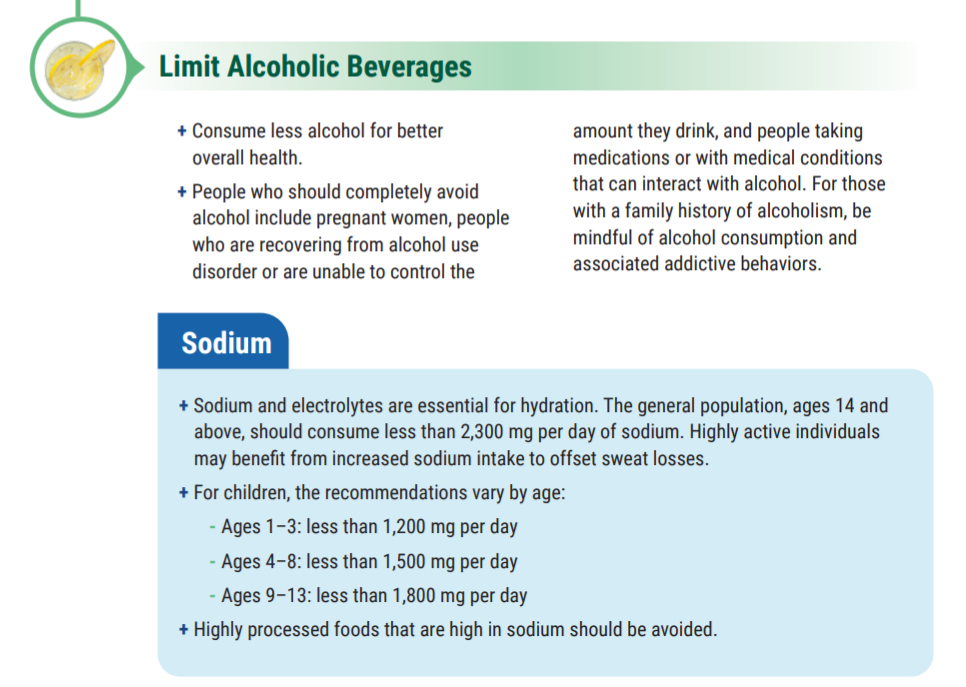
Previous guidelines:
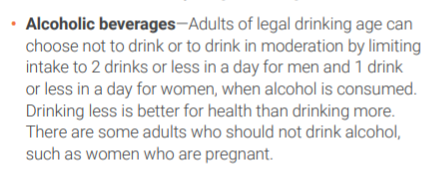
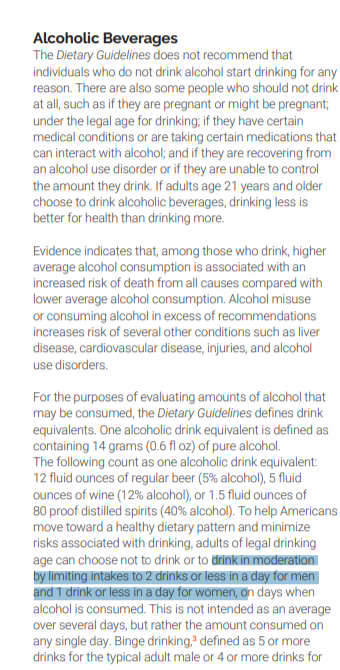
Instead of adopting those restrictions, the Trump administration unveiled a markedly different approach. The updated dietary guidelines abandon numerical limits altogether, replacing decades-old serving recommendations with a broad message encouraging Americans to consume less for better health. This ended a standard that had been in place for roughly 35 years.
The shift followed sustained lobbying from producers and trade groups representing an industry worth an estimated $1.2 trillion globally. Former head of chronic disease prevention at the Centers for Disease Control and Prevention (until 2025) said vague messaging risks allowing individuals to define “moderation” in ways that increase consumption according to Reuters.
The tension mirrors a broader conversation happening in wellness circles, particularly following neuroscientist Andrew Huberman’s outspoken position on the topic.
“There is zero evidence that low to moderate amounts of consumption are better for health than no consumption at all,” Huberman asserted in one episode. According to Huberman, when consumed, it converts into acetaldehyde, and that damages cells throughout the body, affecting multiple organs including the brain, liver, and gut microbiome.
Research shows that consuming just one to two servings daily is linked to thinning of the brain’s cortex and an increased risk of various cancers, particularly breast cancer.
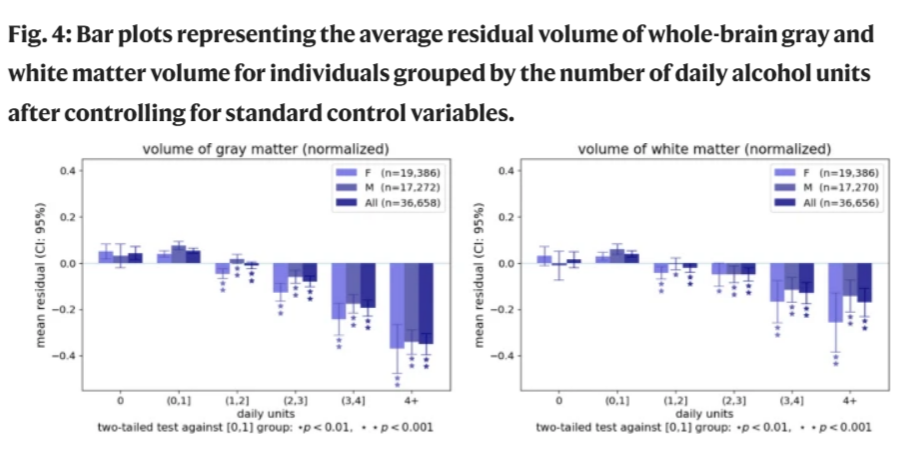
Huberman emphasized that even small amounts can disrupt restorative sleep and raise cortisol levels, leading to more stress.
His message resonated widely, prompting many listeners to reconsider their habits entirely. While some critics have portrayed Huberman’s stance as radical, his supporters argue he provides people with available information so they can make choices aligned with their well-being.
The dietary guidelines process has long attracted lobbying from affected industries. Major beverage companies began engaging with policymakers on the 2025-2030 update years ago. In 2022, Congress funded a $1.3 million study by the National Academies of Sciences, Engineering and Medicine to examine health effects. Former lobbyists said the industry pushed for the study, which was supported by lawmakers including Senator Tammy Baldwin of Wisconsin.
Published in late 2024, the National Academies report found an association between moderate consumption and lower overall mortality, though it also identified health risks. Separately, HHS commissioned its own review, released in draft form in January 2025, which concluded that even one daily serving increases the risk of several cancers.
Industry groups dismissed the HHS-backed research as biased and praised the National Academies report as more credible. A coalition representing affected industries accused HHS of conducting a flawed and opaque process.
One of the scientists involved in the HHS study, Priscilla Martinez, said the evidence clearly shows a causal relationship with cancer and expressed frustration that the findings were sidelined.
Following Kennedy’s swearing-in as health secretary in February, HHS underwent sweeping layoffs. More than 10,000 staff were dismissed, including key officials working on related policy. Others were removed from the project in the months that followed. The responsibility for drafting guidance was later transferred to senior officials not previously involved.
Ultimately, the administration relied primarily on the National Academies study when finalizing the new guidelines. Emails reviewed by Reuters show senior USDA officials overseeing the process met with industry representatives during the revision period.
A White House official said consumption was already near historic lows and insisted industry influence was not a factor. Both President Trump and Kennedy abstain completely, and the health movement aligned with the administration has focused more on food additives and other topics.
HHS said its policies were driven by evidence and gold-standard science. “It is absurd to suggest that anything other than science guides our work on this presidential priority.”