
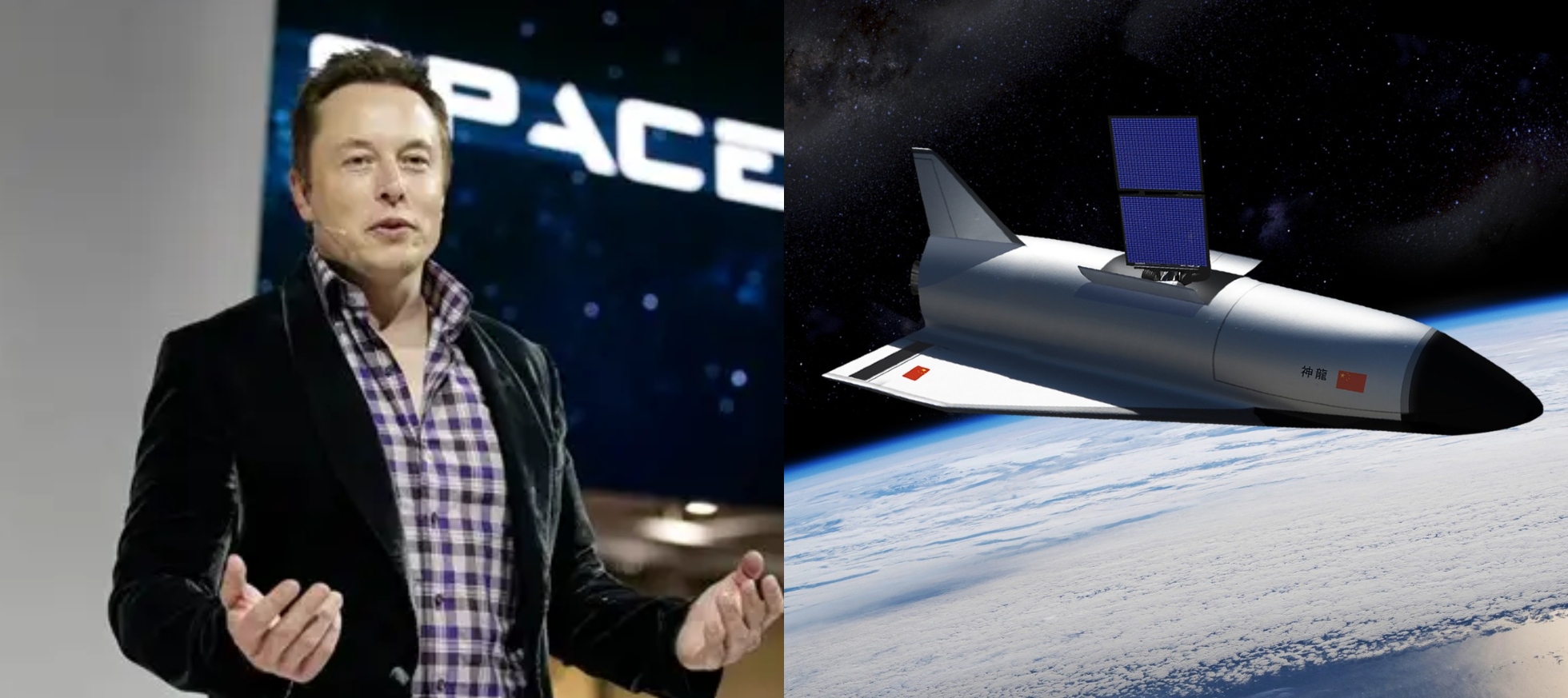
China’s ambitious attempt to replicate SpaceX’s revolutionary reusable rocket technology has hit a wall, with two high-profile recovery failures occurring within 20 days of each other in late 2025. Sources state that despite massive investments and national backing, the country’s aerospace program continues to struggle with the technical challenges that SpaceX mastered years ago.
On December 3rd, 2025, LandSpace’s Zhu Que 3 rocket lifted off from the Dongfeng commercial aerospace innovation testing area in Inner Mongolia’s Gobi Desert. While the first stage successfully separated 133 seconds after launch and began its vertical landing sequence, the mission ended in disaster. Just kilometers from touchdown, the rocket erupted into a massive fireball, disintegrating as it crashed to the ground and scattering debris across the desert.
Twenty days later, the national team’s Long March 12A experienced an eerily similar fate. The 70.4-meter rocket, equipped with seven Long Yun liquid oxygen methane engines and designed for more than 50 reuses, successfully placed its payload into orbit. However, during the return phase, some engines failed to restart, leading to insufficient thrust and loss of attitude control. The first stage crashed 2 to 4.5 kilometers from the intended recovery site in another violent explosion.
According to Zhang Shaoqing, chief designer of Zhu Que 3, the rocket completed the most challenging phases “basically perfect,” including grid fin deployment, re-entry attitude control, and atmospheric entry. But during the final landing phase, about 3 kilometers above ground, the engine experienced abnormal combustion, preventing a soft landing.
These failures highlight three critical technical challenges facing China’s reusable rocket program: stability of deep throttling and multi-engine operation during extreme conditions, precise attitude control during hypersonic re-entry, and reliability of multi-system integration under extreme conditions. These are areas where China still faces significant gaps compared to SpaceX, particularly in heat-resistant materials and real-time guidance algorithms.
SpaceX began its reusable rocket journey in 2012 and achieved its first successful landing in December 2015. By 2025, Falcon 9’s annual launch frequency had stabilized at over 100 launches with a cumulative recovery success rate exceeding 97%. The highest number of reuses for a single booster had surpassed 30 times, with internal marginal launch costs dropping to under $3,000 per kilogram.
China’s response to these setbacks revealed another problem: the inability to acknowledge failure honestly. State media refused to use the word “failure,” instead declaring the Zhu Que 3 test “basically successful” and claiming it gathered “valuable data.” This prompted widespread mockery online, with one commenter noting, “You had two tasks and one failed. Just be honest. Instead of saying nothing, you just wrote basically successful on the big screen. Is this a scientific attitude?”
The underlying issue extends beyond technical capability. As one observer pointed out, the Chinese aerospace sector operates under political constraints that prioritize alignment with leadership over innovation. “Engineer Deng is forced to spend a significant amount of time every day studying Xi Jinping’s ideological works and then write reflections on what he learned. How can there be enough time to study rockets?” one commenter noted.
Despite these challenges, China continues pouring resources into its aerospace ambitions. Some think tanks estimate that China’s total aerospace budget in 2025 could exceed $20 billion, with reports suggesting the total size of China’s aerospace funds exceed 480 billion yuan over recent years. The country’s rocket launches have surged from 39 in 2020 to over 90 in 2025.
However, the motivation behind this aggressive push extends beyond commercial competition. China has applied for low Earth orbit satellite constellation totaling over 200,000 satellites with the International Telecommunication Union, several times the size of SpaceX’s Starlink application. This represents an attempt to secure strategic orbital positions and control future internet infrastructure.