
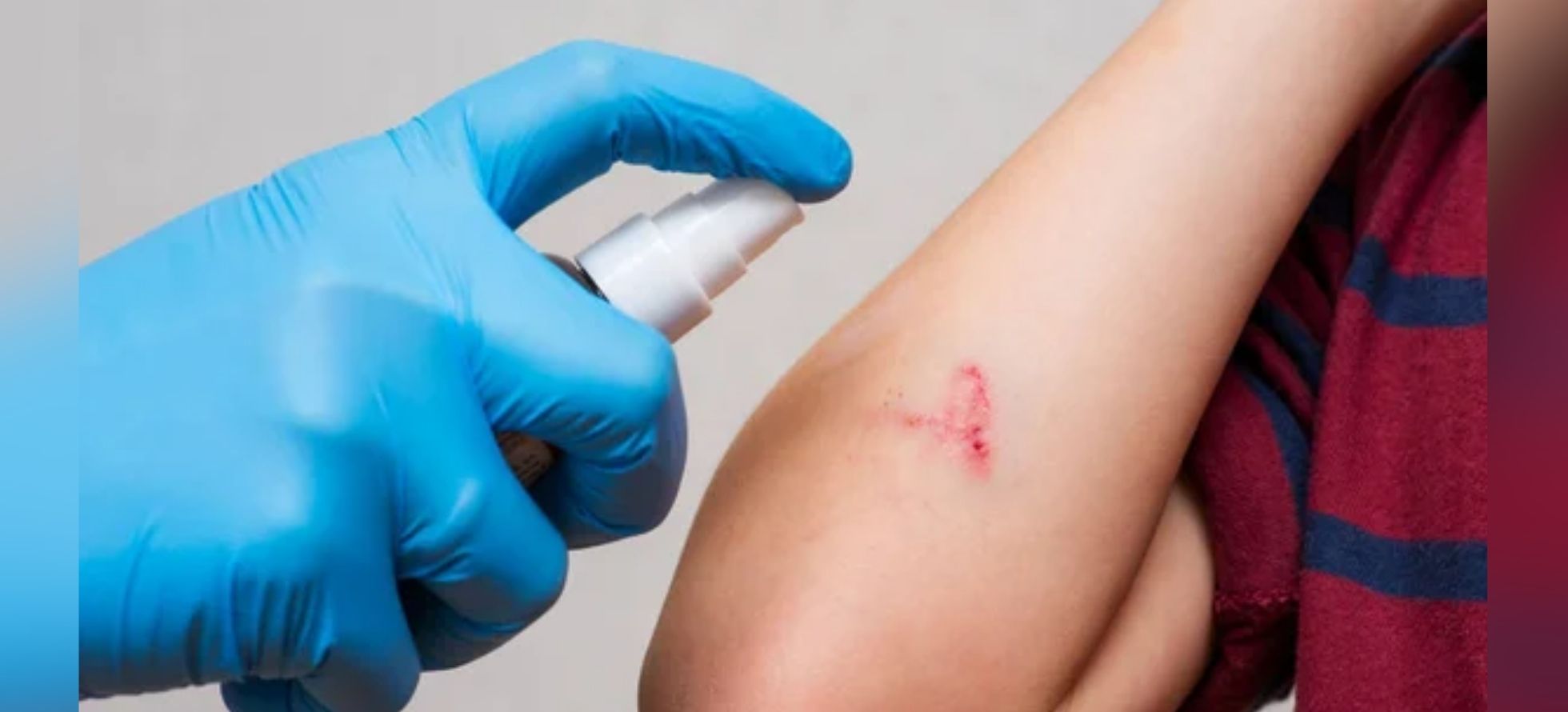
Medical emergencies often come down to seconds, and researchers in South Korea believe they’ve created a tool that could make all the difference when time matters most.
Scientists at the Korea Advanced Institute of Science and Technology have developed a spray-on powder capable of sealing serious wounds in approximately one second, offering a dramatic improvement over traditional bandages and dressings that can take precious minutes to control bleeding.
According to sources, the innovation addresses a longstanding challenge in emergency medicine: how to quickly treat deep or irregularly shaped injuries where conventional patches simply don’t work well. The powder’s secret lies in its chemical composition, which triggers an immediate reaction when it contacts blood.
Made from biocompatible materials, the powder interacts with calcium naturally present in blood, causing it to rapidly solidify into a gel-like barrier. This active sealing process differs fundamentally from standard dressings, which merely absorb blood without creating a protective layer.
Testing revealed another advantage of the powder’s unique structure. Before transforming into gel form, it demonstrates remarkable absorbency, capable of soaking up roughly 725% of its own weight. This three-dimensional absorption helps stabilize bleeding during the crucial first moment of application.
The spray delivery system offers practical benefits for emergency responders. Unlike bandages that require careful wrapping or patches that need precise placement, the powder can be applied quickly to wounds of any shape or size. This ease of use could prove invaluable in high-pressure situations where every second counts.
Storage stability represents another key feature. The powder remains ready for immediate use without special handling requirements, making it suitable for inclusion in first aid kits and emergency medical supplies.
While the technology shows considerable promise, it remains in the research phase and hasn’t received approval for use in human patients. The development nonetheless represents a significant step forward in emergency wound care.
The breakthrough joins a growing list of medical advances pushing the boundaries of what’s possible in healthcare. Last year, doctors successfully completed the world’s first cross-border robot-assisted heart surgery, operating on a patient more than 10,000 kilometers away.