
Free to use under the Unsplash License
Bert Kreischer’s star power may still look strong on paper, with millions of subscribers and hundreds of millions of total views across platforms, but deeper metrics suggest his actual audience engagement is stagnating or declining. That pattern points less to sustained momentum and more to creative strain. On YouTube, his average views per video have slipped into the tens of thousands, far below the viral numbers that once defined his rise, suggesting his content no longer lands with the same impact. At the same time, fan communities and comment sections increasingly criticize repetitive material, weaker live performances, and an overreliance on familiar stories instead of new ideas. Longtime viewers frequently describe burnout with his podcasts and sketches, citing recycled jokes and constant output. Taken together, these signals resemble a creator chasing volume to maintain visibility rather than one driven by sharp, evolving material.
Comedian Bert Kreischer delivered an unexpected take on the Paul brothers during a recent episode of the ‘2 Bears, 1 Cave’ podcast, comparing their cultural impact to some of America’s most significant historical figures.
The conversation emerged after Kreischer attended the Jake Paul vs. Anthony Joshua boxing match in Miami, where he sat alongside comedian Matt Rife and various celebrities. Reflecting on the sold-out arena atmosphere, Kreischer had an epiphany about what the Paul brothers have accomplished.
“I’m looking at Michael Irvin who was given every gift by the Lord to be a physical specimen,” Kreischer said, noting the NFL legend’s natural athletic gifts. “But he didn’t make $90 million in a ring.” He pointed out that Anthony Joshua, despite being a professional boxer, hadn’t achieved the same financial success before fighting Paul.
What struck Kreischer most was that Jake Paul built his boxing career without traditional athletic advantages. “Jake Paul, and I apologize if this is crass, is not an athlete,” he began, before clarifying his point. “He created something. That is willpower, and that’s what makes him a god.”
The comedian emphasized that Paul transformed himself through determination rather than natural selection. “If you are a guy thinking, ‘What the f**k am I doing with my life?’ Look at Jake Paul and take a page out of his book because that kid created something out of absolutely nothing.”
Kreischer extended his praise to Logan Paul, saying: “And then I look at Logan Paul, who by the way is an amazing professional wrestler. And I look at Logan Paul and I go, ‘By the way, good-looking kid. Not the best looking kid in this room, but the most famous person in this arena.”
“These two kids are the American dream,” Kreischer declared. “They are the American dream.” He suggested their story deserves serious academic study, saying, “There should be a class taught about the Paul brothers in college.”
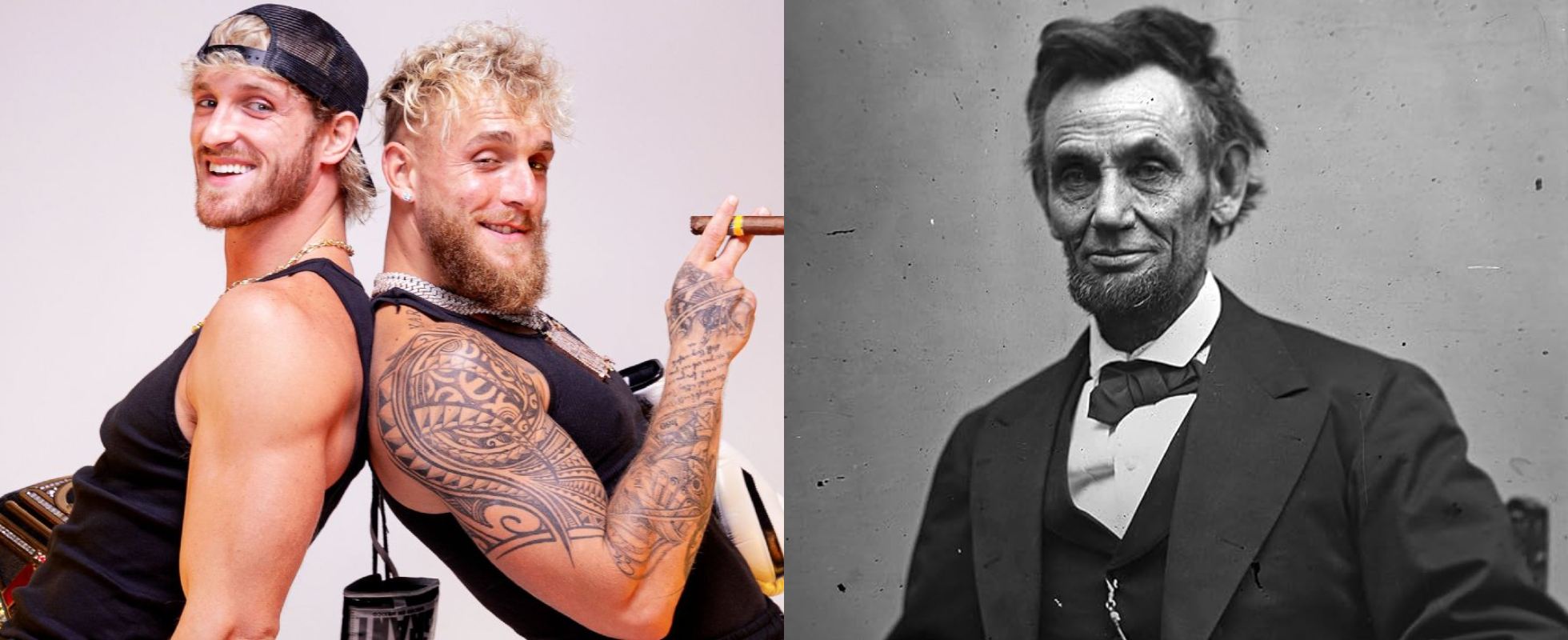
Then came the most provocative statement of the discussion. “They are as important to our country as Abraham Lincoln,” Kreischer said, later adding George Washington and John F. Kennedy to the comparison. When his wife Leanne questioned the comparison, Kreischer doubled down on his position.
The comedian contextualized his argument by comparing his own career trajectory to Jake Paul’s meteoric rise. Kreischer noted that he performs in similar-sized venues after 25 years of developing his craft, while Paul created comparable success seemingly from nothing in a fraction of the time.
Co-host Tom Segura acknowledged the brothers’ achievement, saying Paul “created the persona” and understood that “people are more excited to watch somebody that they hate lose than they are to watch somebody that they love win.”
Kreischer concluded with a message to younger critics: “Jake and Logan Paul are better than any gene in our family. We should take a f**king knee to these two men.”
Kreischer argues that the Paul brothers represent a new template for success built on willpower, self-promotion, and understanding modern media.


