
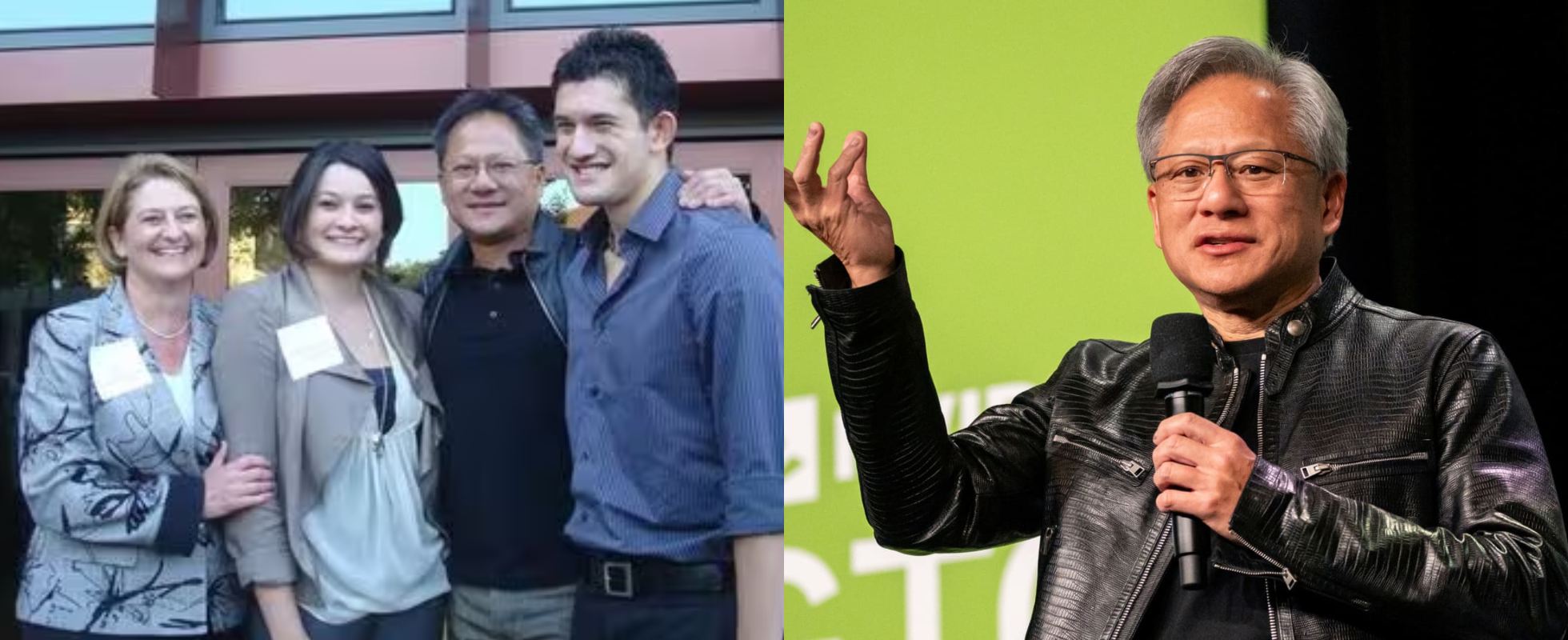
When Jensen Huang stood before the crowd at the 2026 World Economic Forum in Davos, he delivered a message that resonated far beyond the Swiss ski resort’s gilded conference rooms. The Nvidia CEO championed blue-collar careers as prime opportunities in the artificial intelligence era, declaring that skilled trades were becoming some of the most lucrative paths available.
“We’re going to have plumbers and electricians and construction and steelworkers,” Huang told BlackRock CEO Larry Fink during their conversation. “Everybody should be able to make a great living. You don’t need to have a PhD in computer science to do so.”
His enthusiasm wasn’t unfounded. As companies race to build data centers and chip manufacturing facilities, demand for skilled labor has skyrocketed. “In the United States we’re seeing quite a significant boom in this area. Salaries have gone up nearly doubled,” Huang observed. “We’re talking about six figure salaries for people who are building chip factories or computer factories or AI factories.”
Huang described the current moment as “the largest infrastructure buildout in human history,” requiring an army of network technicians, electricians, and construction workers to bring AI factories online. His vision painted a future where advanced degrees become less essential, and practical skills command premium compensation.
Yet for all his praise of the trades, Huang’s own children followed a decidedly different trajectory.
Spencer Huang, 62-year-old Jensen’s older child, spent nearly a decade running a popular establishment in Taipei after earning his degree in Chinese. The venue earned recognition from Forbes as one of Asia’s top 50 before closing in 2021.
Spencer then completed a master’s in technical business administration from NYU and joined Nvidia in 2022 as a product manager in robotics, one of the company’s most strategic divisions. His salary reportedly sits around $530,000 annually.
Madison Huang initially pursued culinary arts, training at the Culinary Institute of America and studying pastry and wine at Le Cordon Bleu. She worked for luxury brand LVMH in France before pivoting to technology during her MBA at London Business School.
After joining Nvidia as an intern in 2020, she now serves as Senior Director of Product Marketing in the simulation and omnibus group, earning over $1 million in 2024 according to SEC filings.
Madison has also become part of her father’s inner executive circle, helping coordinate major company events. Her boyfriend, Nico Capez, joined Nvidia in 2024 as well.
The family approach represents a departure from other tech dynasties. Steve Jobs and Bill Gates saw their children pursue interests outside their companies. But at Nvidia, the practice extends beyond the Huang family. Co-founder Chris Malachowsky and board member Aarti Shah also have children on the payroll.
The rapid advancement of Madison and Spencer has sparked questions about favoritism, particularly given Madison’s senior title and seven-figure compensation. Former Nvidia VP Greg Estes acknowledged to The Information that “it’s natural anyone meeting them would be aware they’re Jensen’s kids,” but maintained they both contribute meaningfully and work diligently.
Huang has confronted the criticism directly. “Many employees’ children work here,” he said. “Parents wouldn’t recommend their children if they were unqualified and would embarrass them.” He added that some second-generation employees “outperform their parents.”
Whether Spencer or Madison will eventually take leadership positions remains uncertain. Huang owns just 3.5% of Nvidia and shows no signs of stepping down. According to South Korean outlet Maeil Business Newspaper, both children have become recognized figures in Taiwan, where their father is regarded as a technology icon. Madison particularly attracted attention during a 2025 appearance at Computex in Taipei alongside her mother, Lori Huang.
Back at Davos, Huang continued his argument about AI democratizing opportunity. He addressed concerns about automation replacing knowledge workers by reframing the conversation around job purpose versus job tasks. Using radiologists as an example, he noted that while AI helps them analyze scans exponentially faster, “the number of radiologists have gone up” because they can now see more patients and focus on diagnosis rather than just scan review.
Similarly, nurses who previously spent half their shifts on documentation can now use AI for charting, freeing them for patient care. “AI is increasing their productivity. As a result the hospitals are doing better. They want to hire more people,” Huang explained.
He emphasized AI’s accessibility, calling it “the easiest software to use in history” and declaring that “all of you can be programmers now.” For developing nations and Europe, Huang views AI as a tool to “close the technology divide” and transform existing industrial capabilities for the robotics era, provided countries invest in energy infrastructure and cultivate skilled workforces.
His message at the global forum was clear: the AI revolution creates opportunities for everyone, regardless of educational background. The construction boom surrounding AI infrastructure offers pathways to prosperity through practical skills and hands-on work.
Yet the contrast remains stark. While Huang extolled six-figure salaries for those building chip factories, his own children parlayed elite educations, hospitality experience, and family connections into executive positions at a company now valued at approximately $4.5 trillion.
Nobody questions their work ethic or contributions. But when the CEO’s daughter earns seven figures and attends exclusive executive gatherings while her father champions plumbing careers on the world stage, the dissonance is difficult to ignore.