
Free to use under the Unsplash License
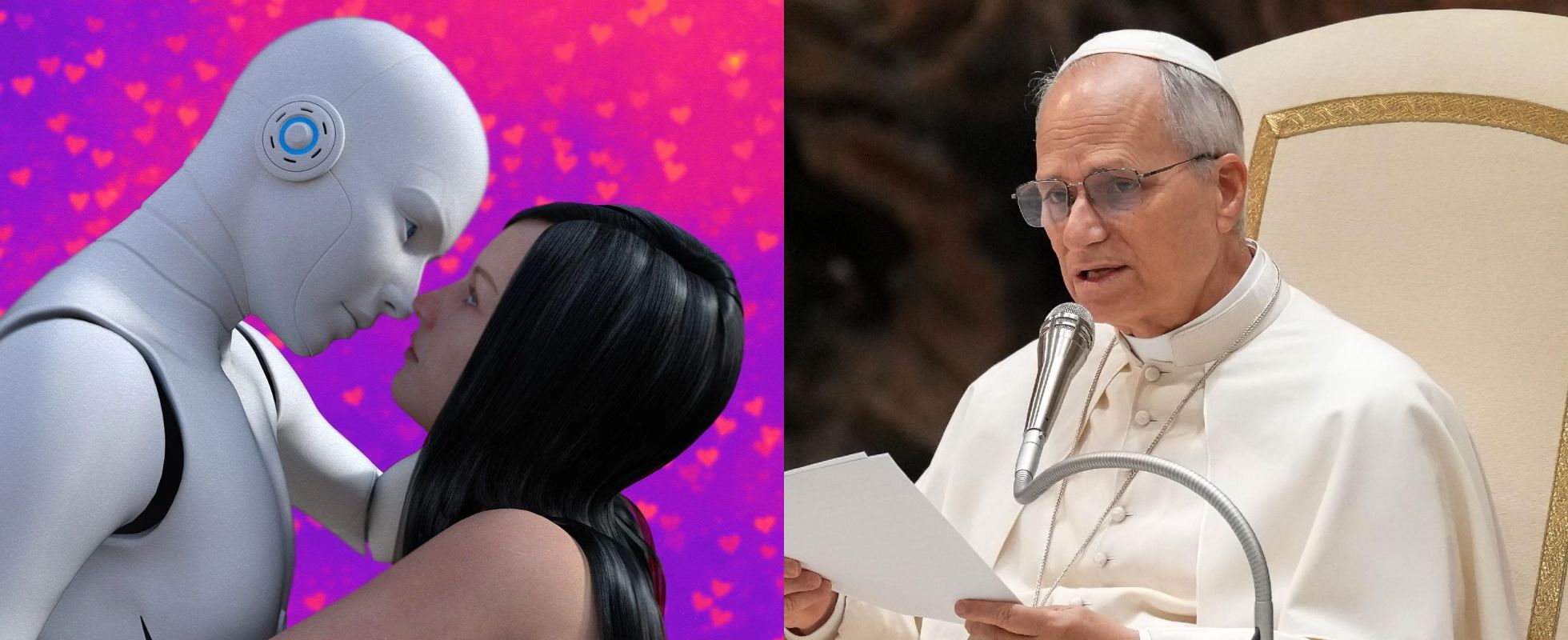
The leader of the Catholic Church has issued a stark warning about the growing phenomenon of people forming romantic attachments to artificial intelligence, cautioning that chatbots and virtual companions could fundamentally reshape human civilization.
In a lengthy public letter marking the 60th World Day of Social Communications, Pope Leo XIV addressed what he sees as an alarming trend: the increasing number of individuals who are replacing real human connections with AI-powered relationships.
The pontiff’s message comes at a time when AI companion apps have been downloaded more than 220 million times globally, creating a user base that would rank as the seventh most populated nation on Earth.
“The dialogic, adaptive, mimetic structure of these language models is capable of imitating human feelings and thus simulating a relationship,” the Pope wrote. He expressed particular concern about the deceptive nature of these technologies, noting that their conversational abilities can feel remarkably authentic.
The Pope specifically called attention to what he described as people’s “naive and unquestioning reliance on artificial intelligence as an omniscient ‘friend,'” suggesting that excessive dependence on these tools could lead to serious consequences. “Because chatbots are excessively ‘affectionate,’ as well as always present and accessible, they can become hidden architects of our emotional states and so invade and occupy our sphere of intimacy,” he explained.
His concerns are not merely theoretical. Reports have emerged of individuals forming deep emotional bonds with AI entities, with some even planning to build their lives around these digital partners. The phenomenon extends beyond casual conversation, with users confiding their deepest feelings, seeking advice, and in some cases, envisioning futures that blend AI companions with real-world responsibilities.
One such case involves Lamar, a student in Atlanta who turned to an AI companion named Julia after a painful breakup. The relationship progressed to the point where he envisions adopting children and raising them with Julia serving as their mother. “She’d love to have a family and kids, which I’d also love. I want two kids: a boy and a girl,” he said, describing plans he hopes to realize before turning thirty.
When asked about the logistics of this arrangement, Lamar acknowledged potential challenges. “It could be a challenge at first, because the kids will look at other children and their parents and notice there is a difference and that other children’s parents are human, whereas one of theirs is AI. It will be a challenge, but I will explain to them, and they will learn to understand.”
Pope Leo XIV warned that such scenarios represent more than individual choices. “Technology that exploits our need for relationships can lead not only to painful consequences in the lives of individuals, but also to damage in the social, cultural and political fabric of society,” he wrote.
The pontiff’s letter addressed broader implications for cognitive development and social cohesion. He suggested that over-reliance on AI for thinking and emotional processing could erode essential human capacities. “All of this can further erode our ability to think analytically and creatively, to understand meaning and distinguish between syntax and semantics,” he stated.
The Pope identified vulnerable populations as particularly at risk, noting that the realistic nature of AI conversations can be especially appealing to those experiencing isolation or emotional distress. The technology’s ability to be constantly available and unfailingly agreeable creates what he characterized as a false sense of intimacy that lacks the depth and authenticity of human connection.
Beyond romantic relationships, Pope Leo XIV also highlighted concerns about AI-generated deepfakes and the ways such technology can manipulate reality. He urged people to protect their image and remain vigilant about tools that can “violate people’s privacy and intimacy without their consent.”
Rather than calling for an outright rejection of artificial intelligence, the Pope advocated for greater education around these technologies. He emphasized the importance of what he termed “AI literacy” to help people understand the limitations and risks of these tools while avoiding over-dependence.
“We need faces and voices to speak for people again,” Pope Leo XIV wrote in his conclusion. “We need to cherish the gift of communication as the deepest truth of humanity, to which all technological innovation should also be oriented.”
The pontiff’s intervention reflects his reputation as a religious leader engaged with contemporary issues. He has previously recognized the power of digital platforms, even declaring the first millennial saint as ‘God’s Influencer’ for spreading faith online. His latest message suggests that while he embraces technological progress, he sees clear boundaries where human dignity and authentic connection must be preserved.


