
Free to use under the Unsplash License
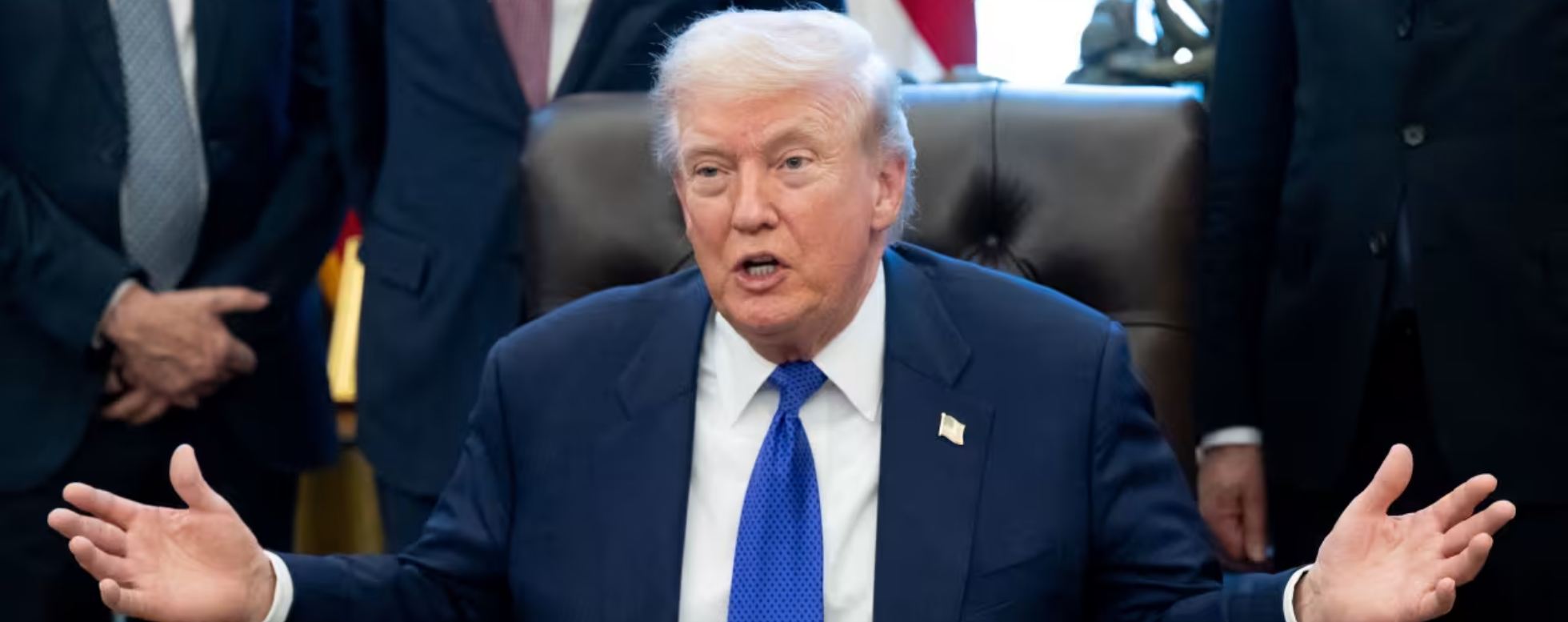
President Donald Trump has explained his decision to raise tariffs on Swiss goods by referencing a conversation with Switzerland’s “prime minister,” a government position that doesn’t actually exist in the Alpine nation.
During a Fox Business interview, Trump described how he initially imposed a 30% tariff on Swiss imports to address what he characterized as a $42 billion trade deficit. What happened next, according to Trump, led to an unusual escalation.
— calfkicker (@calfkickercom) February 12, 2026
“Then I got an emergency call from, I believe, the prime minister of Switzerland,” Trump said. “And she was very aggressive, but nice, but very aggressive. Sir, we are a small country. We can’t do this. We can’t do this. I couldn’t get her off the phone.”
According to Trump’s account, the Swiss leader repeatedly emphasized her country’s small size. “We are a small country. Again and again and again,” he recalled.
Rather than reducing the tariffs as the caller apparently hoped, Trump went in the opposite direction. “So it was at 30%. And I didn’t really like the way she talked to us. And so instead of giving her a reduction, I raised it to 39%,” he explained.
The problem with this narrative? Switzerland has no prime minister. The country operates under a unique system with a seven-member Federal Council. Leadership rotates annually among council members, with one serving as president in a largely ceremonial capacity.
The current president is Karin Keller-Sutter, who Trump mentioned at the World Economic Forum in Davos, saying she “just rubbed me the wrong way.”
The confusion over Swiss governance has become more than a simple factual error. Sen. Ron Wyden (D-OR), who chairs the Senate Finance Committee, is now investigating whether Trump violated legal and ethical standards by accepting valuable gifts from Swiss businessmen shortly before dramatically reducing those same tariffs.
In a January 28 letter to U.S. Trade Representative Jamieson Greer, Wyden raised concerns about a Rolex table clock and a 2.2 lb (1 kilogram) gold bar, collectively valued at more than $170,000, which Trump accepted in November 2025. The items were reportedly presented as donations to Trump’s presidential library during a private Oval Office meeting.
“Accepting such gifts creates an apparent conflict of interest and possible violations of the emoluments clause of the U.S. Constitution,” Wyden wrote in his letter.
Less than two weeks after receiving these items, Trump reduced the Swiss tariffs from 39% to 15%. Swiss exporters celebrated the rollback, and Swiss trade official Helene Budliger Artieda publicly thanked the business leaders involved.
The White House has rejected any suggestion of impropriety. “The only special interest guiding President Trump’s decision-making is the best interest of the American people, and any suggestion otherwise is completely unfounded,” White House spokesman Kush Desai told Bloomberg.
The gold bar came from precious metals firm MKS-Pamp, which maintains that the donation was legal and received approval from White House ethics officials. Rolex has declined to comment on the matter.
In Switzerland, the situation has generated significant attention. Two Swiss lawmakers have requested that the country’s top prosecutor investigate whether the gifts constituted bribery. While no formal case has been opened, the Swiss Attorney General’s office confirmed that a review is underway.
The Swiss episode shows a pattern of foreign leaders using personal gifts and gestures to build relationships with Trump.
U.K. Prime Minister Keir Starmer hand-delivered a letter from King Charles III inviting Trump for a second state visit in February 2025. Ukrainian President Volodymyr Zelensky presented Trump with a custom golf putter engraved with “Let’s putt peace together,” a gift from a war veteran, and gave Melania Trump a personal letter from his wife.
Qatar donated a luxury Boeing 747 intended for U.S. Defense Department and presidential library use. South African President Cyril Ramaphosa brought Trump a book on golf courses, though he appeared to gain little favor.
Wyden also questioned the rationale behind the original tariff increase. “The American public and U.S. importers and consumers who pay the tariffs are entitled to a government that pursues trade policy in the public interest, rather than on the basis of the President’s whims,” he wrote.
The Supreme Court is currently reviewing the legality of Trump’s tariff decisions. Until a ruling is issued, the tariffs remain in place, costing U.S. importers over $16 billion per month, according to federal data.


