
Free to use under the Unsplash License
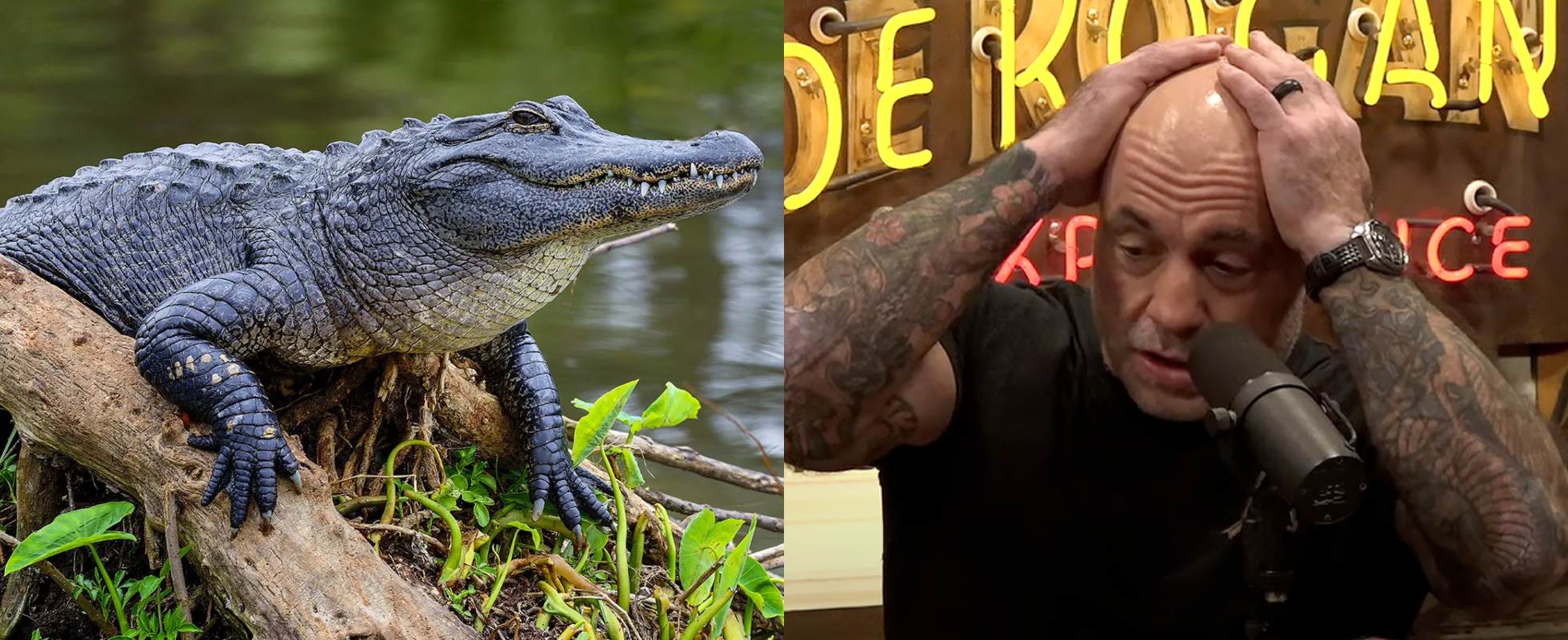
On the Joe Rogan Experience episode #2476, reproductive epidemiologist Dr. Shanna H. Swan brought up the work of a Florida scientist to illustrate just how far-reaching the effects of pesticide pollution can be on wildlife.
Swan introduced the subject by referencing Louis Guillette, a researcher she described as no longer living. “There was a wonderful scientist who’s not living anymore,” Swan said. “His name is Louis Guillette. He lived in Florida. And he showed that alligators swimming in a lake that had a lot of runoff of pesticides, get this, their p*nises were small.”
She then described the unusual but hands-on methods Guillette used to gather his data. According to Swan, the researcher would physically capture the animals in the wild before taking measurements in the lab.
“He measured them, and he was a big guy,” she explained. “He went at night, wrestled them into the boat, I have pictures of that, took them to his lab, measured their p*nises.”
Host Joe Rogan reacted with humor to the vivid description of the fieldwork. “They must have been very confused when they got let go,” he joked. “Like, what is this guy k*nky with? What is his thing?”
Swan clarified that the reproductive effects observed in the polluted alligator population went far beyond anatomy alone. The animals were also experiencing declines in fertility.
“They had fewer eggs, so they were a declining species,” she said. “That’s just a very dramatic example.”
Rogan then pulled up information from the AI search engine Perplexity AI and read aloud findings consistent with Guillette’s research.
“This has actually been documented in wild alligators,” Rogan said, quoting the results. “Males in heavily polluted lakes have on average smaller penises and other reproductive problems linked to hormone-disrupting chemicals.”
He summed up the takeaway: “We are shrinking alligator p*nises, ladies and gentlemen.”
Continuing to read from the data, Rogan listed several documented effects associated with endocrine-disrupting pollutants, including significantly lower testosterone levels, abnormal hormone patterns, altered reproductive organs, reduced hatching success, and increased birth defects. These are all consistent with exposure to chemicals such as DDT derivatives, dieldrin, and PCBs.
“So it’s all endocrine disruptors from pollution,” Rogan concluded.
Swan stressed that the science behind these findings is not new or controversial within the research community. “This is not new,” she said. “This is old work.”
She also acknowledged why such findings rarely become headline political issues, despite their implications.
“There’s not a lot of people that say, ‘First problem on my list today, alligator p*nis sizes. It’s a real issue. You’re in front of Congress. We got to talk. Alligator p*nis sizes are shrinking,'” Swan said. “They’d kick you out of the building.”
However, she noted that Guillette did bring his concerns directly to lawmakers. During testimony before Congress, he used a provocative line to underscore the broader implications of declining reproductive health.
“Louis Guillettewent to Congress and he gave a talk and he said, ‘Every man in this room is half the man his grandfather was.'”


