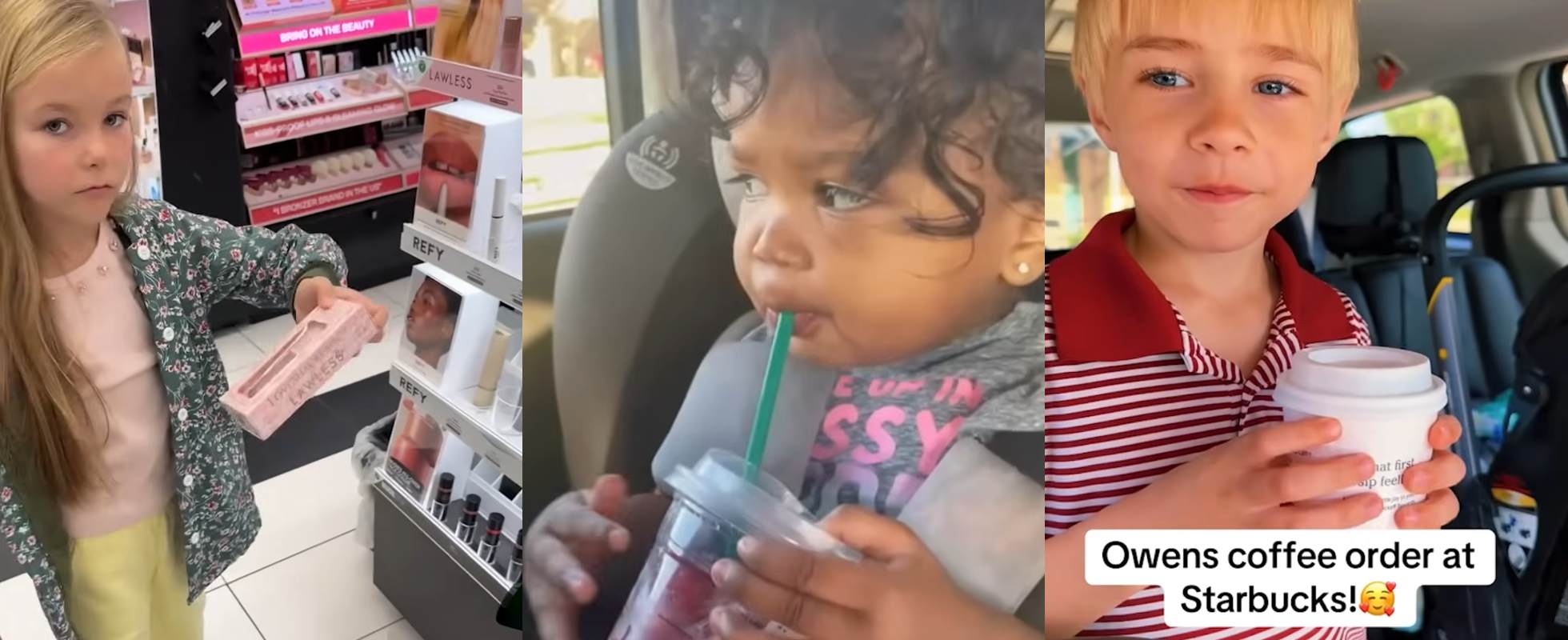
There was a time when a child’s brand loyalty meant wearing a Spider-Man t-shirt or begging for a Star Wars birthday cake. Today, that loyalty has been redirected toward Starbucks Frappuccinos, Sephora hauls, and Lululemon leggings, and the people leading the charge are often the parents themselves.
A disturbing trend has taken hold across social media, where parents are actively introducing their toddlers and young children to adult consumer brands and filming it all for views. The content ranges from mothers sharing their baby’s first Starbucks experience to children as young as five walking through Sephora hauls on camera.
In many cases, kids are being coached offscreen, handed products they cannot yet name, and turned into content before they can read.
The health consequences are real. Starbucks has quietly shifted its peak business hours from morning employee rushes to after-school afternoons, with Wednesday afternoons now among its busiest periods. Millions of children consume caffeinated beverages daily, with one in four parents reporting their child drinks caffeine every day.
For still-developing brains and bodies, that level of caffeine consumption carries risks including elevated blood pressure, sleep disruption, and anxiety. The sugar content in many of these drinks adds a separate layer of health concerns tied to obesity and type 2 diabetes.
Yet the brands themselves are not passive in this. While Starbucks claims its marketing targets adults between 18 and 54, the company maintains an official presence in Roblox, a platform whose player base skews heavily toward children.
Cosmetics companies have used colorful packaging and young influencers to plant themselves firmly in the minds of pre-teens, selling products that dermatologists and even the brands’ own FAQ pages confirm are not appropriate for young skin.
Italy has launched formal investigations into one major cosmetics company over its alleged targeted marketing to minors, and a new term, “cosmeticorexia,” describing an unhealthy obsession with skincare in children, has emerged in just the past five years.
The social media algorithm accelerates all of it. When a parent posts a video of a toddler ordering a Starbucks, comments flood in with excitement, not concern. That positive engagement signals to the algorithm that the content performs well, so it gets pushed further.
More creators follow, more parents feel social pressure to participate, and before long, a 12-year-old is openly stating she is “so a**icted that she’s literally unable to not give all of her money to Starbucks.”
Past children’s brands were designed specifically for young audiences, meaning children naturally grew out of them. Adult brands build loyalty that does not fade with age. It is not a phase. It is a foundation. And corporations know exactly what they are doing when they lay it.