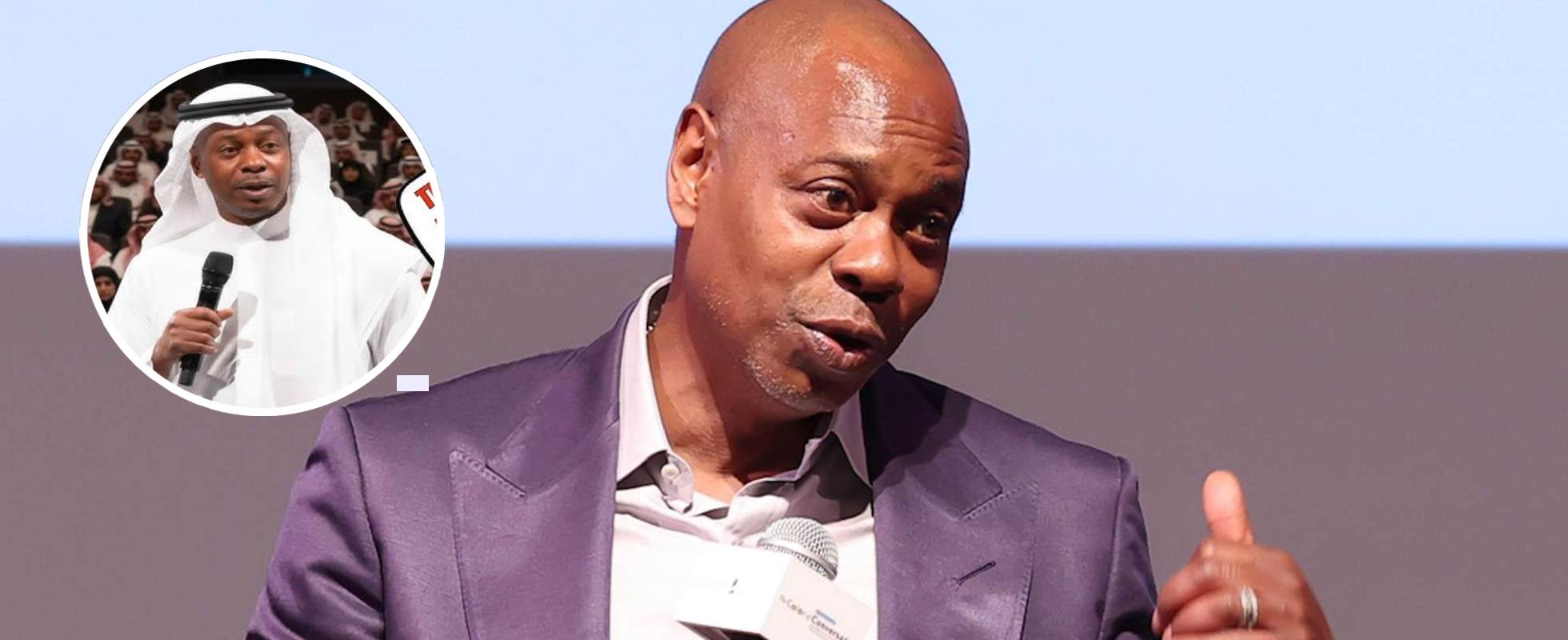
Dave Chappelle was recently confronted in an interview about a comment he made claiming it was easier to speak freely in Saudi Arabia than in the United States. When asked if that was true, Chappelle responded simply, “It was for me that night,” explaining that “the king said I can say whatever I want.”
The remarks come in the wake of his appearance at the Riyadh Comedy Festival, which drew significant public criticism. Rather than letting the controversy fade, Chappelle has continued addressing the backlash months later, drawing comparisons to how other performers, like Pete Davidson, simply acknowledged doing it for the money and moved on.
According to sources, during the interview, Chappelle was asked directly about the killing of journalist Jamal Khashoggi and whether he was aware of it before agreeing to perform. He confirmed he was, noting that he had previously turned down an invitation to perform in Saudi Arabia for that very reason.
He then shifted his argument: “The United States government does business with the Saudis. Netflix does business with the Saudis. Everyone, the Saudis financed tons of movies, all these things. And none of these things were an issue until I went there.”
Chappelle also brought race into his defense, saying, “As soon as a black man can make money off the plantation, they try to tell you that the money is dirty. Well, okay. I’ll go home and spend the money with actual slave owners on it.”
When pressed on what ultimately changed his mind about going, he said, “Time and circumstance. Time and the wheels of commerce kept turning. If you want to be that pure about money, then stop driving your car, stop eating, don’t use your cell phone. Everything is tethered to something that’s just terrible.”
Critics have pointed out the contradiction in his position. Chappelle has long presented himself as a free speech advocate, yet performed in a country that imprisons comedians and restricts expression in ways that far exceed anything happening in the United States. The argument that other corporations also do business with Saudi Arabia does little to address that specific inconsistency.
Comedian Dan Soder also weighed in on Chappelle’s decline, saying on a podcast, “He just felt like a rich friend that didn’t want to be funny,” and attributing much of the problem to the culture of yes-men surrounding him.
Chappelle, for his part, showed little sign of second-guessing himself, stating, “I don’t think that festival would have been legitimate if I wasn’t there,” a remark that many found more telling than anything else he said in the interview.