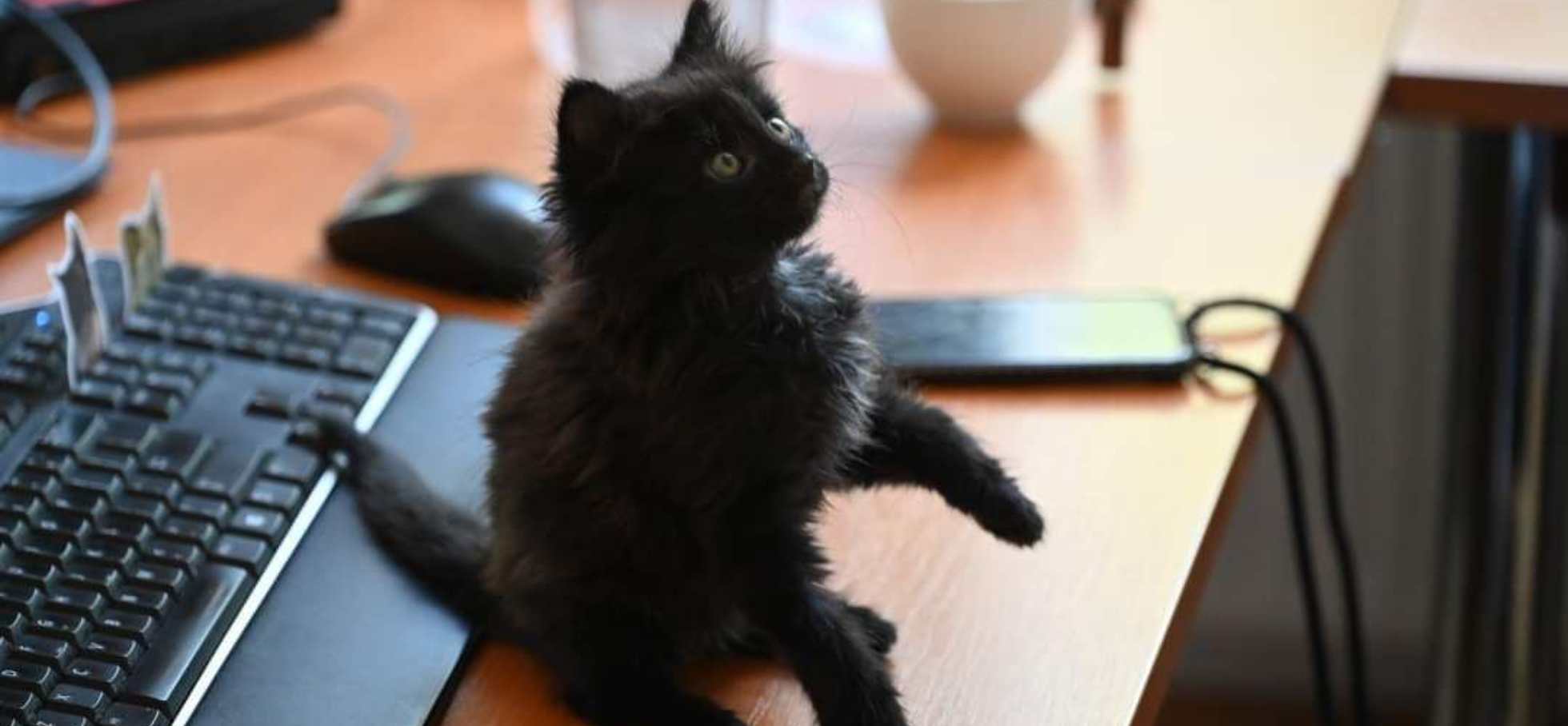
In what may be one of the most unusual political maneuvers in European history, a black cat named Nuodėgulis has become the unlikely guardian of Lithuania’s public broadcasting independence.
According to sources, the feline, whose name translates to “charred coal” in English, now holds veto power over the potential dismissal of Monika Garbačiauskaitė-Budrienė, the director-general of Lithuanian National Radio and Television (LRT). This peculiar arrangement emerged from a heated political standoff between the Lithuanian government and the country’s public broadcaster.
The controversy began in late 2025 when LRT, a publicly-owned broadcasting service similar to America’s PBS, underwent an audit. According to the State Audit Office, the investigation revealed “systemic risks to employees’ social guarantees,” excessive paid programming, and “shortcomings in public and program procurement.”
In response, the Lithuanian government proposed sweeping reforms to LRT’s operations, including provisions that would allow for the removal of Garbačiauskaitė-Budrienė from her leadership position. Opposition lawmakers, however, viewed these measures as politically motivated targeting of the director-general.
Their strategy to protect her took an unexpectedly creative turn. In an effort to obstruct the legislative process, opposition members submitted more than 100 amendments to the proposed changes. Among these was one particularly memorable provision introduced by lawmaker Agnė Širinskienė.
Širinskienė’s amendment stipulates that the LRT director-general can only be removed from her position if her pet cat, Nuodėgulis, issues a vote of no confidence. In a surprising twist, parliament voted in favor of the entire package of amendments, officially incorporating the cat’s approval into the legislative framework.
The absurdity of the situation has not been lost on Lithuania’s leadership. President Gitanas Nausėda addressed the matter with reporters, expressing his bewilderment at the turn of events.
“Veto it with the cat, or adopt it with the cat? What are we even talking about? Are we discussing a serious draft law that officially reaches the presidency, or are we telling jokes?” he remarked.
An initial parliamentary vote on the matter was scheduled for Thursday, December 18, but has reportedly been delayed until January after the chair of parliament’s culture committee was hospitalized.
Political observers suggest that the cat-related amendment will likely face presidential veto, though the delay tactics employed by opposition lawmakers have already succeeded in slowing the legislative process significantly.
Critics of the government’s proposed reforms argue that the aggressive pursuit of changes to LRT represents an attempt to exert control over the independent broadcaster. The opposition’s unconventional response, while seemingly humorous, underscores serious concerns about press freedom and governmental overreach in the Baltic nation.
For now, Nuodėgulis remains at the center of this political circus, his potential vote carrying weight that few household pets could ever claim. Whether the cat’s newfound authority survives the legislative process remains to be seen, but the story has already captured international attention as a testament to the sometimes strange intersection of politics and protest.
This incident joins a growing list of animals participating in political processes, including the annual Bike Path Mayor election in Somerville, Massachusetts, where 50 pets, including cats, dogs, a parrot, guinea pig, snake, and tortoise, campaign for the ceremonial position each year.