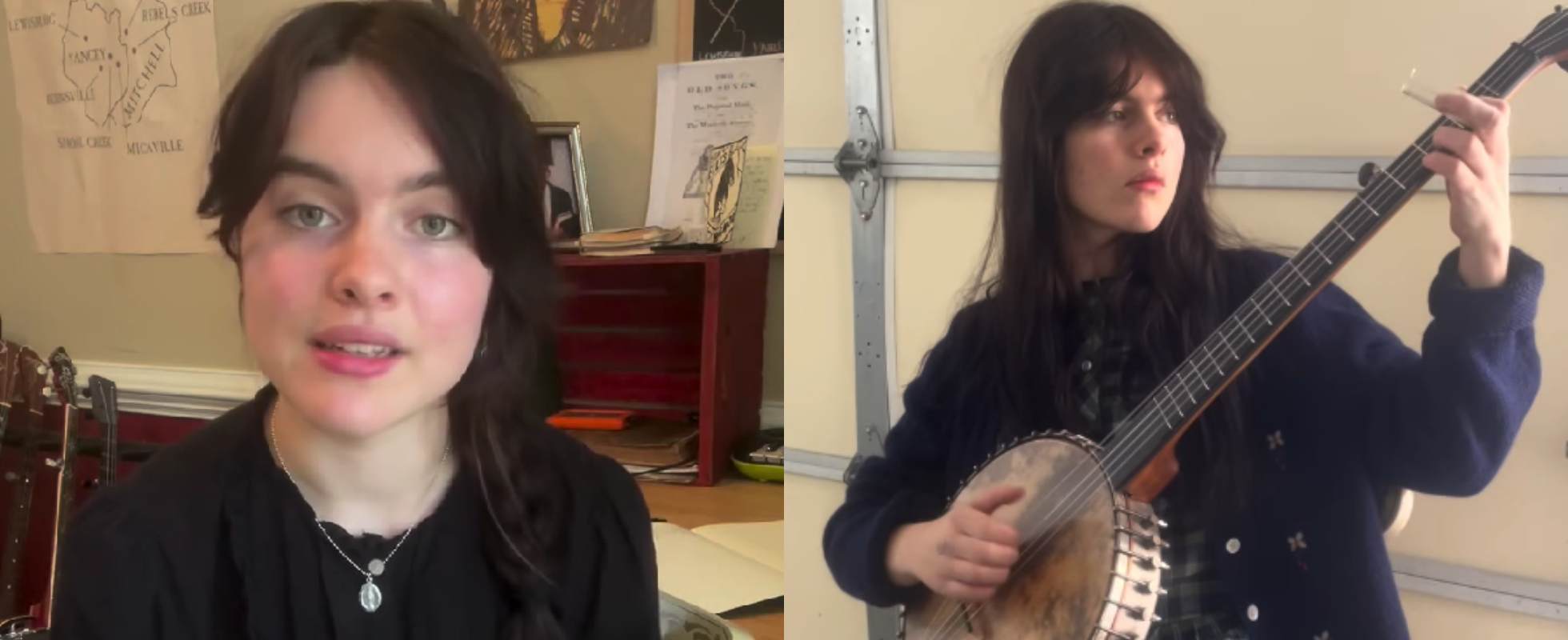
Folk musician Murphy Campbell found herself at the center of a major ordeal when an entity called Timeless Sounds IR uploaded AI-generated imitations of her music to every major music platform, then used her recordings to strip her of her own income.
According to sources, the scheme worked like this: someone fed YouTube videos of Campbell performing to an AI engine, which then replicated her voice and instrumental style. That fabricated music was then distributed across platforms using a company called Vydia.
Vydia then proceeded to file copyright claims against the original source videos on Campbell’s own YouTube channel, the same videos that had been used to teach the AI to sound like her in the first place.
“An entity called Timeless Sounds IR uploaded AI-generated versions of my songs to all major platforms,” Campbell explained in a video update to her followers. “And to do that, they fed YouTube videos of me to an AI engine that then mimicked my voice in playing.”
Because YouTube’s copyright claim system operates without individual human review of each dispute, Campbell’s channel was effectively handed over to Vydia’s financial control. “I am no longer making money on YouTube,” she said. “Vydia is making money on YouTube off of my own videos of me playing my own banjo in my own backyard with traditional folk songs, some for my own family, over AI-generated music.”
The situation left Campbell with almost no recourse. YouTube’s Content ID system places the burden of resolution on the parties involved rather than platform moderators, meaning Campbell could only appeal directly to the company that had filed claims against her.
“I can dispute it with Vydia,” she said. “Do you think Vydia is going to listen to me? I don’t think so.”
The public response was immediate and furious. Lawyers, fellow musicians, and supporters flooded the comments urging her to pursue legal action.
“This is a classic case of Digital Kidnapping and Copyright Fraud,” wrote one commenter. “You need to hit Vydia with a formal Cease and Desist immediately. They are liable for distributing that fraudulent AI content.”
NEW: Musician Murphy Campbell says she isn’t making money on YouTube because an AI company is cloning her music and filing copyright claims against her own videos
“An entity called Timeless Sounds IR uploaded AI-generated versions of my songs to all major streaming platforms…… pic.twitter.com/GUf09zRuJi
— Unlimited L’s (@unlimited_ls) April 4, 2026
Others pointed out that the problem extends well beyond Campbell’s case. One commenter described having an entire channel created in their likeness without consent: “Someone created a YouTube channel that used an AI copy of my voice, used AI to rewrite my scripts, and then added all sorts of details that weren’t real to make the stories more suspenseful. YouTube did nothing.”
YouTube’s dispute process places enormous trust in whoever files the claim, with little built-in protection for independent artists who lack legal resources.
Legal experts in the comments urged Campbell not to stop at a simple dispute. “That ‘label’ who created these illegal derivatives needs to be banned from the platform and sent DMCA takedowns,” wrote one attorney following the case.
Campbell also took care to clarify for confused followers: “None of the videos up on my YouTube Channel ‘Murphy Campbell’ are AI generated. Some folks here have misunderstood and suggested boycotting my YouTube channel believing that it’s the one sharing AI slop. That’s a misunderstanding.”
After Campbell’s video spread widely online, Vydia reversed course entirely and withdrew every copyright claim.
“Yes, that’s AI-generated music for y’all, and these are the consequences of using it,” Campbell said. “So if this looks like a bright future, I’d reconsider.”
Shortly after the situation gained traction online, Campbell shared another update with followers on social media. She explained that the original video discussing the dispute had been removed from several platforms due to a copyright infringement complaint.
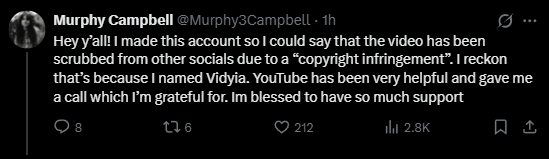
Despite the takedowns elsewhere, she noted that YouTube had been supportive throughout the process and even reached out to her directly, expressing gratitude for the platform’s assistance and for the wave of public support she received.