
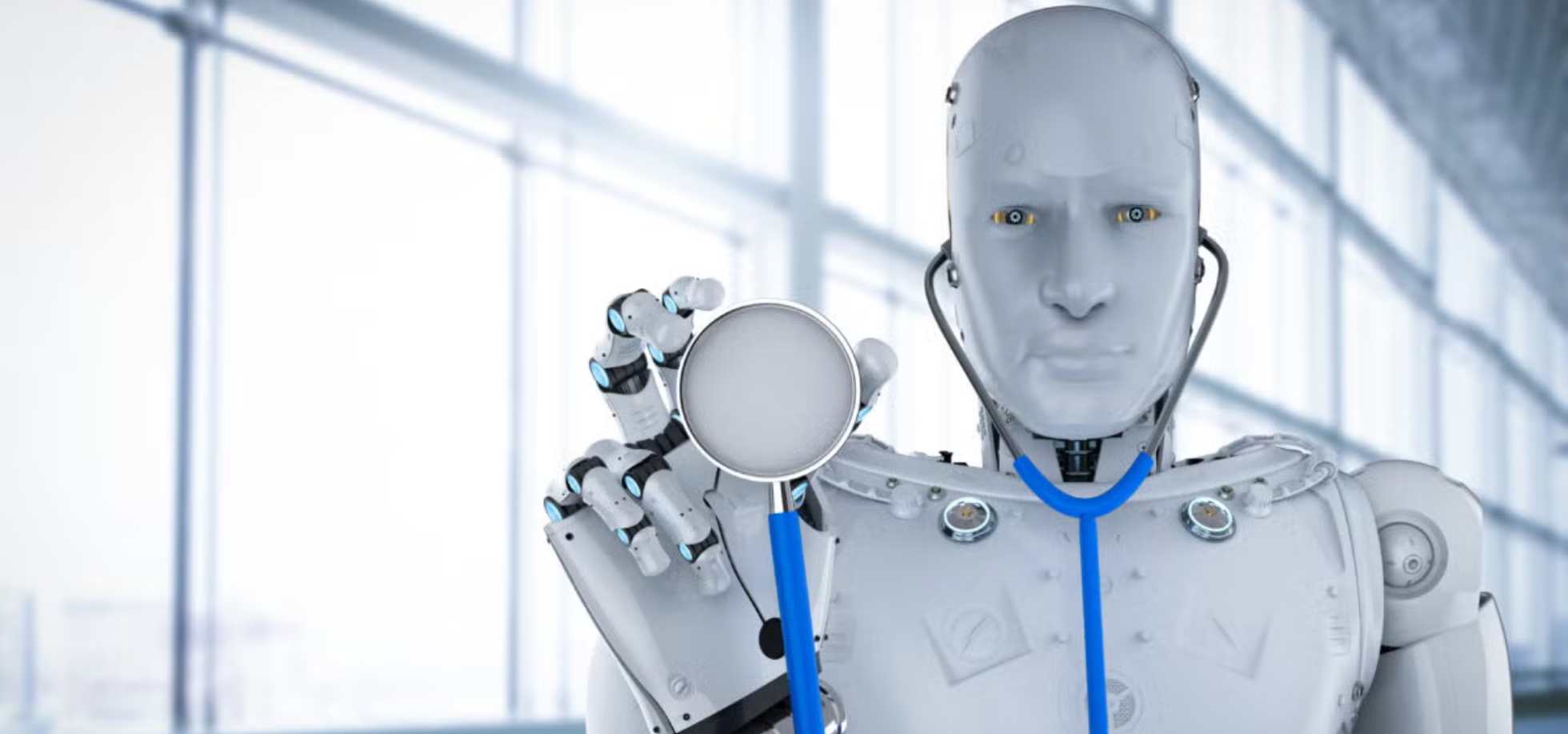
Artificial intelligence may soon revolutionize healthcare as researchers from Tsinghua University in China have developed a virtual hospital system where AI doctor agents outperform human physicians in diagnostic accuracy. The groundbreaking study, titled “Agent Hospital,” demonstrates how large language models can learn medical expertise by treating thousands of simulated patients without any manually labeled training data.
The Agent Hospital system creates a complete simulation of hospital operations, where patients, nurses, and doctors are all autonomous AI agents. These agents navigate through realistic medical procedures including triage, consultation, examination, diagnosis, and treatment planning.
The research team, led by Junkai Li, Siyu Wang, and colleagues from Tsinghua University’s Institute for AI Research, designed the system to mirror real-world healthcare processes with remarkable detail.
What makes this research particularly significant is the MedAgent-Zero strategy, which allows doctor agents to continuously improve their medical knowledge through experience. The system simulates eight respiratory diseases including COVID-19, Influenza A and B, and various bronchial conditions. As doctor agents treat more patients, they accumulate successful case records and learn from diagnostic errors through a reflection process.
The results demonstrate impressive learning capabilities. After treating approximately 10,000 virtual patients, an amount that would typically take a human doctor over two years to encounter,the AI doctor achieved accuracy rates of 88% in examination decisions, 95.6% in diagnosis, and 77.6% in treatment recommendations within the simulated environment.
Perhaps most remarkably, when tested on real-world medical examination questions from the MedQA dataset, the evolved AI doctor achieved 93.06% accuracy on respiratory disease questions. This performance surpasses human expert physicians, who typically score around 87% on the same evaluation. The AI accomplished this without any manually labeled training data from actual medical cases.
The system works through two key components: a Medical Record Library that stores successful diagnoses and treatments, and an Experience Base that captures lessons learned from incorrect decisions. When facing a new patient, the AI doctor retrieves relevant historical cases and accumulated principles to inform its diagnostic reasoning.
The simulation environment includes 16 distinct hospital areas with 14 doctor agents and 4 nurse agents, each with specialized roles and expertise. Patient agents are generated with realistic demographic information, symptoms, and disease progressions. The system tracks how patient conditions evolve based on treatment effectiveness, requiring follow-up visits if conditions worsen or allowing recovery if treatments succeed.
This research represents a significant advancement in applying AI to healthcare. Traditional approaches to developing medical AI systems require extensive manually labeled datasets or supervised fine-tuning. The MedAgent-Zero strategy instead enables continuous learning through simulated practice, similar to how human doctors develop expertise over time.
The study’s findings suggest that simulation environments can effectively train AI agents for specialized tasks. The medical knowledge accumulated within Agent Hospital proved transferable to real-world medical evaluations, indicating the system learns generalizable diagnostic principles rather than simply memorizing patterns.
While the current implementation focuses on respiratory diseases, the researchers plan to expand the system to cover more medical conditions and departments. They also aim to enhance the social simulation aspects, including promotion systems for medical professionals and dynamic disease distributions that change over time.
The research does acknowledge limitations. The system currently relies on GPT-3.5 as its base model, and the efficiency is constrained by language model generation speeds. Additionally, while the simulated health records closely mimic real electronic health records, some discrepancies with actual clinical data may exist.
This development arrives as healthcare systems worldwide face increasing pressure from growing patient populations and limited medical resources. AI doctor agents that can achieve expert-level diagnostic accuracy could potentially assist human physicians, reduce diagnostic errors, and improve patient outcomes. However, the researchers emphasize that their work focuses on demonstrating the viability of simulation-based AI training rather than immediate clinical deployment.