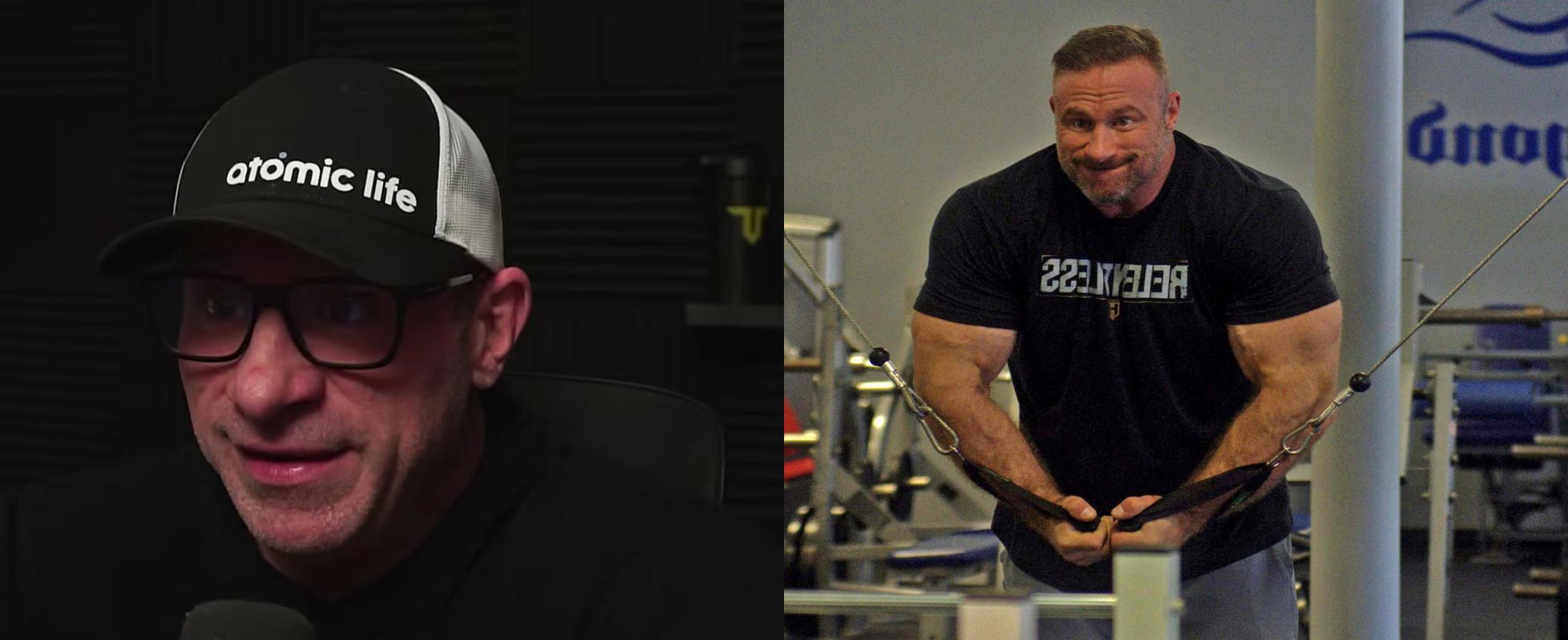
Bodybuilding coach Justin Harris recently shared his approach to appetite stimulation through strategic peptide use. Drawing from decades of experience working with top IFBB pros and Olympians, Harris talked about it in a recent podcast with Nyle Nayga.
When addressing severe appetite suppression in athletes, Harris outlined a specific protocol combining two powerful compounds.
“If you really need to eat, if you can’t eat, if you do 25 or 50 milligrams of MK687 and then you do 500 micrograms of GHRP6 intravenously 10 minutes before three meals of the day, you will absolutely be able to eat,” he explained.
The protocol involves precise timing for maximum effect. Harris recommends intravenous administration of GHRP6 approximately 10 minutes before meals to trigger immediate hunger response.
Harris notes that this represents a short-term solution for athletes experiencing severe appetite suppression.
“That would be a short-term protocol for someone who had their appetite absolutely ruined to where they’re eating like 800 calories a day when they need 4,500,” Harris clarified.
Beyond peptides, Harris advocates a measured approach to performance enhancement. His baseline recommendation centers on injectable compounds, with testosterone serving as the foundation. “Stick to injectables and pick an anabolic you prefer: EQ, deca, NPP, maybe masteron, and run that at about 80 percent of your test dose,” he advised.
For typical protocols, Harris suggests approximately 1,000 milligrams of testosterone paired with 800 milligrams of a mild anabolic like primobolan. This ratio, he argues, eliminates most estrogen management concerns while maximizing growth potential with minimal side effects.
During the conversation, Harris also emphasized the importance of blood pressure management throughout athletic careers. “If you have high blood pressure, get it treated,” he stated firmly. His preference leans toward ACE inhibitors or ARBs as first-line treatments, citing their protective effects on kidney function.
The coach highlighted a common pathway to serious health complications in bodybuilders: chronic hypertension leading to renal failure, followed by congestive heart failure and ultimately pulmonary edema.
“That’s really the core of it,” he explained, urging athletes to prioritize cardiovascular health alongside performance goals.
Perhaps most striking was Harris’s perspective on actual muscle protein synthesis rates. Through mathematical analysis, he calculated that gaining 10 pounds of muscle in a year requires synthesizing only about five grams of protein daily when accounting for the fact that 70 percent of muscle mass consists of water and glycogen rather than contractile tissue.
This realization shaped his views on protein requirements and training volume. “Unfortunately, I think training is for performance, but PEDs and nutrition are for hypertrophy basically,” he admitted.
While Harris built his reputation helping athletes add substantial size, his methods prioritize longevity and health alongside performance. “We’re all going to pass away,” he reflected. “I just wish people enjoyed life more and were less destructive to themselves in pursuit of their goals.”