Chinese women who spent thousands on courses teaching them to attract wealthy husbands are discovering that gazes and calculated poses don’t guarantee financial security through marriage.
Chinese influencer Zhou Yuan built an empire on this promise. The 46-year-old mother of two from Changsha branded herself as China’s foremost expert in what she called “s*xual intelligence.” Her Black and White S*xual Intelligence Academy earned over 24 million yuan by teaching women exaggerated poses and suggestive language packaged as charm enhancement.
“Show them your gaze and form an X with your body,” she said in a video, while teaching what she calls the ‘k iller gaze.’
Students practiced this gaze in videos that went viral for all the wrong reasons. One clip showed a student joking about using the technique on her professor to avoid completing her thesis. Commenters suggested she’d more likely lose her degree than gain favor.
The business model followed a calculated three-stage process. First, draw customers in with 9.9 Yuan trial courses and provocative short videos. Her follower count jumped by 55,000 in 30 days.
Next, sort customers into tiers ranging from 99 Yuan basic courses to an 88,000 Yuan mentorship package promising to make women “irresistible.” Finally, upsell adult products and medical beauty treatments at prices two to three times market rates.
Offline camps cost between 2,999 and 4,880 Yuan for multi-day sessions. Former student described the content as explicit, bordering on inappropriate material, yet marketed as women’s empowerment and healing. The academy ran more than ten camps monthly, primarily at a Changsha base with expansion into cities like Xiamen and Tianjin.
Zhou Yuan’s most cynical strategy involved double-dealing. She taught mistresses how to formalize their relationships while simultaneously advising worried wives on keeping their husbands. She profited from both sides of troubled marriages, targeting women aged 35 to 50 with marriage anxieties.
Estimates suggest she taught tens of thousands, possibly exceeding 100,000 students total. Most were stay-at-home wives or traditional women lacking financial and emotional independence. They saw her courses as final hope.
The reality proved different. Students reported their partners grew more distant. In some cases, the training accelerated divorce rather than preventing it.
Authorities finally intervened. On January 22nd, China Women’s News published criticism charging Zhou Yuan with treating women as objects and reducing their worth to tools for pleasing men. Her main Douyin account received a permanent ban that same day.
By January 30th, the Market Supervision Administration in Yuhua District, Changsha, launched an official investigation, ordering immediate cessation of all online and offline activities.
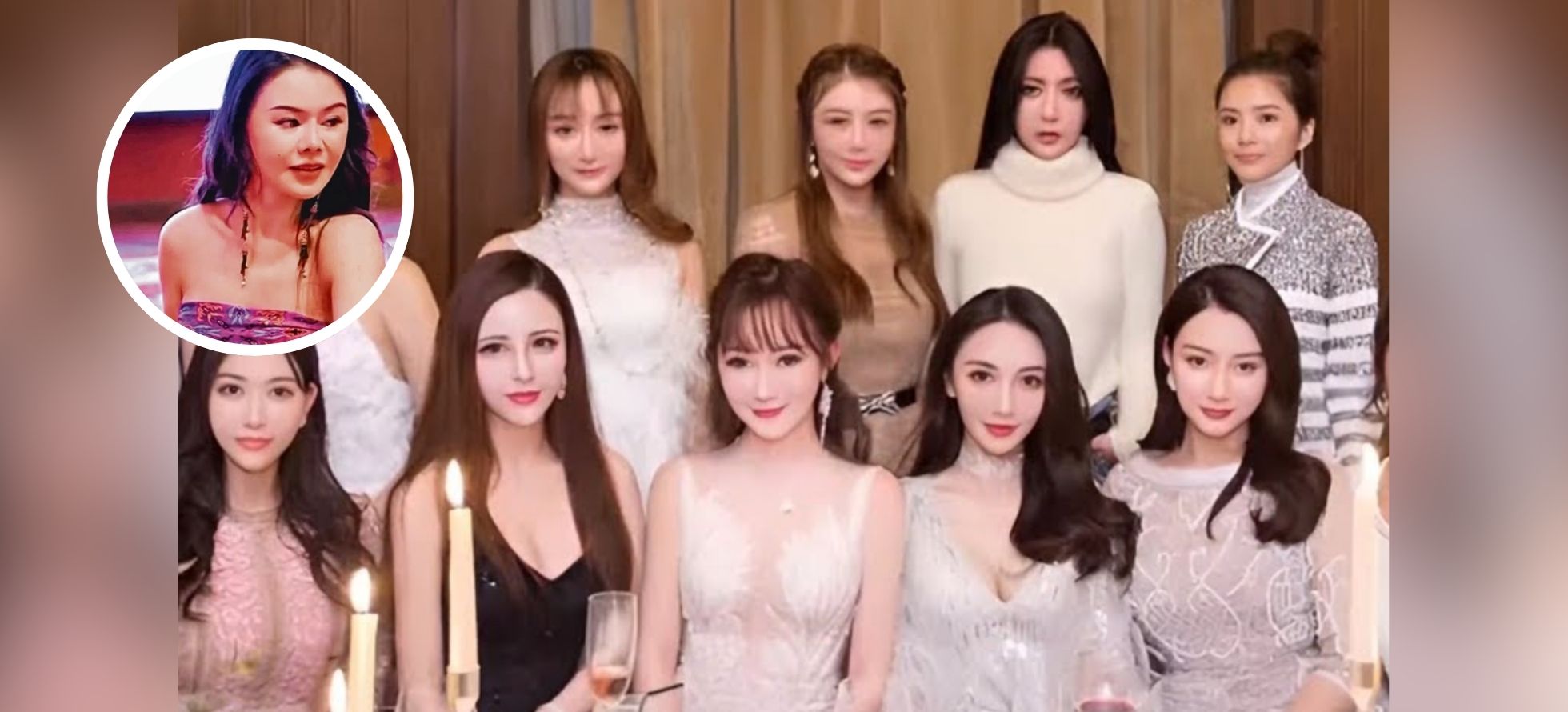
Zhou Yuan represents just one node in this industry. Sister Amy’s socialite training program, exposed by billionaire heir Wang Sicong in 2017, followed similar patterns. Amy, born Hu Manyu, transformed from TV producer to matchmaker to wife factory operator. She operated $2000 bootcamps to teach women how to marry rich men.
Her program required cosmetic surgery at specific clinics, earning her 20% commissions totaling nearly 1 million yuan monthly. Students shared clothes, bags, and hotel rooms to stage luxury lifestyles for social media. They learned conversation scripts, networking tactics, and strategies for converting affairs into official relationships, including using pregnancy as leverage.
The industry’s poster children now serve as cautionary tales. Ye Ke’s relationship with actor Huang Xiaoming initially seemed to validate these programs. Her carefully constructed online persona embodied everything these courses teach.
But when her cake-tasting video went viral, her excessive use of English phrases and manufactured refinement felt fraudulent rather than sophisticated.
A financial analyst examined the business model and concluded it operates as an anxiety monetization loop. “It doesn’t create any long-term appreciating assets such as professional knowledge or core skills,” the analyst explained. “Results depend on external evaluations specifically based on others’ preferences, which makes it purely a consumable expenditure.”
When financial times were better and wealthy men spent freely, these programs had a market. Now that boom has ended. The women who invested in these shortcuts find themselves aging, single, and facing uncomfortable truths about wasted time and money.