
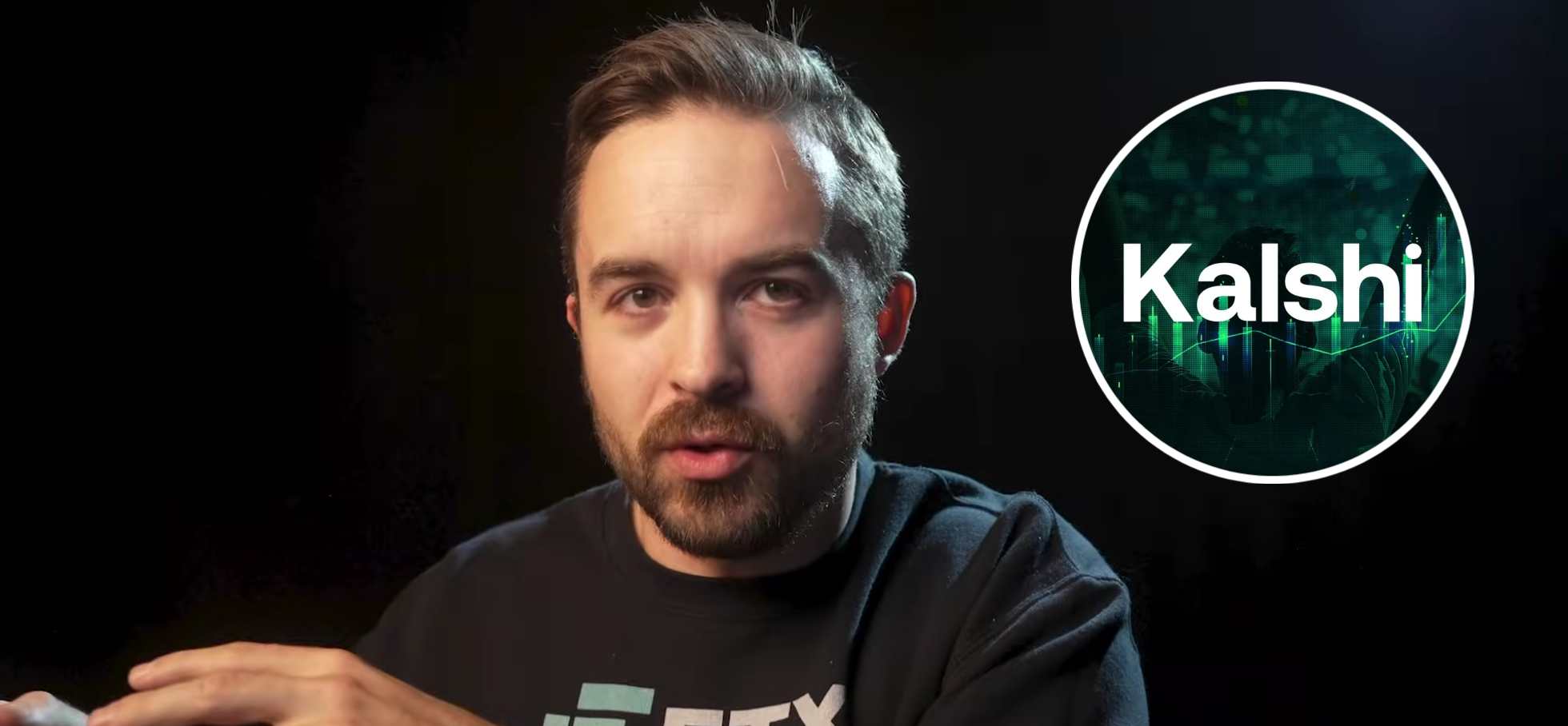
Popular investigative YouTuber Coffeezilla has launched a critique of prediction market platform Kalshi, accusing the company of marketing sports wagering while simultaneously maintaining they operate a federally regulated exchange rather than a traditional sportsbook. He talked about it in a recent YouTube video.
The controversy centers on Kalshi’s recent introduction of “combos,” a feature that allows users to combine multiple positions for higher payouts. Coffeezilla notes this mirrors the “parlay” system widely used in sports wagering, merely rebranded with different terminology.
“They just rebranded it and they now call it trading instead of gambling, combos instead of parlay,” he explains in his recent video.
The YouTuber draws parallels to the Galaxy nitrous oxide situation, where companies sold products under legal loopholes while maintaining the illusion of legitimate culinary use. Similarly, he argues, prediction markets claim to serve as “oracles for truth” while following the playbook of traditional sportsbooks.
What particularly concerns Coffeezilla is the integration of these platforms into financial “super apps” like Coinbase and Robinhood. These companies position themselves as comprehensive financial management tools, with Coinbase stating their goal is to be “the most trusted place to manage your entire financial life.” Yet they simultaneously offer services that Coffeezilla argues will harm users’ financial futures.
“It’s like saying, ‘Hey, I want to be the health super app,'” he analogizes. “I’m going to offer x-rays if you break your arm. I’m going to offer you carrot juice if you need vitamin A. But then you say, I’m also going to offer junk food and oxycodone out of the back office.”
The critic emphasizes a fundamental distinction between long-term investing, which historically provides positive expected returns, and prediction markets, which he characterizes as negative-sum games once fees are factored in. Using simulations, he demonstrates how negative-sum environments inevitably drive balances to zero over time.
Kalshi’s advertising has become particularly contentious. One promotional video explicitly states: “Yeah, it’s legal now. You can make money from football in all 50 states.”
Another ad shows someone asking, “Wait, how did you win money? Isn’t it illegal to bet on sports in Georgia?” The response: “That’s the thing. It’s not gambling. Kalshi is a federally regulated exchange.”
Coffeezilla also highlights the lack of consumer protections compared to traditional sportsbooks. While established platforms must offer self-exclusion options by law, prediction markets face no such requirements.
The situation extends beyond Kalshi, with Coffeezilla noting that Roblox‘s CEO has even considered implementing prediction markets for children on the platform, though framed as potentially “educational.”
“Your bank has become your bookie,” Coffeezilla summarizes, expressing frustration at what he sees as a dangerous trend in financial technology.