
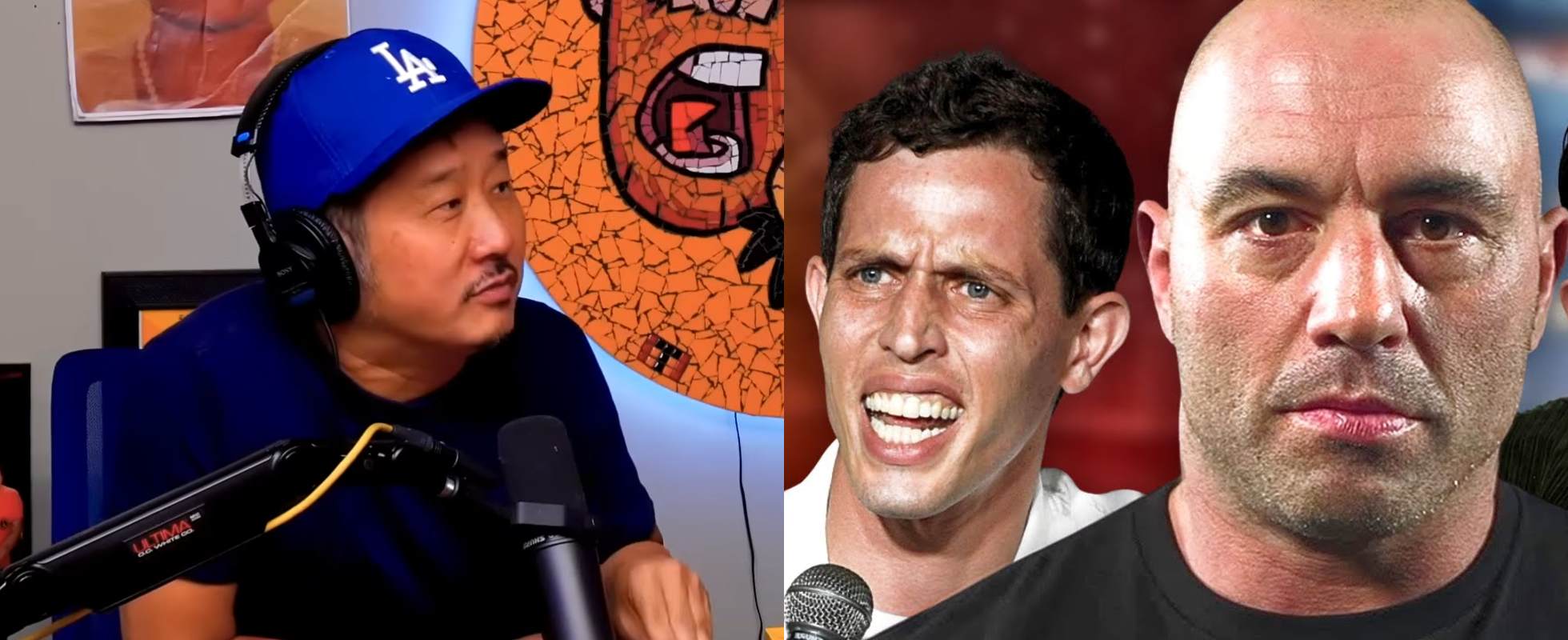
Recently, comedian Bobby Lee has made some comments directed at a specific corner of the comedy world. Anyone who has followed the conversations closely can see where the criticism is pointed, even if Lee often stops short of naming names.
The topic came up during a conversation with comedian Ari Matti, when the discussion turned toward the increasing casual use of slurs in certain comedy circles. Matti suggested that hearing a comic casually drop the N-word around him could feel like a strange form of acceptance or trust.
Lee, however, wasn’t convinced.
“I’m not with what you guys are doing in Austin,” Lee told Matti. “Well, let’s be real. I don’t like some of the words you guys use freely.”
When Matti asked him to clarify what he meant, Lee didn’t hesitate.
He stated: “It’s like edge lord st. It’s becoming so hacky to me that people, you guys use these words just for the s**ck factor. I’m just not into it. You know what I mean?”
Matti partly agreed with the criticism while explaining his own boundaries when it comes to language in comedy.
Bobby then replied: “I think the R word sometimes in a joke maybe, right?… But I would never say the N word in any environment except when I’m alone. The F word I normally use ever. You know what I mean?”
Lee then made an observation that pushed the conversation further. He said, “And I see Austin comics use it regularly.”
Matti responded with a dry joke that hinted at how normalized the behavior has become within certain circles. He stated, “It’s in the contract. If you want to play in Austin, it’s in the contract.”
Lee has longstanding relationships with many comedians who eventually moved to Austin, and he openly acknowledges that the podcast ecosystem, including Joe Rogan’s sphere, helped elevate his own career. Still, he has become increasingly critical of what he views as a kind of performative edginess that now dominates parts of that scene.
Another shift Lee has been vocal about is the growing belief that popularity, whether measured in ticket sales, YouTube views, or podcast downloads, now determines who counts as a “great” comedian.
During a recent appearance on Marc Maron’s WTF podcast, the two discussed how this mindset can shut down meaningful criticism within comedy.
Maron described the culture bluntly: “If you rail any criticism of YouTube comics, Matt Wright, or anybody, the legions of meatheads who call themselves comedy fans based on the competitive nature of what’s been established by the Austin school, you get this sports-like attitude. It’s like you can’t sell that many tickets. You’re not as funny. This deciding tone of what is and isn’t funny is such [expletive] because the best comics, the most interesting people, almost no one knows.”
Lee agreed with the sentiment and recalled a moment that genuinely unsettled him while watching a fellow comedian perform in a stadium setting. Without naming the comic involved, he described witnessing a moment that felt more like a concert than a stand-up show.
Lee stated: “I remember seeing, I don’t want to say his name. But I saw a guy, a friend of mine. And he, you know, after a set, he’s in a stadium and he tells everyone to pull out a lighter or a, you know what I mean, camera, right? And he’s just kind of on stage like almost like a photo, right? And everyone’s standing, you know what I mean? Almost worshipping him. And I vomited on my phone. I literally had a reaction to it. I’m like, what are you doing?”
Online speculation quickly centered on Tony Hinchcliffe, whose arena-sized comedy shows have produced images similar to the moment Lee described. Lee himself, however, never identified the comedian directly.
Part of Lee’s perspective comes from the fact that he has been in the business for decades. When Hinchcliffe was working as a door attendant at the Comedy Store in the late 2000s, Lee had already spent years building a career in stand-up, television, and film. He watched that generation of comedians try to break through in Los Angeles before many of them eventually relocated to Austin.
In an earlier conversation with Andrew Santino, Lee reflected on what he saw as a different set of ambitions among some of those comics. He stated, “Those guys, they don’t have dreams. They don’t want to like get on a movie or TV or act, right? They’re not actors.”
He also recalled hearing Hinchcliffe express frustration with the industry during those early years. Lee said: “He’s had said stuff like I can’t get anything.”
Lee has also talked about the attitude shift he sometimes notices when comedians who moved to Austin return to Los Angeles. On Bad Friends, he described one interaction that left him surprised by the confidence some comics bring back with them.
“They come up back to LA, one guy, I don’t want to name his name, and go, ‘Oh, you seem like you’re thriving out.’ He goes, ‘I’m k*lling it.’ You know what I mean? And I’m like, whoa, whoa, whoa, dude. Because you couldn’t survive here. This is a different animal.”
Despite these criticisms, Lee’s relationship with Joe Rogan remains notably friendly. Rogan has publicly supported him on multiple occasions, including during a tense period involving threats from other comedians.
The two have also joked about Lee’s reluctance to move to Austin. When Rogan teased him about previously saying he would never relocate, Lee admitted there was some resentment behind that stance.
“You have to understand what you guys did,” Lee told Rogan. “You guys took half of the talent out. So I was just b*tthurt.”
Rogan argued that Austin has since developed its own pipeline for producing new comedians, though Lee didn’t sound entirely convinced.
Even so, Lee hasn’t distanced himself from the scene entirely. He still collaborates with many comedians connected to the Austin ecosystem and is currently preparing to promote his first full comedy special for Hulu, which was filmed earlier this year.
As Lee recently put it, he sees himself occupying a somewhat unusual position within the modern comedy landscape. “I’m still kind of a part of that. Like my ecosystem, there’s a lot of bro. But there’s a little bit of Marc Maron in me too, though,” he said.


