The relationship between artistic inspiration and appropriation has long been a thorny subject in cinema, but few cases illustrate this tension as starkly as the career trajectory of Darren Aronofsky. The director, celebrated for films like Requiem for a Dream, Black Swan, and The Whale, now finds himself at the center of a firestorm over his latest venture into artificial intelligence-generated entertainment.
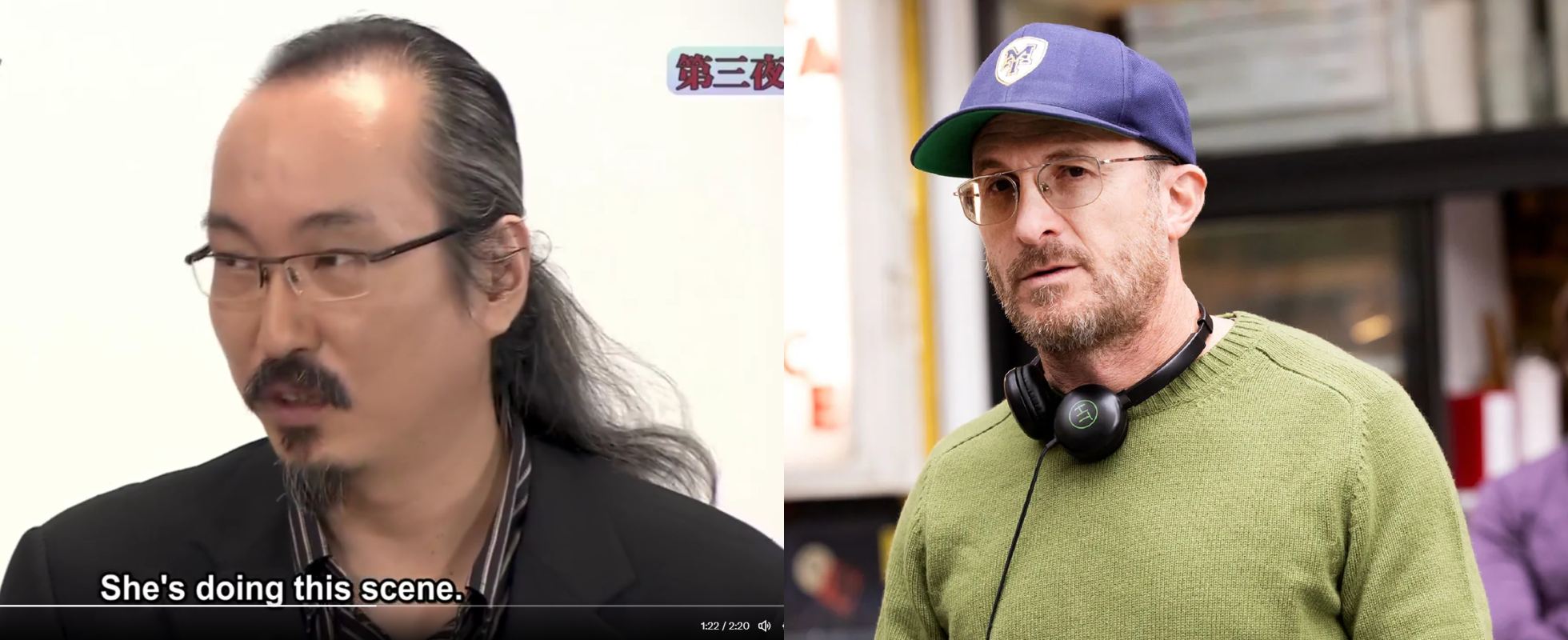
In a recent conversation, acclaimed animator Satoshi Kon recounted his encounter with Aronofsky when the American director visited Japan. He said: “Aronofsky is supposedly a real fan of the movie [Perfect Blue]. And I actually got to talk to him when he came here for Requiem for a Dream.”

Kon had just watched ‘Requiem for a Dream’ and immediately recognized something troubling. Two specific sequences from his 1997 psychological thriller ‘Perfect Blue’ appeared nearly identically in Aronofsky’s 2000 film.
The scenes in question show a character submerging their face in bathwater, filmed from an overhead angle, followed by an underwater perspective as they struggle beneath the surface. Kon said, “I watched Requiem for a Dream before that talk and this cut where she’s submerged her face in the bath… And he used these two cut scenes, the same angle and pose and everything. Yes, they are in Requiem for a Dream.”
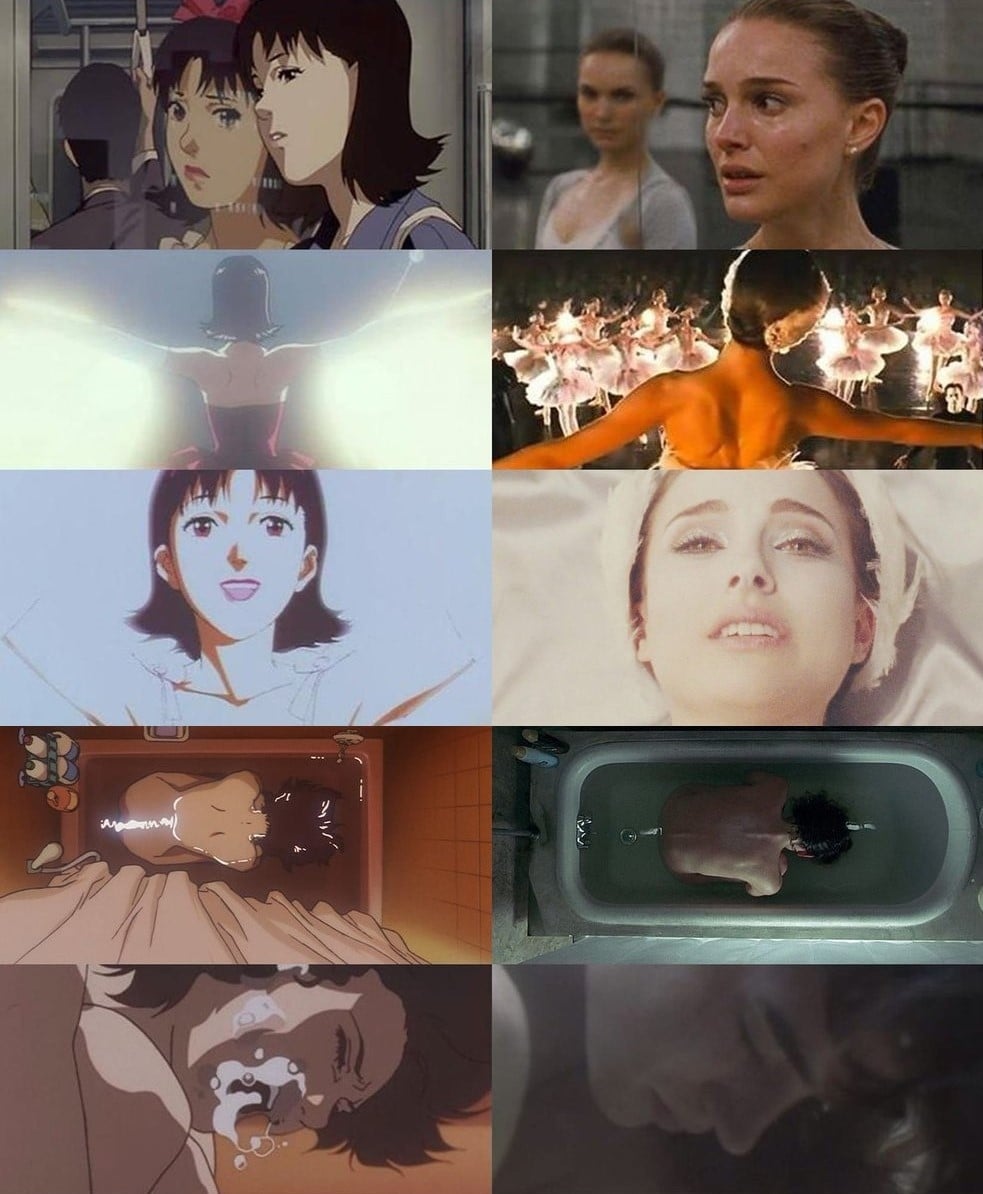
When Kon confronted Aronofsky directly, the American filmmaker’s response was that it was homage. He explained, “When I asked him about it, he said it was an homage.”
“An homage to me,” Kon repated with evident frustration.
But the similarities extended beyond these bathroom sequences. Kon observed that ‘Requiem for a Dream’ featured an elderly woman obsessed with appearing on television who eventually experiences delusions of people emerging from her TV screen.
The character’s fantasy culminates with her wearing a bright red dress. These narrative and visual elements closely mirror Perfect Blue’s exploration of media obsession and psychological breakdown.
When the host says that there’s an overlap between the scenes of Kon and Aronofsky, Kon suggested that it’s something more problematic than flattery: “Overlaps or flattery?”
Satoshi Kon talks about how Requiem for a Dream took from his film Perfect Blue (1997) pic.twitter.com/apBQtPoY0W
— Animation Obsessive (@ani_obsessive) January 30, 2026
This pattern of borrowing now takes on new significance given Aronofsky’s current project. The filmmaker recently unveiled a trailer for “On This Day 1776,” a series created entirely through artificial intelligence generation. While the production employs SAG-affiliated voice actors, every visual element comes from AI tools trained on existing artwork and media.
The backlash has been swift and severe, with numerous social media users criticizing it. Time Studios President Ian Betanti defended the series, claiming it demonstrates “what thoughtful, creative, artist-led use of AI can look like. Not replacing craft, but expanding what’s possible and allowing storytellers to go places they simply couldn’t before.”
Yet critics remain unconvinced. The visual quality has drawn particular scorn, with character designs described as unsettling and resembling low-quality social media content rather than professional production. More fundamentally, observers question whether the series achieves anything that traditional methods using sets, costumes, and makeup couldn’t accomplish.
The controversy centers on several interconnected concerns. Many view the project as proof of concept for replacing traditional creative positions with automated systems to reduce costs. Others emphasize that AI-generated content cannot be truly original since it derives from training data built on existing works created by human artists. The decision to include human voice actors appears strategic, allowing proponents to claim the series isn’t entirely machine-generated despite the visual content being wholly artificial.
For Aronofsky, the irony is inescapable. A filmmaker who once defended lifting sequences from another artist’s work as “homage” now champions technology that systematically processes and recombines countless artists’ creations without attribution or compensation.
As @TSoS_ wrote: “Okay yeah, I just turned from one of Aranofsky’s biggest defenders into his biggest hater.”