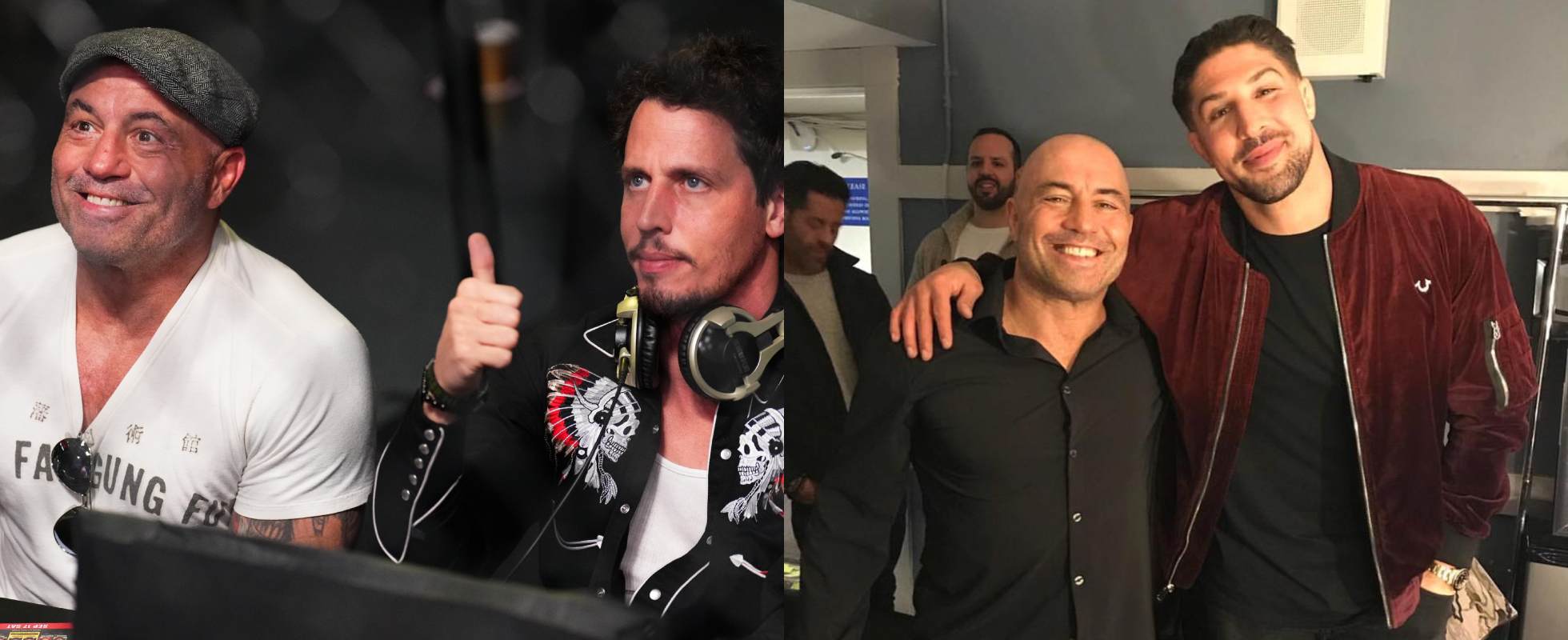
Over the last decade, a strange pattern has emerged within the orbit of Joe Rogan‘s influence. Comedians who built their careers on the back of his platform, like Brendan Schaub, Bert Kreischer, and Tony Hinchcliffe, each followed a similar arc. They rose with Rogan’s help, became widely liked, and then gradually became the targets of a dedicated community of critics who found more entertainment in tearing them down than in watching them perform.
Brendan Schaub is the clearest example. A former UFC athlete who transitioned into podcasting and standup with genuine goodwill from audiences, Schaub seemed like a natural fit for the comedy world. That goodwill evaporated after a string of failed standup specials, plagiarism accusations, and a very public falling out with former friends.
The backlash outgrew the niche comedy forums it started in and became something else entirely: a cottage industry. YouTube channels were generating real income, built entirely around Schaub criticism. As one commentator put it, “The most entertaining thing about Brendan Schaub is when people are making fun of him.”
Bert Kreischer followed a different but parallel path. His entire persona was built around one story, a heavily embellished account from a college trip to Russia. Joe Rogan himself told Bert to tell that story at every show, and Bert listened. For years it worked.
But as his profile grew, so did the scrutiny. Audiences started noticing the constant interruptions, the stories that felt unreliable, and the drinking that shifted from personality quirk to genuine concern.
Tony Hinchcliffe presents the most complex case. Undeniably sharp as a roast comic, Hinchcliffe built Kill Tony into a genuinely successful show. But his handling of peak moments, particularly after the Tom Brady roast, left a sour impression on people who were just getting to know him.
Instead of letting the work speak for itself, he leaned hard into self-promotion. “They gave a hungry wolf a chance at showing what I can do,” he said publicly, and that kind of posturing turned away the very audience he had just earned.
The common thread through all three is Rogan. None of them reach this level without his platform. But that platform also came with an audience paying very close attention. And once an audience decides it is more entertaining to criticize than to cheer, the performer has very little say in what comes next.