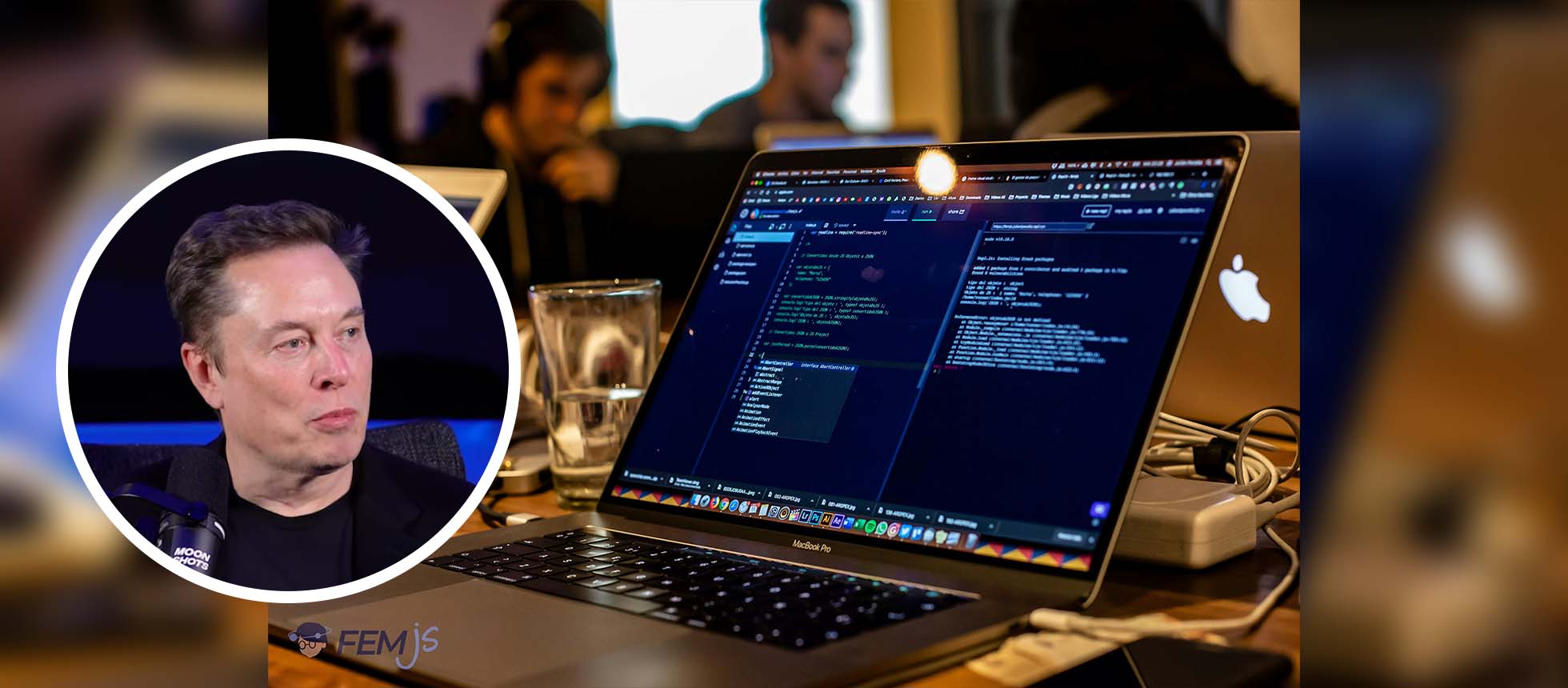
In a wide-ranging conversation at Tesla’s Austin Gigafactory, Elon Musk delivered stark predictions about artificial intelligence’s impact on employment, stating that white collar workers will be the first casualties of the AI revolution, not the last.
“The white collar labor will be the first to go.”
“Until you can move atoms, the thing that can be replaced first is anything that involves just digital. If it involves tapping keys on a keyboard and moving a mouse, the computer can do that.”
Musk explained that physical manipulation requires humanoid robots, creating a temporary buffer for manual labor.
“You need the humanoid robots to shape atoms. So if all you’re doing is changing bits of information, which is white collar work, that is the first thing that will be replaced.”
When pressed on timing, Musk stated:
“I’d say you’re pretty close to being able to replace half of all jobs right now.”
He emphasized this includes anything like education and anything that involves information.
The Tesla and SpaceX CEO acknowledged the transition will be turbulent.
“My concern isn’t the long run. It’s the next three to seven years. The transition will be bumpy. You will have universal high income and social unrest simultaneously.”
Musk outlined how the displacement will unfold through competitive pressure.
“There actually has to be a company that makes more use of AI that competes with a company that makes less use of AI, creating a forcing function for increased use of AI.”
He compared it to historical job displacement, noting that computer used to be a job description, buildings full of people doing calculations that one laptop now handles.
“Companies that are entirely AI will demolish companies that are not. It won’t be a contest.”
Despite the disruption, Musk maintains an optimistic long-term outlook. He believes AI and robotics will enable sustainable abundance where anyone can have whatever they want. Rather than traditional universal basic income through taxation and redistribution, he envisions prices dropping dramatically as AI-driven productivity surges.
“The robots are going to just do whatever you want. Prices will drop.”
The conversation revealed Musk‘s belief that we are already living through the singularity.
“We’re in the singularity.”
He predicts achieving AGI in 2026 and that:
“By 2030, AI will exceed the intelligence of all humans combined.”
Musk outlined three principles he believes are critical for beneficial AI development: truth, curiosity and beauty.
“Truth will prevent AI from going insane. Curiosity will foster any form of sentience. And if it has a sense of beauty, it will be a great future.”
When asked about the chip shortage potentially limiting AI development, Musk identified power and cooling infrastructure as the true bottleneck.
“The limiting factor will be turning the chips on, power. You need power and all of the equipment necessary, power and transformers and cooling.”
The conversation painted a picture of imminent, irreversible change.
“There’s no on off switch. It is coming and accelerating.”
His advice was practical:
“Don’t worry about saving for retirement. It won’t matter. Either we’re not going to be here or you won’t need to save for retirement.”
Throughout the discussion, Musk returned to a central theme, humanity’s role as what he calls the biological bootloader for digital super intelligence. While acknowledging the disruption ahead, he maintains that the only alternative to embracing this transition is economic collapse under mounting national debt and competitive pressure from nations like China that are aggressively pursuing AI development.