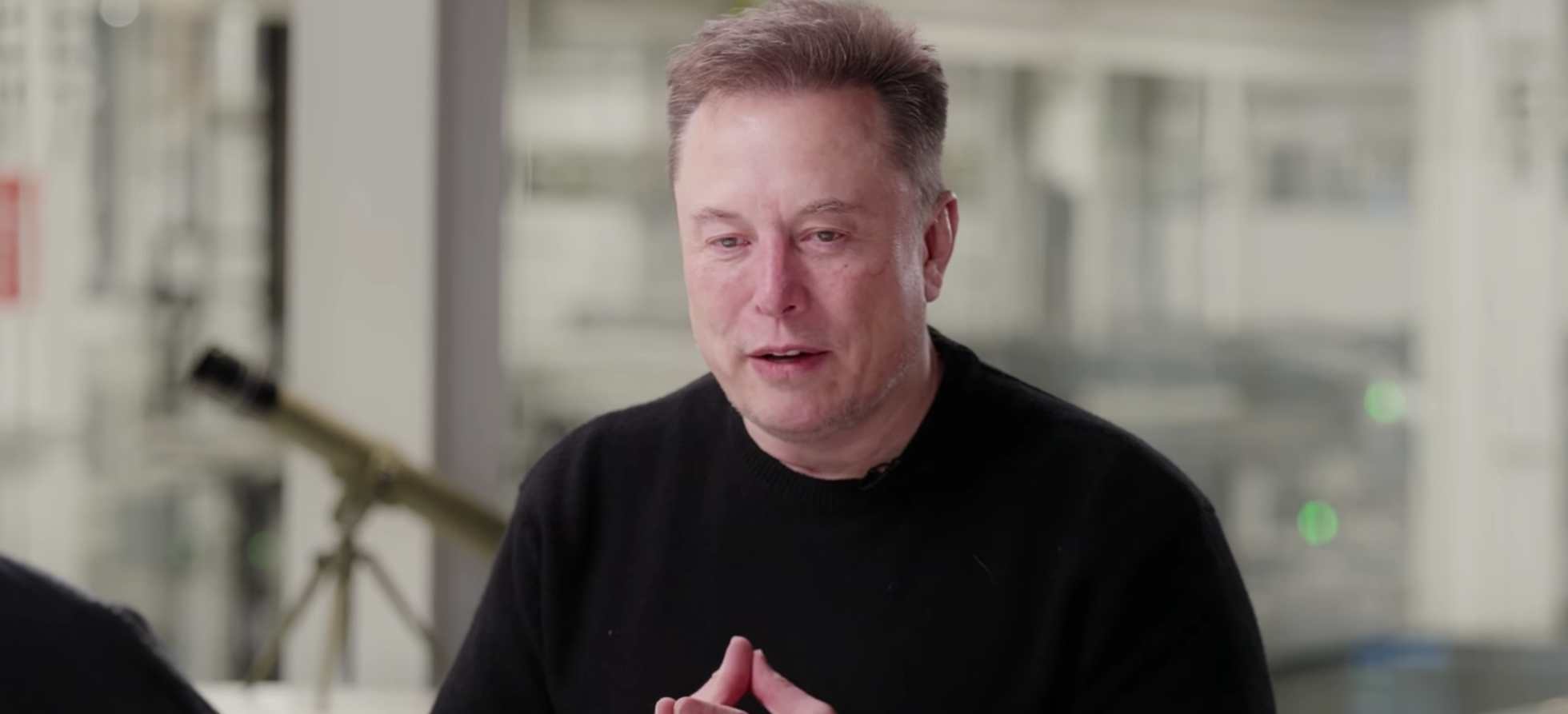
In a wide-ranging conversation with Indian entrepreneur Nikhil Kamath, Elon Musk painted a radical vision of humanity’s future—one where artificial intelligence and robotics fundamentally transform the very concepts of work and money as we know them today.
Musk’s most striking prediction centers on the timeline for this transformation. “My prediction is in less than 20 years, working will be optional,” he stated matter-of-factly. “Maybe even as little as I don’t know 10 or 15 years, the advancements in AI and robotics will bring us to the point where working is optional.” He clarified this isn’t merely about reduced working hours, but rather a complete paradigm shift: “It’ll actually be that people don’t have to work at all in the future, and it may not be that far in the future.”
This prospect stems from what Musk describes as a coming wave of abundance driven by AI and humanoid robots. He explained that in this future, “people will have any goods and services that they want. If you can think of it, you can have it type of thing.” The Tesla CEO suggested this transformation represents a fundamental economic shift, moving society from universal basic income to what he terms “universal high income.”
Perhaps even more provocatively, Musk argued that money itself may become obsolete. “Long term I think money disappears as a concept,” he said. “In a future where anyone can have anything, I think you no longer need money as a database for labor allocation.” He explained that when AI and robotics can satisfy all human needs, “money’s relevance declines dramatically.”
Instead of traditional currency, Musk believes energy will become the fundamental unit of value. “Energy is the real, is the true currency,” he explained, noting that unlike fiat money, “you can’t legislate energy. You can’t just pass a law and suddenly have a lot of energy.” He referenced the Kardashev scale, which measures civilization’s advancement by the percentage of available energy it can harness and convert to useful work.
Musk acknowledged the strangeness of this future, describing it as a “singularity”—a point beyond which outcomes become unpredictable. “We’re really headed into the singularity as it’s called,” he noted. “It doesn’t mean that something bad happens. It just means you don’t know what happens.”
The technology enabling this transformation is already advancing rapidly. Musk pointed to Tesla’s progress in autonomous driving and real-world AI, along with the development of the Optimus humanoid robot, which he expects to begin production at scale next year. “I think everyone’s going to want their own personal C3PO R2-D2, helper robot,” he said.
However, Musk was careful to note that this future isn’t immediate and won’t eliminate all human endeavor. For those building startups or pursuing difficult goals, “you definitely need to put in serious hours,” he acknowledged. And even in an automated future, working might remain “optional in the same way that you can grow your own vegetables in your garden or you could go to the store and buy vegetables”—a choice rather than a necessity.
When pressed on what people would do in a world without compulsory work, where everyone has material abundance, Musk admitted uncertainty. The convergence of his various companies—SpaceX, Tesla, and xAI—points toward this future of “solar powered AI satellites,” which he believes represents the logical endpoint of harnessing solar energy efficiently.
For entrepreneurs in countries like India, Musk emphasized that traditional education may become less relevant in this approaching era. “We’re going to be in a postwork society,” he explained, though he still sees value in college for social reasons and broad learning across subjects.


