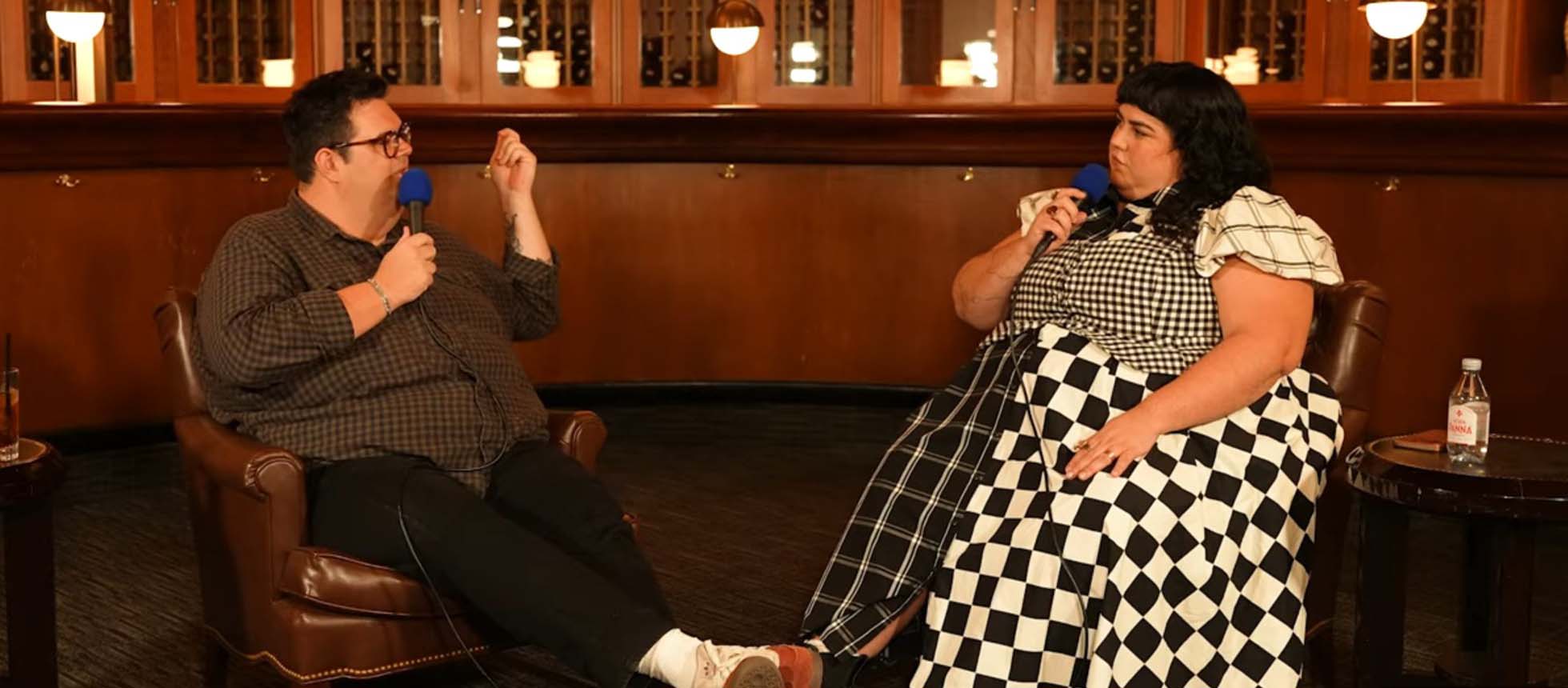
On a recent episode of So True with Caleb Hearon, Hearon and guest Virgie Tovar floated a take so detached from everyday expectations that it briefly turned a comedy podcast into an argument against personal responsibility.

The segment centered on Tovar recounting a party in Chicago where she claimed she could not sit anywhere in the host’s home. Not because the hosts were rude. Not because seating was limited. But because the furniture was designed for people of roughly average size.
“Not a one a chair in that house I could sit in,”
Tovar framed the situation as evidence of a moral failure rather than a predictable physical limitation tied to furniture design. From there the conversation escalated into a demand that other people preemptively redesign their private homes around the most extreme bodies imaginable. Tovar instructed thin people furnishing their houses to picture “the fattest biggest chunkiest” person they have ever seen and shop accordingly. If that hypothetical guest would not be comfortable the furniture she argued should simply not exist.
“Thin people, when you’re buying seats for your home, I want you to think of the fattest person you’ve ever seen,” Tovar said. “I want you to think of the fattest, biggest, chunkiest you’ve ever encountered. And I want you to think, if I had them over, would they enjoy this seat? And if the answer is no, I’d like you to skip it.”
In other words the responsibility for accommodating someone who exists far outside normal physical parameters should fall on everyone else everywhere including inside their own living rooms.
One example offered involved a dining table with an attached bench that could not be moved. Tovar described it as requiring guests to be “a certain diameter” to sit down framing a fixed piece of furniture as an act of exclusion rather than a design choice made for aesthetics space or durability. The idea that not every object is meant to accommodate every body was never considered.
Tovar openly shared her experience of breaking chairs, describing the aftermath with painful honesty: “As a fat person, when you break a chair in front of other people, the way you have to roll off the wreckage onto your elbows and knees and then begin to ply your pry yourself off the ground.”
The discussion then shifted to public chair breaking incidents which Tovar described in emotional detail. The embarrassment the recovery and the lasting impact. Even here the blame was redirected away from basic physics and toward the chair the room the furniture industry and society at large. The chair failed her. The environment failed her. Accountability did not enter the discussion.
Several furniture styles were singled out including lightweight plastic chairs and compact benches as if budget seating and space saving designs were quiet acts of v***lence. At no point did the hosts acknowledge that furniture has weight limits for structural reasons not ideological ones or that designing everything for worst case extremes makes it more expensive less durable and less practical for most people.
The core message was clear hosts are responsible for anticipating and accommodating bodies far beyond standard ranges while guests carry no obligation to adapt decline invitations or accept physical constraints.
“I’m not changing. Everyone else should.”
What was framed as a call for inclusivity ultimately read as something else entirely an insistence that personal circumstances should override common sense engineering limits and the basic reality that a private home is not a public accommodation.
The irony is that the demand for universal accommodation leaves no room for anyone else’s preferences budgets or boundaries. The chairs must change. The houses must change. The owners must change.
Only the people making the demand remain exactly as they are.
Check out these to fat ass podcasters talking about keeping your fat friends in mind when you buy furniture for your house.
Because apparently I have to live in Pee-Wee’s playhouse because they have no self-control. pic.twitter.com/rpOAZbnJn6
— Royce Lopez (@hippojuicefilm) December 16, 2025