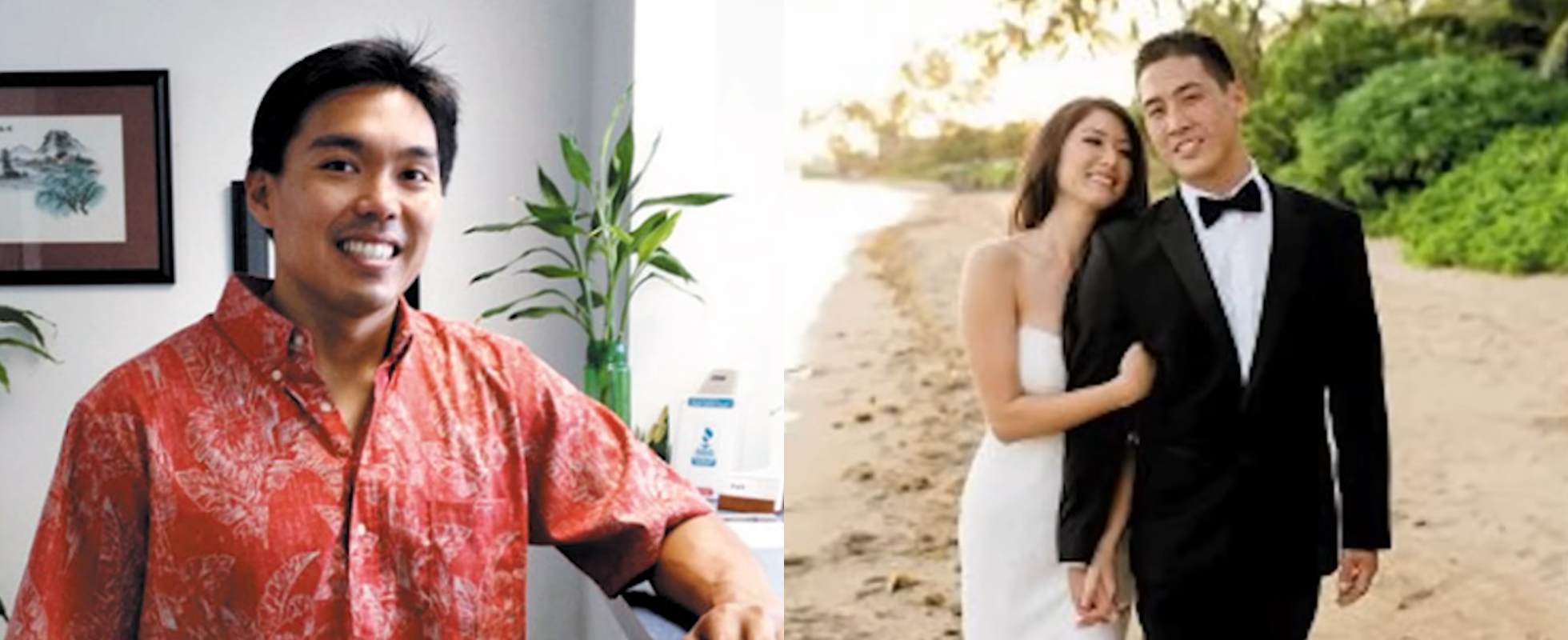
On January 13, 2022, an elderly woman arrived at her son’s acupuncture clinic in Hawaii after he failed to come home the night before. Inside, she found her son John Takahara lying in a pool of blood near the front desk. He had been sh*t four times in the head.
Known locally as “the healer,” John was a respected acupuncturist who treated chronic pain, stress, and fertility issues. Patients praised his compassion, recalling how he treated those who couldn’t afford to pay and even offered $2,000 scholarships to high school students pursuing medical careers.

Security footage from nearby businesses captured a suspicious figure shortly before the sh**ting. Dressed entirely in black with a large white bucket hat despite the warm weather, the person paced around the block before entering John’s clinic. They stayed inside just 48 seconds. When they left, they appeared to check the contents of a brown paper bag. As they crossed the street, a gust of wind blew the hat into traffic. The figure didn’t stop to retrieve it.
Ten days later, police recovered the hat near a homeless encampment. A man said he had picked it up off the street and worn it once. The hat would later become a key piece of evidence.
Inside the clinic, investigators found a backpack containing $4,000 in cash labeled “herbs.” There were no signs of a struggle, suggesting John had been caught off guard.
The investigation took a turn when police examined John’s phone. They discovered thousands of messages exchanged over one month with a woman named Joyce Thompson, who had sought John’s help for fertility treatments.
Joyce was married to Eric Thompson, her high school sweetheart. The couple had one daughter and lived in a $2 million waterfront home built on Eric’s successful business customizing bathtubs for elderly and disabled clients.
After suffering a miscarriage, Joyce began acupuncture treatments with John and soon became pregnant. She later returned for postpartum support.
During that time, the two began a two-month affair. Their messages included declarations of love, and John reportedly expressed interest in a committed relationship. Joyce ended the relationship in July after her husband discovered it.
Eric later testified that he found out about the affair during a work trip, after reviewing security footage from their home. He confronted Joyce, and she eventually confessed. The couple attempted to reconcile.
At Joyce’s suggestion, they signed a postnuptial agreement giving Eric all assets and full custody of their daughter in the event of separation. The document also barred Joyce from seeing psychics, she claimed one had encouraged the affair, and from contacting John again. It was signed just two weeks before the shooting.
Prosecutors argued the agreement reflected Eric’s inability to move past the betrayal. The defense claimed it was symbolic and that the couple had been rebuilding their marriage.
Authorities identified a white Chevrolet Silverado circling near the clinic around the time of the k*lling. Of 53 similar trucks in the area, only one owner had a connection to John: Eric Thompson. Surveillance footage showed that the toolbox normally mounted in Eric’s truck bed had been removed the day before the shooting, matching the vehicle seen near the scene. It was reattached hours later.
Prosecutors also pointed to similarities in gait between Eric and the figure in the bucket hat. Within minutes of Eric returning home, neighbors’ cameras recorded an orange glow in his backyard. Investigators later found evidence of a small fire in a bucket. Prosecutors theorized he burned the w*apon, possibly a 3D-printed fir**rm. Eric said he was lighting tiki torches.
DNA testing on the recovered hat initially matched Eric. However, that evidence was later thrown out after an FBI audit revealed the Hawaii Police Department had used unvalidated testing methods.
The defense highlighted alternative suspects, including other men whose partners had been involved with John. They argued the case against Eric was entirely circumstantial.
The first trial ended in a mistrial when jurors failed to reach a unanimous verdict. In a second trial, Eric was convicted. However, the case remained divisive, with some questioning whether the evidence met the standard of proof beyond a reasonable doubt.
Eric received a life sentence with the possibility of parole after 15 years.