
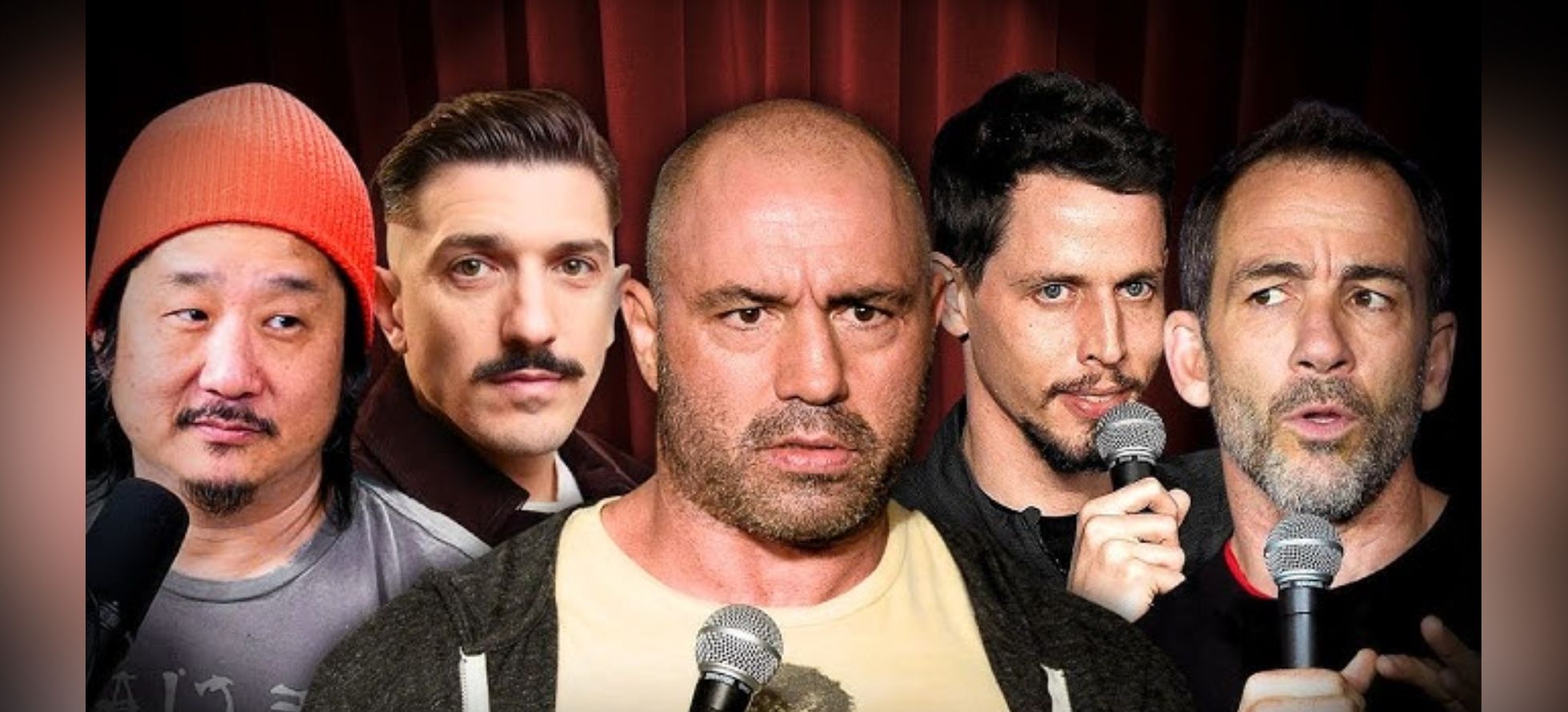
The podcast community has seen a major transformation in recent years. What began as independent media challenging mainstream narratives has evolved into something entirely different.
Today’s most successful podcasts, particularly those featuring long-form interviews, have adopted a strikingly similar format and political orientation. This change raises questions about whether mimicking Joe Rogan’s approach guarantees success.
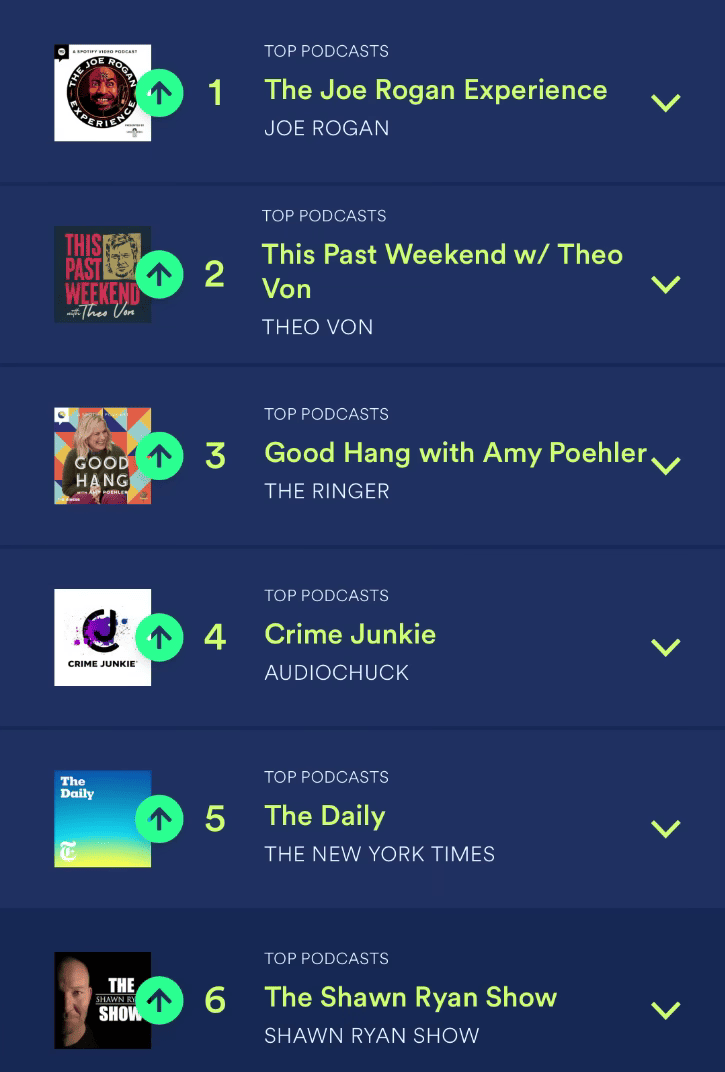
A recent analysis of the top podcasts in both the US and UK reveals a pattern. In America, the charts are dominated by The Joe Rogan Experience, The Shawn Ryan Show, Tucker Carlson’s show, and Candace Owens.
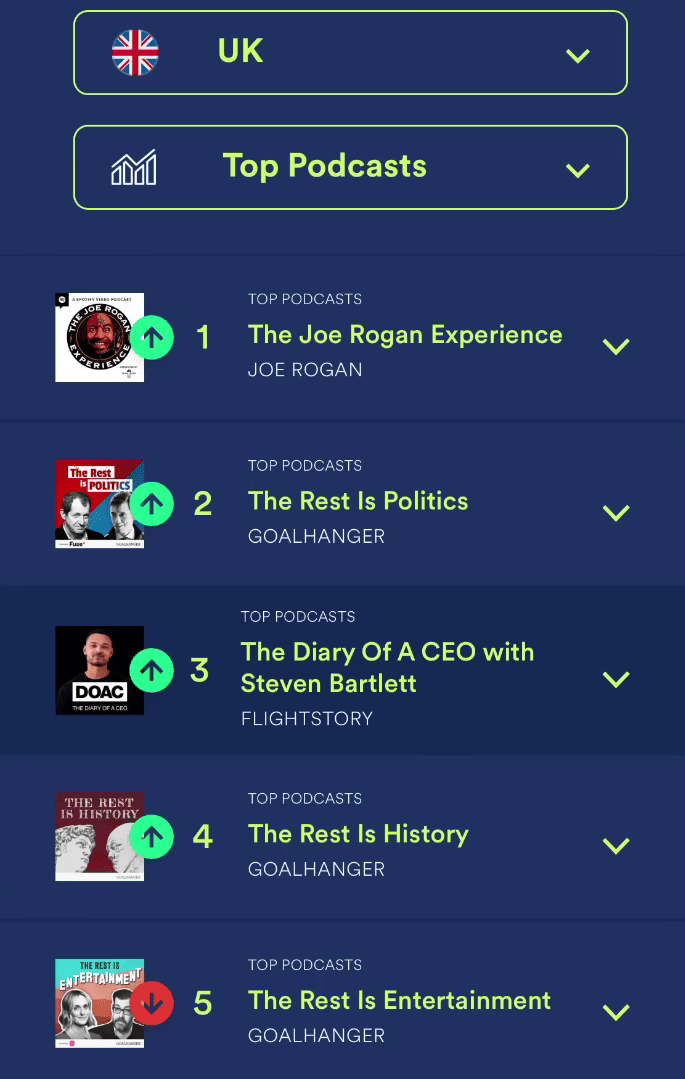
In the UK, Joe Rogan tops the charts, followed by “The Rest Is Politics,” hosted by two center-right former politicians, and “Diary of a CEO.”
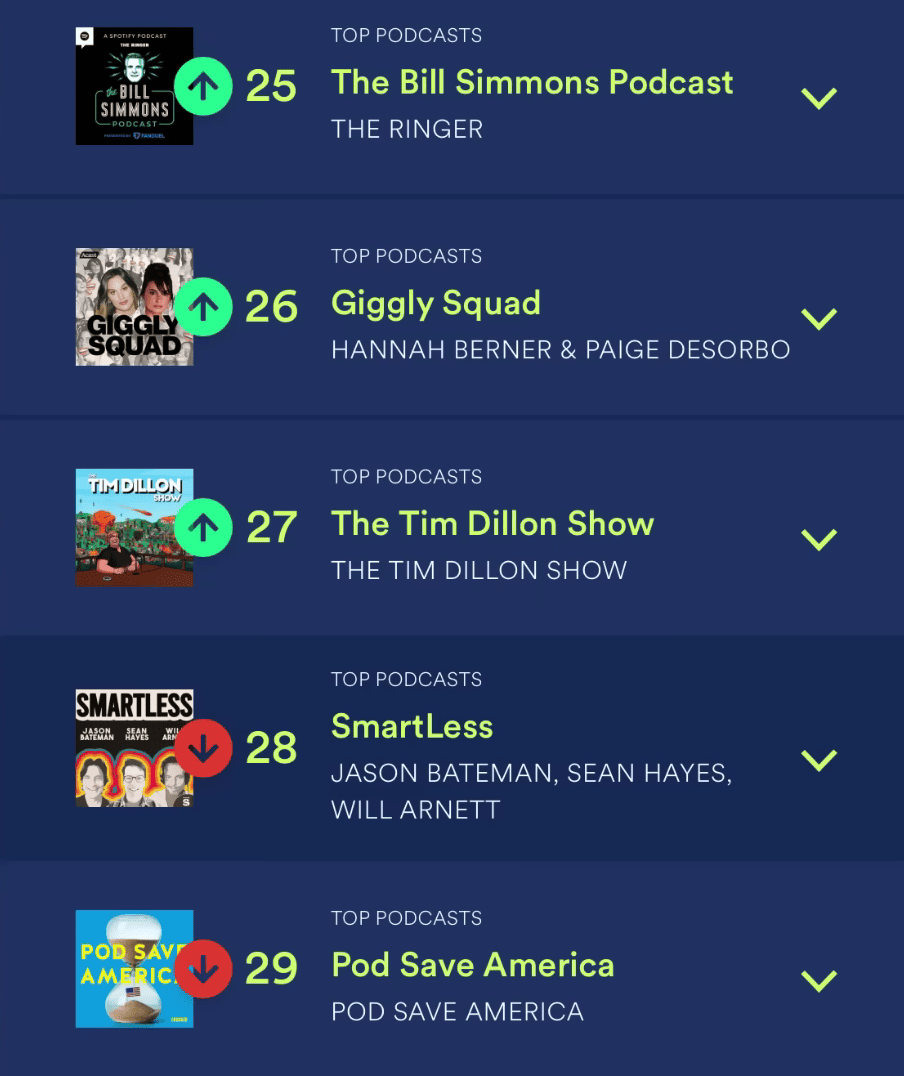
Meanwhile, left-wing political podcasts are virtually absent from the top 30, with liberal establishment podcast Pod Save America barely scraping in at number 29.
The dominance of conservative voices becomes even clearer when examining guest lists. Between September and recent months, Joe Rogan’s political guests included Dave Smith, Tim Dillon, Palmer Luckey, Andrew Schulz, Elon Musk, Brett Weinstein, Chris Williamson, and Rand Paul. Conservative perspectives appeared consistently, while alternative viewpoints were notably scarce.
Theo Von’s podcast showed similar patterns, with Tucker Carlson and Dave Smith among his guests, and only Bernie Sanders representing a different political perspective.
So, why would anyone copy Joe Rogan’s model? The answer lies in incentives. These podcasts function less as journalistic platforms and more as promotional vehicles. Guests know they won’t face rigorous questioning or pushback on controversial claims. Whether discussing vaccine skepticism, unconventional health advice, or political ideology, guests can present their views largely unchallenged.
The model works because it’s mutually beneficial. Hosts maintain their audience by avoiding confrontation, while guests gain access to massive platforms without scrutiny.
Steven Bartlett’s “Diary of a CEO” exemplifies this approach, transitioning from business content to hosting guests with controversial views, rarely challenging their statements.
However, this approach creates a fundamental problem for those with different perspectives. A left-wing host who rigorously challenged conservative guests would struggle to book high-profile interviews. Prominent figures wouldn’t voluntarily subject themselves to difficult questioning when friendly platforms abound. The result is a self-reinforcing cycle where only certain viewpoints receive amplification.
Even more concerning is how establishment figures have colonized the podcast space. Shows like “The News Agents” and “The Rest Is Politics” are hosted by former BBC journalists and politicians, turning what was once alternative media into another establishment mouthpiece.
The revolutionary promise of podcasting, offering independent voices free from corporate influence, has largely evaporated.
The “podcast industrial complex” has even spawned entirely artificial ventures. Companies now offer paid podcast appearances with professional hosts and studios, designed primarily to create social media clips that boost personal branding rather than generate genuine audiences.
So is copying Joe Rogan a proven path to podcasting success? Perhaps, but only if you’re willing to sacrifice editorial integrity, avoid challenging powerful guests, and align with the dominant political orientation of the medium.
The formula works because it prioritizes growth and monetization over journalistic responsibility. The Rogan model is a major example of how quickly revolutionary media can become the very establishment it once opposed.


