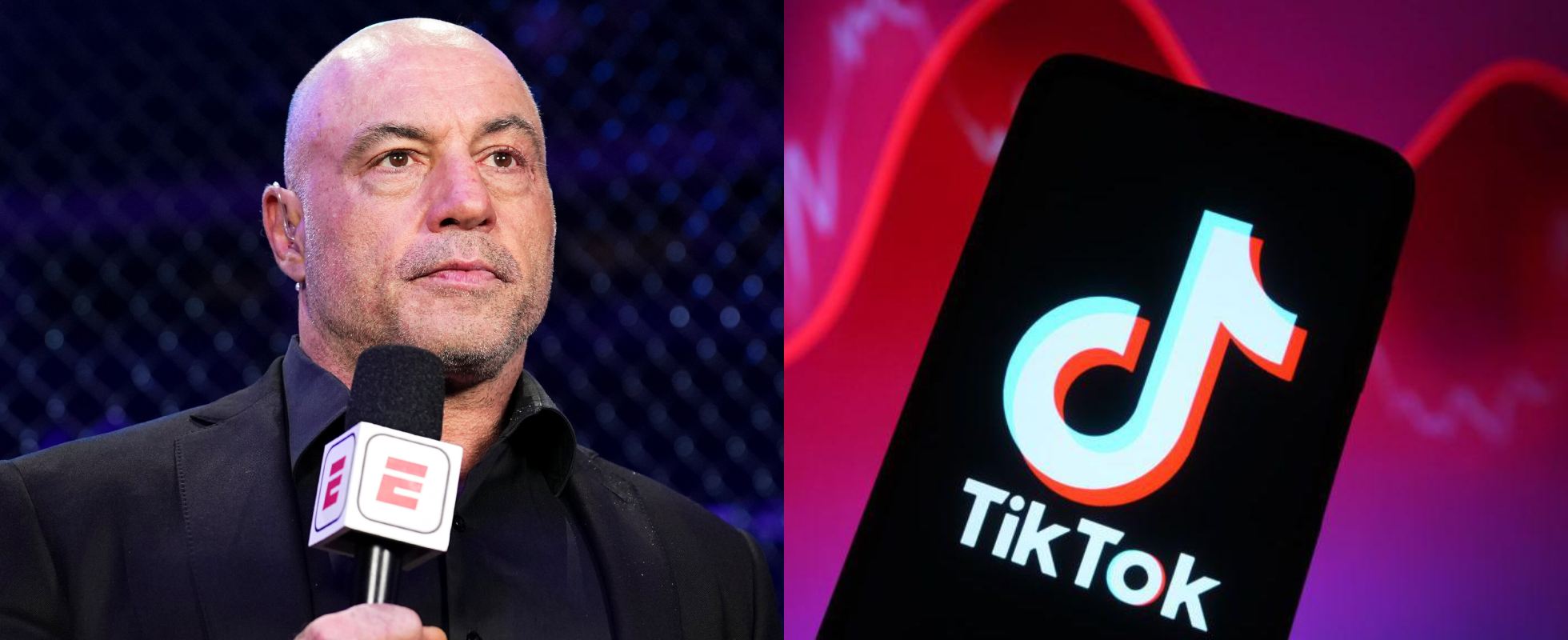
Joe Rogan recently weighed in on social media censorship during an episode of the Joe Rogan Experience with comedian Greg Fitzsimmons, addressing concerns about TikTok’s new ownership and content restrictions following its acquisition by Larry Ellison’s group.
The conversation turned serious when discussing TikTok’s recent policy changes. “TikTok is now not allowing people to post anything that is anti-ICE,” Fitzsimmons noted.

Rogan agreed and said: “Not just that. You can’t post the juice box emoji.”
When Fitzsimmons asked why, Rogan explained it was being used as code for Jews because people were circumventing blocks on content criticizing Israel.
Rogan pointed to the timing as significant. “It was just purchased by Larry Ellison’s group, which is tremendous supporter of Netanyahu in Israel,” he said. “So yeah, there you go. So you got censored news now. So any criticism of Palestine, what’s going on in Gaza, all that stuff’s going to get squashed probably.”
The discussion expanded to broader censorship concerns when they discovered TikTok users couldn’t send the word “Epstein” in direct messages. Rogan found this particularly absurd: “I have a friend, his name is Bobby Epstein. Totally unrelated. He’s the guy who owns the COTA racetrack. He’s a good friend of mine. I can’t send a message saying, ‘I was just talking to my friend Bobby Epstein.'”
On the fundamental principles of free speech platforms, Rogan was emphatic. “If Elon Musk didn’t buy Twitter, we would be f**ked. Because there would be no place where you could say whatever you want, even heinous things,” he argued. “If someone says heinous things, you can block them and not interact with them. And you can let other people tear them down and tear them apart. And that’s how it’s supposed to be.”
Rogan explained his philosophy on countering problematic speech: “You don’t counter hate speech with censorship. You counter it with better speech. And you appeal to rational people that go, ‘This is why this guy is wrong. This is why racism is wrong.’ That’s how you’re supposed to do it. It’s supposed to be a free speech town hall platform.”
The conversation also touched on the importance of anonymity online. “There’s been a lot of calls that say that you shouldn’t be able to be anonymous on social media, that you should have consequences for your actions. The problem with that is then you lose all your whistleblowers,” Rogan said, citing examples of corporate wrongdoing exposed by anonymous sources.
When comparing social media platforms to traditional broadcast networks, Rogan noted that mainstream media already practices selective reporting. “They don’t just report on the news. They report on what they decide they’re going to report on,” he observed. “They have no responsibility to tell you about any particular story.”
The discussion referenced England’s approach, where authorities have reportedly arrested 12,000 people this year for social media posts, most criticizing immigration. Rogan found this deeply troubling as an example of government overreach in controlling online speech.