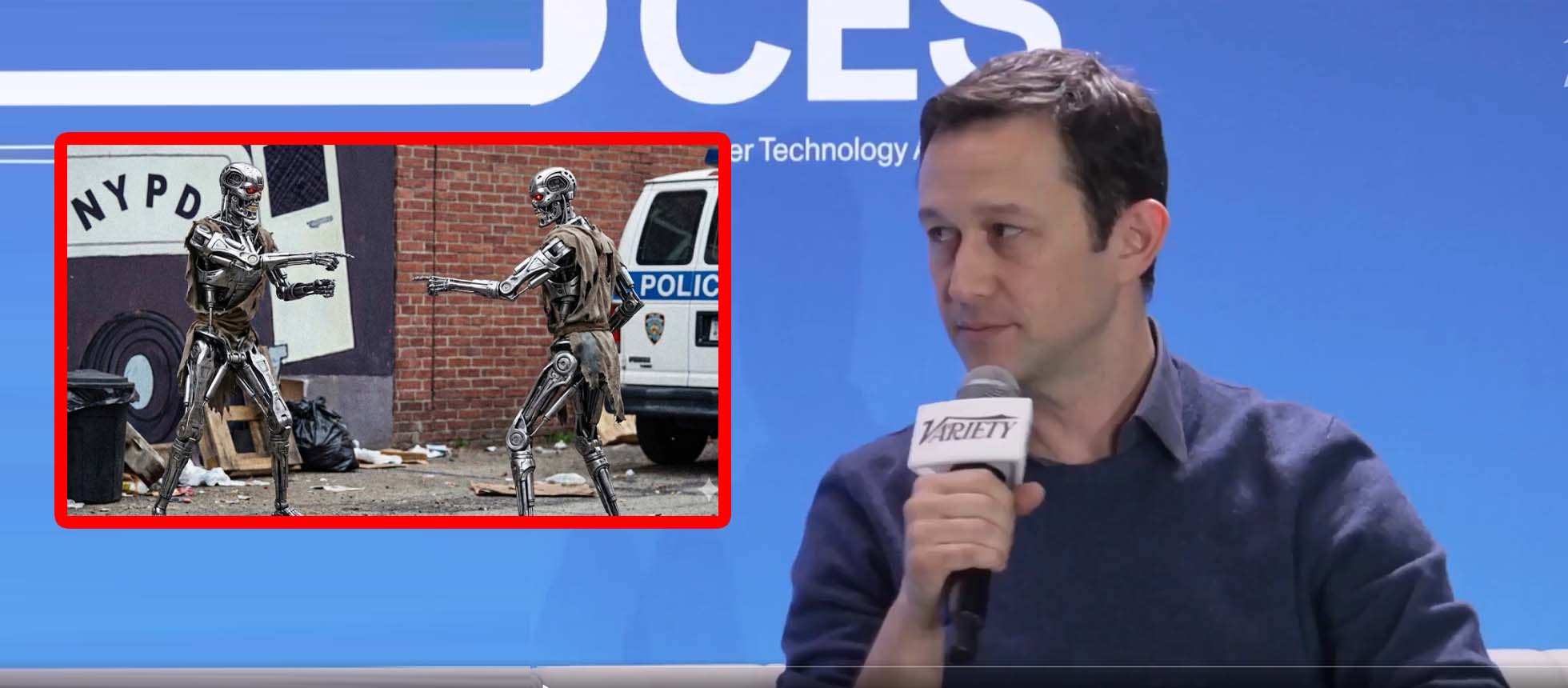
Actor Joseph Gordon-Levitt has emerged as a vocal critic of how artificial intelligence companies have built their systems, stating plainly that
“almost all of these large-language models are built on mass theft.”
Speaking at Variety’s Entertainment Summit at CES, Gordon-Levitt addressed the contentious relationship between Hollywood studios and AI companies, particularly focusing on recent legal battles and licensing agreements. His comments come as authors face a crucial January 15 deadline to decide whether to accept a settlement from AI company Anthropic or pursue individual legal action.
The settlement in question offers authors $3,000 per book after their work was used without permission to train Anthropic’s Claude AI system. Journalist Scott Carney has described the case as the largest copyright lawsuit in history, affecting nearly six million writers and covering approximately 468,000 books.
When the total $1.5 billion settlement is divided across all the books copied from datasets, the payout amounts to just over $200 per book, according to attorney James Barole of the Duncan firm. This figure stands in stark contrast to federal copyright law, which allows for statutory damages of up to $150,000 per work in cases of willful infringement.
“I don’t know that that’s actually a deterrent effect to stop or to slow down or to pause an AI company from doing this again,”
Barole said.
Gordon-Levitt‘s concerns extend beyond individual settlements to the broader practice of major studios negotiating with AI companies. When asked about Disney’s recent deal with OpenAI, which licenses more than 200 characters to their Sora video generator, the actor expressed cautious optimism but significant reservation.
“I appreciate the Disney leadership saying that they want to protect creators,”
Gordon-Levitt said.
“We’ll see how much that wish comes true.”
His primary concern centers on what such agreements might include regarding past unauthorized use of copyrighted material.
“I would hope that any deal done with one of these AI companies doesn’t forgive that past theft,”
he stated.
“Because I would imagine that probably any deal from one of these companies includes a clause that says, you release us from any claims for all of your stuff that we stole over the last number of years.”
Gordon-Levitt emphasized the need for creators and rights holders to maintain a unified position.
“That’s something I think we all kind of need to get on the same page and agree. No, let’s not forgive that past theft.”
Gordon-Levitt articulated a long term vision for how these issues should be resolved.
“Eventually we are going to arrive at the conclusion that this principle is important. That people deserve to be paid for their work,”
he said.
“And at that time, we’re going to go back and we’re going to get recourse for all of the stuff that was stolen.”
The case highlights the significant scale imbalance between AI companies and creative industries. Anthropic’s valuation exceeds that of the entire U.S. publishing industry, making the $1.5 billion settlement a relatively modest expense for the company.
What Gordon-Levitt is really calling out is not a future risk but a completed act. The books are already copied. The models are already trained. The valuations are already locked in. Everything that follows, settlements, licensing deals, “creator-first” language, is cleanup. When companies worth tens of billions negotiate retroactive forgiveness for pennies on the dollar, they aren’t correcting a mistake, they’re pricing immunity.
That’s the quiet precedent being set. If past infringement can be erased with a bulk payout that barely registers on a balance sheet, then copyright stops being a right and becomes a temporary inconvenience. The danger isn’t that AI will replace creators; it’s that the law will be rewritten after the fact to pretend the taking never mattered.