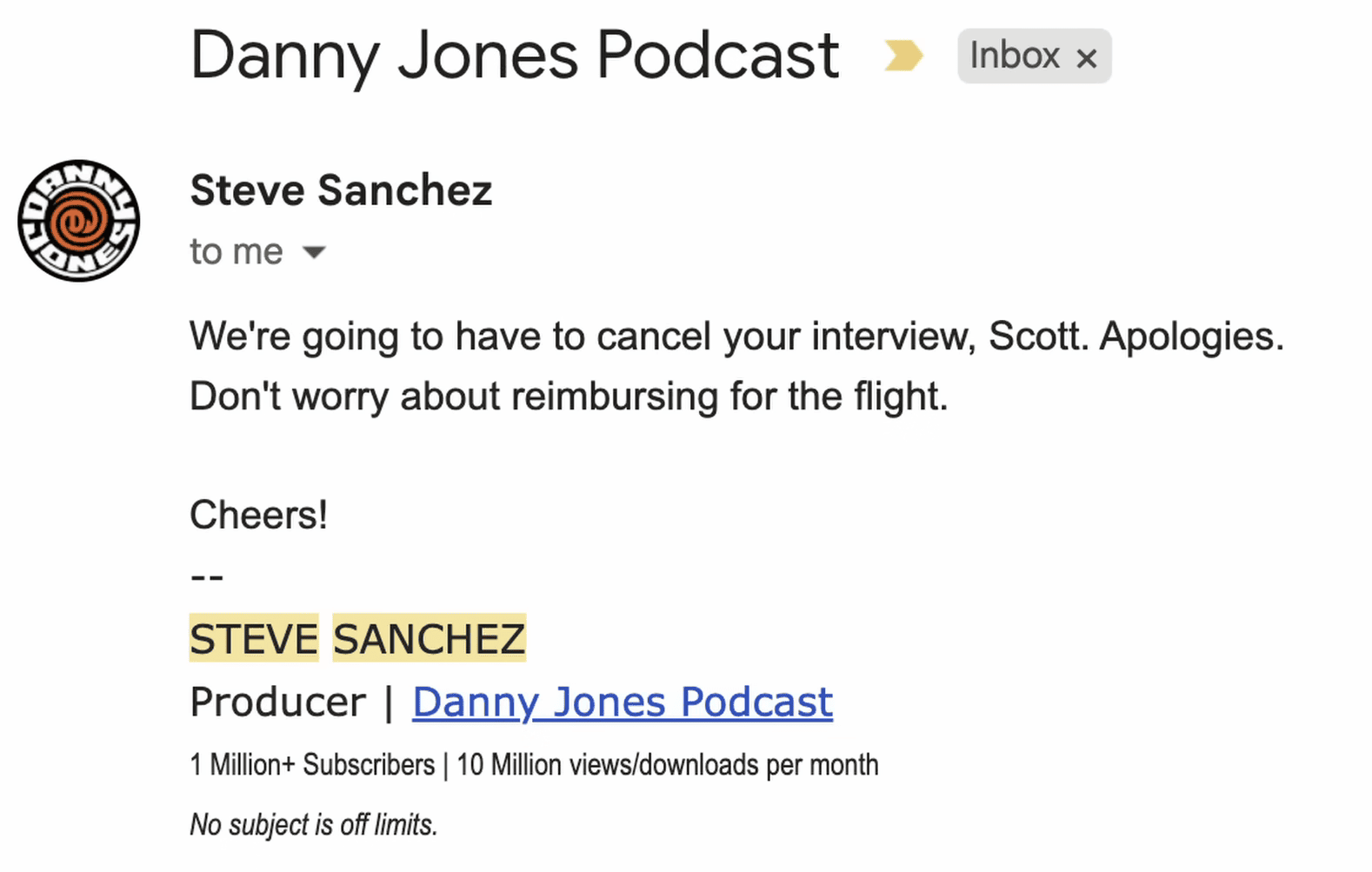
Investigative journalist Scott Carney recently pulled back the curtain on how certain manosphere podcast networks operate. In a recent video, Carney described how producer Steve Sanchez repeatedly contacted him for months, urging him to appear on the Danny Jones podcast.
Eventually, Carney agreed to an in-person interview in Tampa, Florida. But just 30 minutes before recording, Jones abruptly cancelled the appearance.
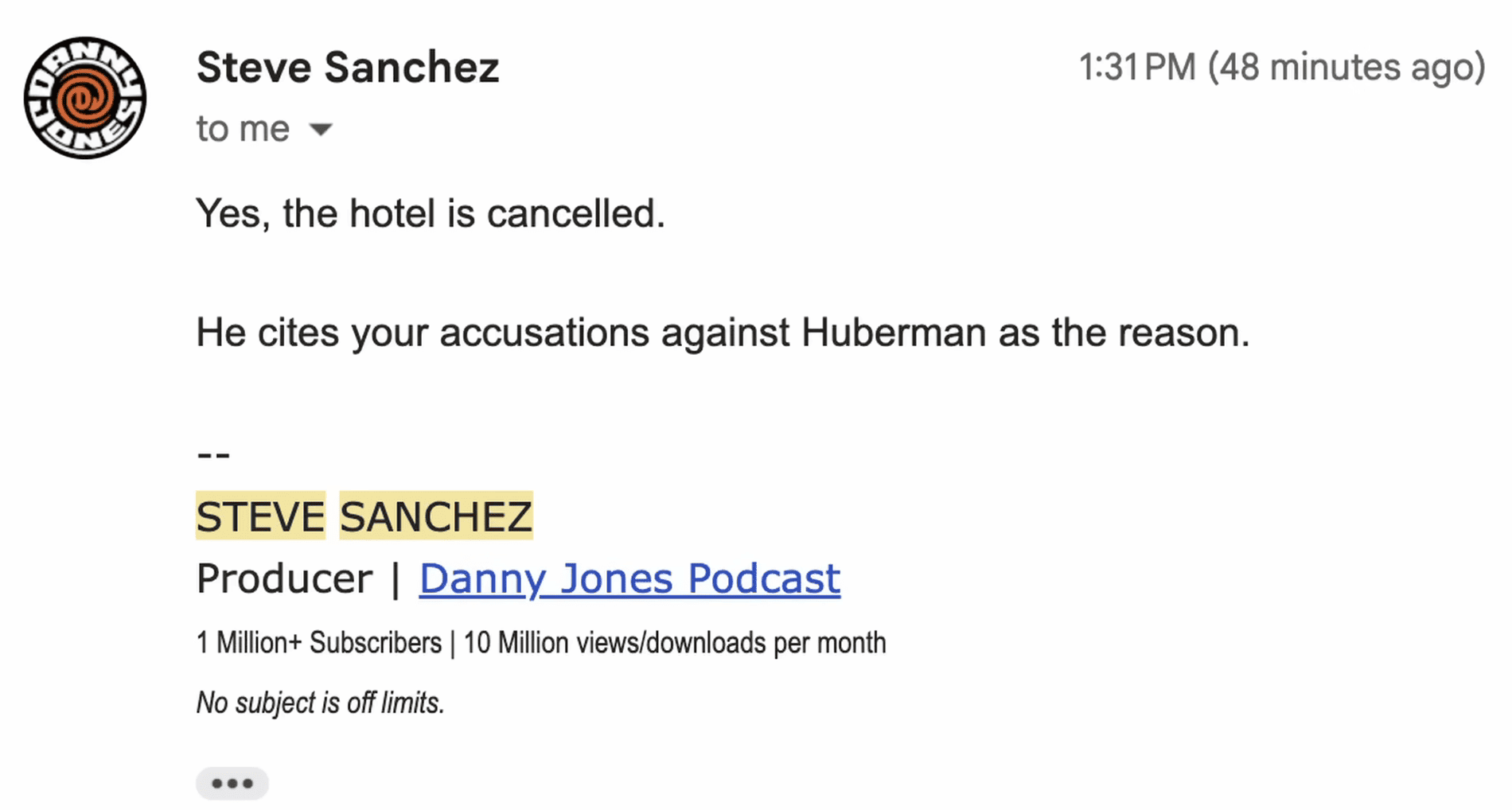
According to Carney, the reason wasn’t scheduling or technical issues, it was his reporting on Andrew Huberman.
Carney stated: “Well, apparently one of the subjects which is off limits is accurately reporting Huberman’s changing opinions on science relating to the sponsorship money that he gets. Also, the various s*xual abuse claims by multiple women that have been documented by multiple magazines as a thing. True issues with Andrew Huberman.”
For a show that branded itself with the subject line “No subject off limits,” Carney noted the irony, saying, “the only thing that’s off limits for Danny Jones is truth.”
But Carney argues the issue goes far beyond one cancelled interview. He says it reflects a much larger “influencer network” built around clout, where podcast hosts gain attention by uncritically echoing whatever another influencer claims, no matter how dubious.
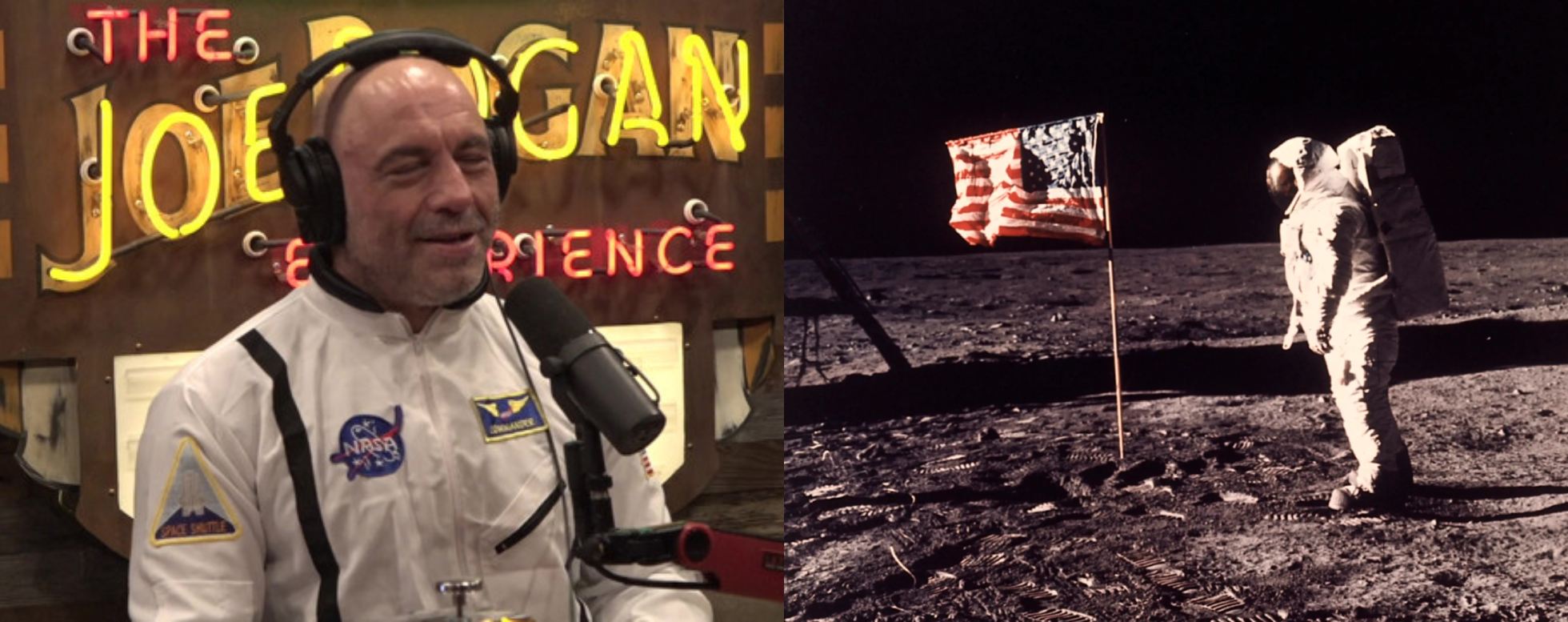
This is where topics like moon landing skepticism thrive.
Carney explained that within these manosphere spaces, conspiratorial thinking is often treated as entertainment or even enlightenment, rather than something to be challenged.
Ideas ranging from moon landing hoaxes to pseudoscientific longevity claims to supposed communication with the de ad circulate freely, amplified by hosts who rarely apply skepticism to their own guests.
Carney said: “There’s an influencer network of people who want to gain clout. Like these people who want to be on… there’s this sort of discussion between people of playing this game of just accepting whatever is said by another influencer.”
He pointed to examples from Jones’s content, including episodes promoting a supposed “12,000-year solar cycle” that resets human civilization. Carney noted this claim is historically incoherent, since organized human civilization has only existed for roughly 5,000 years, based on the origin of writing.
Carney described two separate ecosystems forming online. One is filled with audiences who are “basically gullible and will believe anything.” The other includes people who believe reality still matters, that science exists, and that influential figures profiting off misinformation should be held accountable.
The problem, Carney says, is that these two ecosystems rarely overlap. In manosphere podcast culture, questioning a popular influencer can become a disqualifying act in itself, while fringe theories like moon landing denial are treated as harmless curiosity rather than misinformation.
Carney also suspects the cancellation may have been strategic. He believes Jones was trying to “court Andrew Huberman” as a future guest, and allowing a critical journalist on the show could have risked alienating someone with far more influence and reach.