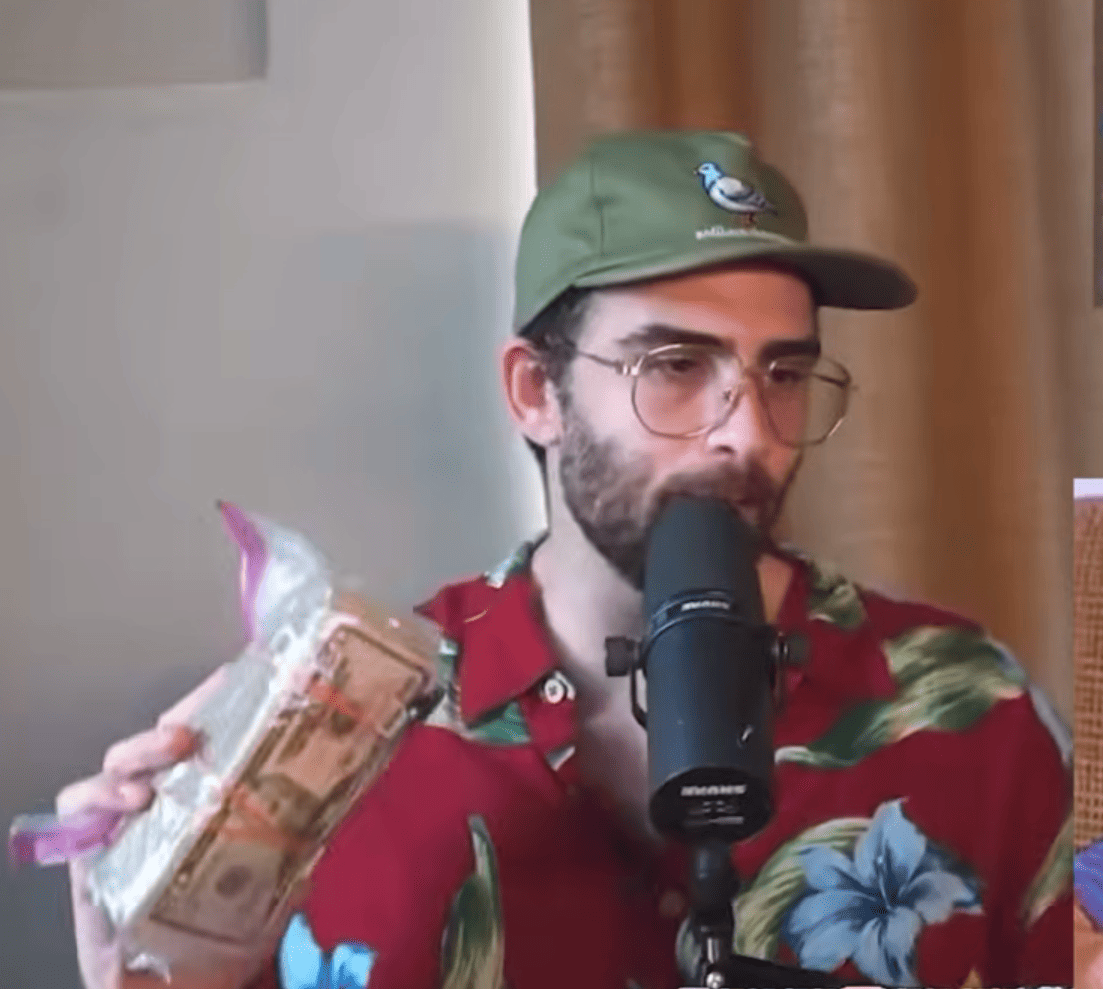
Podcaster and military veteran Shawn Ryan delivered a sweeping critique of President Donald Trump during a recent interview with former National Counterterrorism Center director Joe Kent, accusing the administration of abandoning core campaign promises and fracturing the coalition that helped secure the 2024 election.
Over the course of the conversation, Ryan touched on foreign policy, political loyalty, public health, and what he described as a pattern of broken commitments to voters, particularly those aligned with the Make America Healthy Again (MAHA) movement.
Ryan opened the discussion with an indictment of the administration’s direction, arguing that the policies being implemented bore little resemblance to what voters were promised during the campaign.
“I just haven’t been happy about really much of anything that’s going on,” Ryan said, describing his frustration with the administration. He added that he felt the situation amounted to “a 180 bait and switch from what we were told in just about every aspect.”
According to Ryan, the coalition that propelled Trump back into office in 2024 was built on several clear pillars: ending foreign conflicts, confronting entrenched government institutions, improving public health, and advancing economic populism. He argued that failures across those areas have left supporters increasingly disillusioned.
Ryan also took aim at U.S. involvement in the ongoing conflict involving Israel and Iran, focusing on what he described as an excessive financial burden placed on American taxpayers.
“Israel spent 6.4 billion on this war since March,” Ryan said, citing figures he had reviewed. He contrasted that with U.S. expenditures, noting that the United States had already spent significantly more and was considering an even larger funding request.
“You know how much the U.S. has spent? Approximately 18 to 25 billion with another request for another 200 billion from Congress,” he continued. “Now why are we the ones floating the bill for this?”
Ryan also raised concerns about suspicious stock market activity surrounding Trump’s announcement of a five-day ceasefire, suggesting the possibility of insider trading.
“Whoever made those trades made $60 billion,” he said, adding that he wondered whether members of Congress or administration officials had prior knowledge of the decision.
Another point of contention for Ryan was Trump’s reliance on certain political allies and media figures rather than experienced national security professionals.
He questioned why the president appeared to lean on lawmakers such as Lindsey Graham and Ted Cruz, as well as conservative commentator Mark Levin, instead of individuals with extensive operational backgrounds like Kent.
“I mean, do I need to read your bio again?” Ryan asked Kent during the interview. He then questioned why Trump would seek guidance from political figures he described as career insiders rather than seasoned intelligence professionals.
Ryan also pushed back after Trump publicly mocked Kent for losing a congressional race, offering context about the election results.
“Trump actually lost there in the last presidential election by a 17 percent margin himself,” Ryan said. He noted that Kent’s defeat margin was significantly smaller, adding, “You only lost by a 3.8 percent margin. Who’s the loser?”
When Trump suggested Kent had been given his counterterrorism role out of sympathy, Ryan responded sharply.
“If that’s how you hand jobs out to your administration,” he said, “no wonder we’re in the place we’re at.”
One of Ryan’s strongest criticisms centered on the administration’s decision to grant immunity to manufacturers of glyphosate, a widely used agricultural herbicide that has been the subject of long-standing health concerns.
“Did you see the glyphosate stuff?” he asked Kent before launching into a critique of what he viewed as a betrayal of the Make America Healthy Again movement. He argued that the decision directly contradicted the movement’s emphasis on public health and environmental safety, issues that had energized many voters.
Ryan highlighted what he saw as an inconsistency in how the government classifies national security threats.
“We’re calling the f*ntanyl crisis a national security concern,” he said, referring to the roughly 100,000 de aths attributed to f*ntanyl each year. He then contrasted that figure with cancer mortality.
“Cancer is 618,000 people in one year,” Ryan continued. “And he just gave them immunity.”
He also pointed to geographic patterns he believed underscored the seriousness of the issue. “Do you know where the highest concentration of glyphosate is? It’s in Iowa,” Ryan said. “Do you know where the highest concentration of cancer is? Iowa.”
For Ryan, the glyphosate decision was not an isolated incident but part of a broader pattern of unmet commitments. He cited the continued secrecy surrounding the Epstein files and what he described as a lack of accountability for powerful institutions.
“In going after the deep state, we haven’t seen one indictment,” Ryan said. “We haven’t seen anything.”
He argued that these perceived failures have weakened the political coalition that brought Trump back to power, particularly among voters motivated by anti-war sentiment, economic populism, and health-focused policies.
Kent largely agreed with Ryan’s assessment, acknowledging that the frustration was widespread among supporters.
“That frustration is felt by a lot of people who voted, who campaigned,” Kent said, noting that the campaign platform had resonated strongly with voters. He suggested that the challenge now lies in delivering on those promises before upcoming midterm elections.