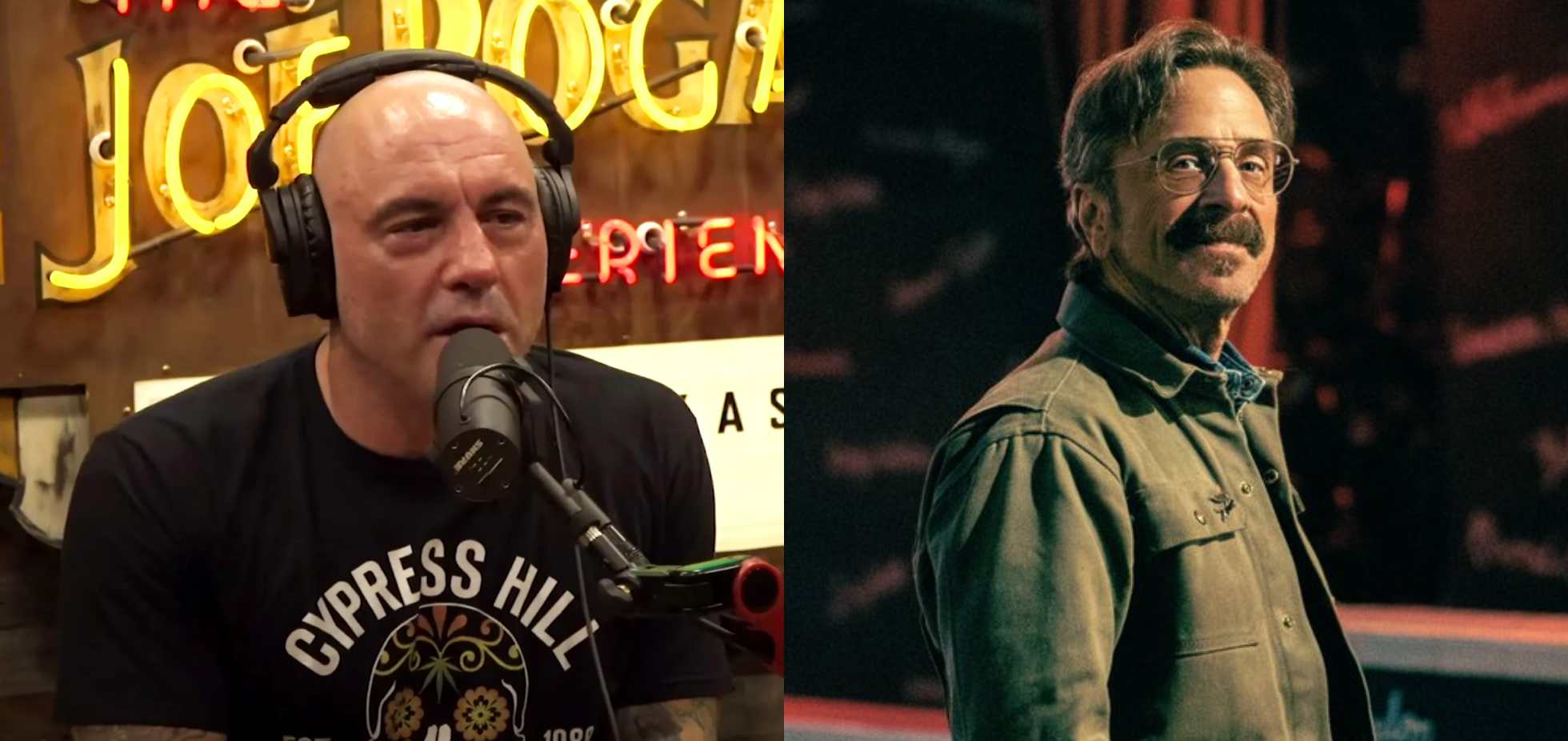
Marc Maron has spent decades inside comedy’s ecosystem, long enough to recognize when the culture shifts from craft to ideology. In a recent interview with Consequence, the veteran comic and podcaster offered one of his most direct critiques yet of the Austin comedy scene and the audience that formed around Joe Rogan’s orbit.
According to Maron, what emerged wasn’t just a different style of stand-up, but a fundamentally different audience.
“They’ve created this audience of what was primarily not comedy fans, and created this new breed of, you know, pseudo-radicalized comedy fans around anti-woke comedy,” Maron said.
It’s a line that cuts to the core of a debate that’s been simmering for years: whether comedy is being used as a shield for politics rather than a tool for challenging them.
Maron was careful to frame his criticism as a defense of comedy itself, not a partisan attack. He rejected the idea that his comments were about advancing progressive politics or scoring points against Rogan personally.
“I’m not some radical progressive out in the world ranting about political impropriety. I’m a comedian,” he said, explaining that his remarks about Austin were made “to make a point.”
That point, in Maron’s view, is that a small set of right-wing talking points has been repackaged as bravery, rebellion, and free speech. The result is a feedback loop where audiences show up not for jokes, but for affirmation.
“There was this thing that was happening where they were assuming the last word about what comedy was,” Maron said. “And it was a fairly un-nuanced and very hackneyed repetition of two or three ideas that were primarily right-wing talking points.”
The problem isn’t that comedy engages with politics. Maron’s own HBO special Panicked does exactly that. The problem, as he sees it, is when comedy stops being expansive and starts being doctrinal.
Maron also questioned whether Rogan even occupies the same category anymore. “Is Joe Rogan still a comic or is he some sort of lifestyle show that deals with information?” he asked.
It’s a distinction that matters. Rogan’s platform is no longer just about stand-up or conversation. It’s a media ecosystem that shapes beliefs, rewards grievance, and blurs the line between entertainment and ideology. In that environment, comedy becomes less about surprise or vulnerability and more about signaling which side you’re on.
Maron’s concern isn’t that comedians are conservative or anti-“woke.” It’s that comedy itself gets flattened into a predictable posture. Once that happens, the art form loses what made it dangerous in the first place.
“What’s interesting about comedy and what is great about it is that it is an expansive bunch of voices, both vulnerable and angry,” he said. From Maron’s perspective, the Austin scene narrowed that range instead of broadening it.
What separates Maron’s critique from the usual culture war noise is that it comes from someone who has evolved publicly, sometimes painfully. In the same interview, he acknowledged making “wrong minded jokes” earlier in his career and learning that provocation alone isn’t wisdom.
That evolution informs his frustration with comics who frame every criticism as censorship and every punch-down as free speech. In Panicked, he mocks performers who claim to be speaking truth to power while recycling grievances that already dominate the media landscape.
For Maron, that’s not rebellion. It’s complacency dressed up as defiance.
Maron insists his comments weren’t about sides. “So that was why I did that,” he said. “It was for comedy. Not for me, not for the left. It was for comedy.”
That may be the most revealing part of his argument. In his view, the real casualty of the anti-woke comedy boom isn’t liberal sensitivity or conservative values. It’s the craft itself. When audiences are trained to clap at talking points instead of laugh at ideas, comedy stops being comedy. It becomes identity maintenance.
And for someone like Maron, a comic who built his career on discomfort, self-exposure, and contradiction, that’s not just boring. It’s corrosive.