
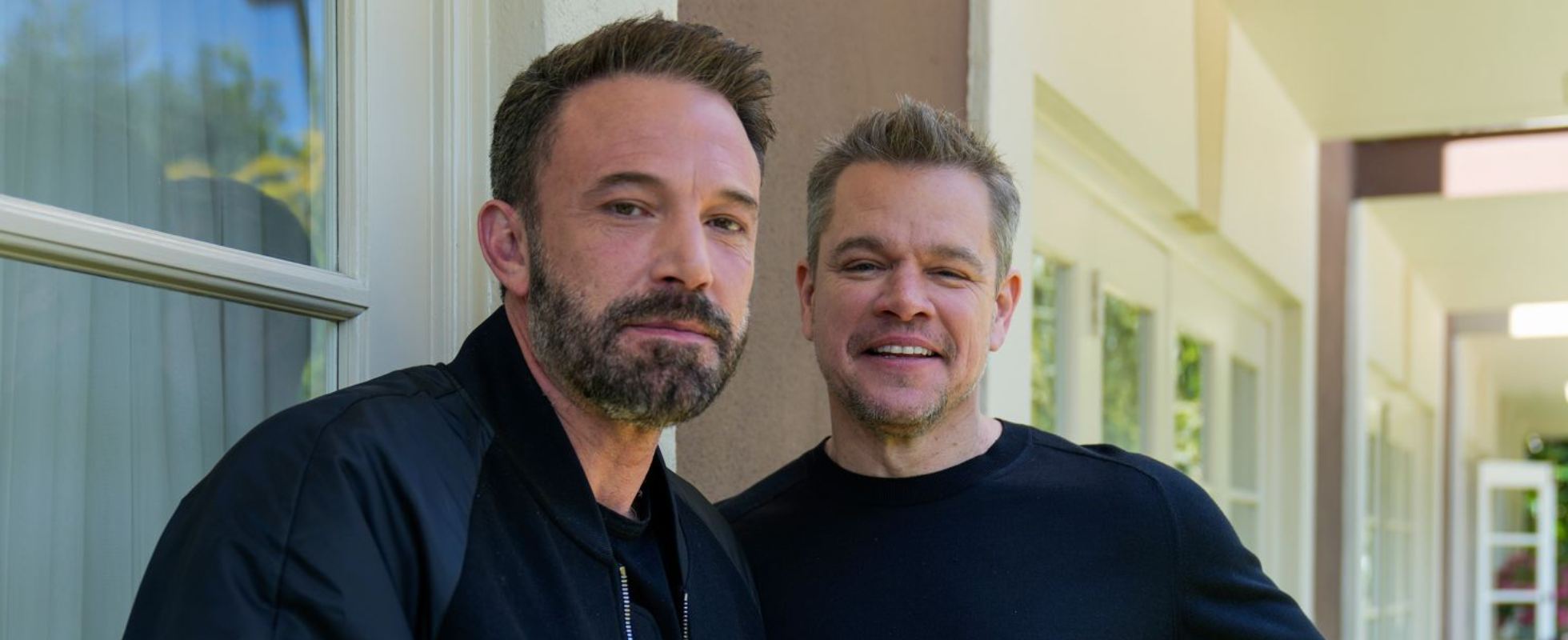
During their recent appearance on the Joe Rogan Experience, Hollywood actors Ben Affleck and Matt Damon offered candid perspectives on cancel culture, forgiveness, and the complexities of public judgment in modern society.
The conversation emerged while discussing human nature and the tendency to reduce people to their worst moments. Affleck talked about a fundamental concern about cancel culture’s approach to mistakes: the absence of redemption.
“To take any forgiveness out of it is a really f**ked up thing because then it makes it impossible to actually go, ‘All right, yeah, I did that. That was wrong. I get it,'” Affleck explained. “You become like an outcast. And I don’t think anybody wants to think the sum total of who you are is your worst moment.”
Affleck emphasized that many of the most trustworthy people in his life have checkered pasts. “Some of the people I would rely on the most, trust my kids with the most, have done s**t that they really regret and was objectively wrong,” he said. He contrasted those who acknowledge their mistakes with those who maintain a facade of perfection, noting that genuine accountability creates trustworthiness.
Both actors expressed concern about the permanence of public condemnation. Damon noted that some people “would have preferred to go to jail for 18 months and come out and say, ‘I paid my debt. Can we be done?’ The thing about getting excoriated publicly like that, it just never ends. It’s the first thing that will follow you to the grave.”
The discussion touched on the psychology behind public pile-ons, with Rogan suggesting that attacking others often stems from insecurity. “Most of the people that I know that have attacked people have a lot of questionable s**t in their past and it’s almost like they’re trying to hide that by going on the attack,” Rogan observed.
Affleck agreed, saying: “If I can point my finger, it’s like no one’s going to be looking at me.”
Damon challenged the notion of moral perfection that underlies cancel culture: “It’s all about evolution, right? Our own personal evolution… The idea of attacking someone is like, so you aced the test? Put your pencil down? You nailed being human?”
Rogan agreed to it and stated: “That’s not possible because you forgot about the part about forgiveness, which is a giant part.”
The actors also questioned what kind of society emerges without redemption. “Who wants to live in a world with no forgiveness and redemption?” Rogan asked. “That’s just denying the very nature of human beings. That people do things that they regret and they do, and then they become better people because of it.”
Both actors speak from experience. Affleck, in particular, knows how quickly public opinion can turn. According to sources, he came under intense scrutiny in 2017 after actor Hilarie Burton accused him of being inappropriate towards her during an appearance on MTV’s Total Request Live in 2003.
Burton, who was in her early twenties at the time, said she had laughed it off on air “so I wouldn’t cry.” When the clip resurfaced amid the Harvey Weinstein revelations, Affleck publicly acknowledged the incident. He tweeted: “I acted inappropriately toward Mrs. Burton and I sincerely apologise.”
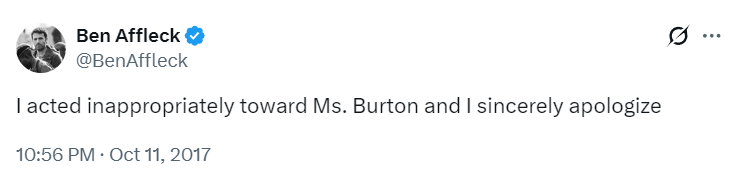
The apology did little to stop the wave of backlash, which was compounded by renewed attention on other old interviews that showed him behaving in ways now widely considered unacceptable.
Damon also has felt the heat of modern outrage, albeit in a different form. In 2016, his casting as the lead in The Great Wall, a Hollywood–China co-production, sparked a fierce “whitewashing” debate. According to sources, critics, including actor Constance Wu argued that the film reinforced the trope of a white savior in an Asian story.
Damon pushed back, saying the term “whitewashing” was being misapplied and blaming click-driven media for inflaming the controversy. “It suddenly becomes a story because people click on it,” he said at the time, suggesting that nuance had been lost in the rush to condemn.
While the backlash didn’t derail his career, it dented his carefully cultivated “nice guy” image.


