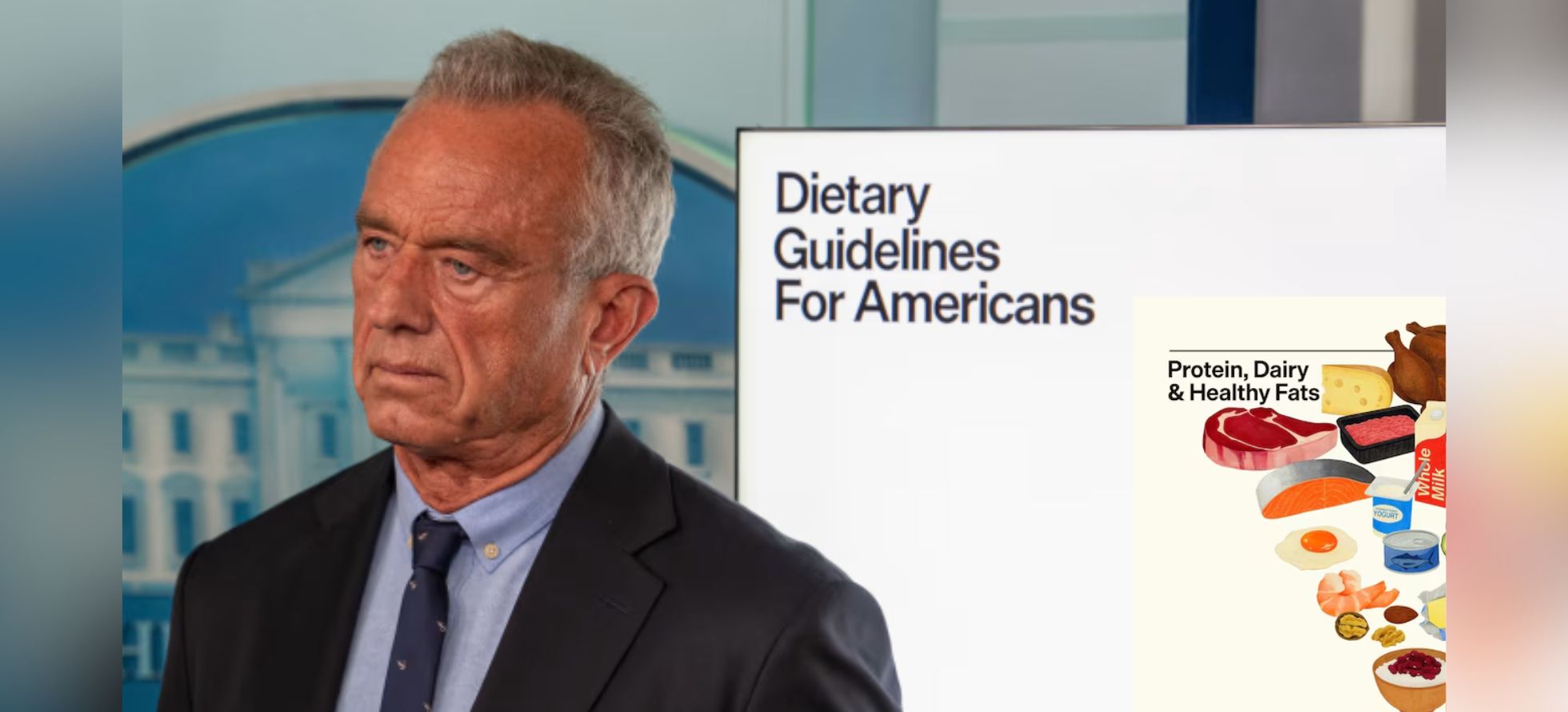
Health and Human Services Secretary Robert F. Kennedy Jr. unveiled sweeping changes to federal dietary guidelines during a White House press briefing, introducing what he called “the most significant reset of federal nutrition policy in history.”
Kennedy began by addressing the visual representation of the new guidelines: “And you can see the food pyramid here. It’s upside down. A lot of you will say, but it was actually upside down before. And we just righted it.”
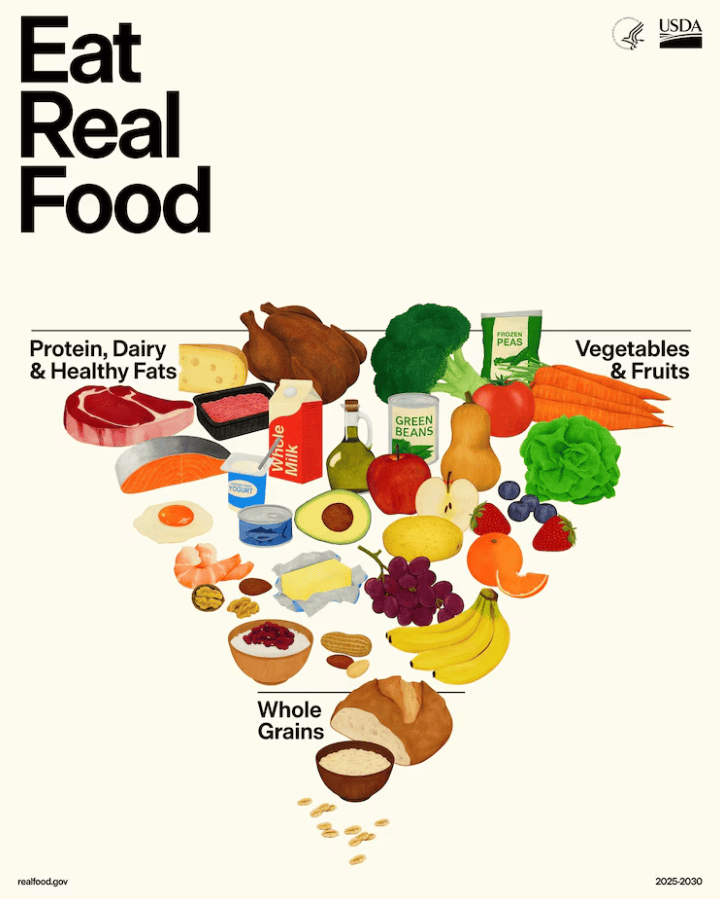
The secretary outlined the core principles of the updated framework, stating, “The new guidelines recognize that whole nutrient-dense food is the most effective path to better health and lower health care costs. Protein and healthy fats are essential and were wrongly discouraged in prior dietary guidelines. We are ending the war on saturated fats.”
Kennedy emphasized the importance of specific food categories: “Diets rich in vegetables and fruits reduce disease risk more effectively than many d**gs. Whole grains outperform refined carbohydrates. Added sugars, especially sugar sweetened beverages, drive metabolic disease. And today, our government declares war on added sugar.”
The secretary was clear about what Americans should avoid: “Highly processed foods loaded with additives, added sugar, and excess salt damage health and should be avoided.”
Kennedy delivered a straightforward message to the public: “As Secretary of Health and Human Services, my message is clear. Eat real food. Nothing matters more for health care outcomes, economic productivity, military readiness, and fiscal stability.”
The new dietary guidelines will reshape federal feeding programs across the country. Kennedy explained the scope: “Dietary guidelines shape dozens of federal feeding programs, including Head Start. Lean standards affect 45 million school lunches every day. Meals for 1.3 million active duty service members and food served to 9 million veterans in VA hospitals.”
On the financial impact of poor nutrition, Kennedy provided stark statistics: “The United States has the highest obesity and type 2 diabetes rate in the developed world. We spend three times more per capita than the European nation, European Union on healthcare. Yet our life expectancy is five years lower, largely due to diet related chronic disease.”
He detailed the crisis facing American youth: “Our childhood obesity rate is five times higher than countries like France. One third of US teens have pre-diabetes. Over 35% are overweight or obese. And 20% of young adults have non-alcoholic fatty liver disease. 77% of military Americans are ineligible for military service because of diet related conditions.”
Kennedy drew a comparison to national security threats: “If a foreign adversary sought to destroy the health of our children, to our economy, to weaken our national security, there would be no better strategy than to addict us to ultra processed foods. It’s shocking that our own government helped to drive these cataclysmic changes in our diet.”
Addressing current federal nutrition assistance programs, Kennedy noted: “42 million Americans rely on SNAP or common purchases include sugary drinks, candy, and chips. 78% of SNAP recipients are enrolled in Medicaid, and 90% of Medicaid spending goes to chronic disease. These incentives raise health care costs and undermine health. This must change.”
The secretary outlined the new framework’s priorities: “The new framework centers on protein and healthy fats, vegetables, fruits, and whole grains.” He added, “For the first time, the dietary guidelines directly address ultra processed foods and set firm sugar limits in federal procurement, driving a significant reduction in added sugar in school meals.”
The changes represent a fundamental shift in how the federal government approaches nutrition policy after decades of what Kennedy characterized as misguided advice that prioritized corporate interests over public health.