
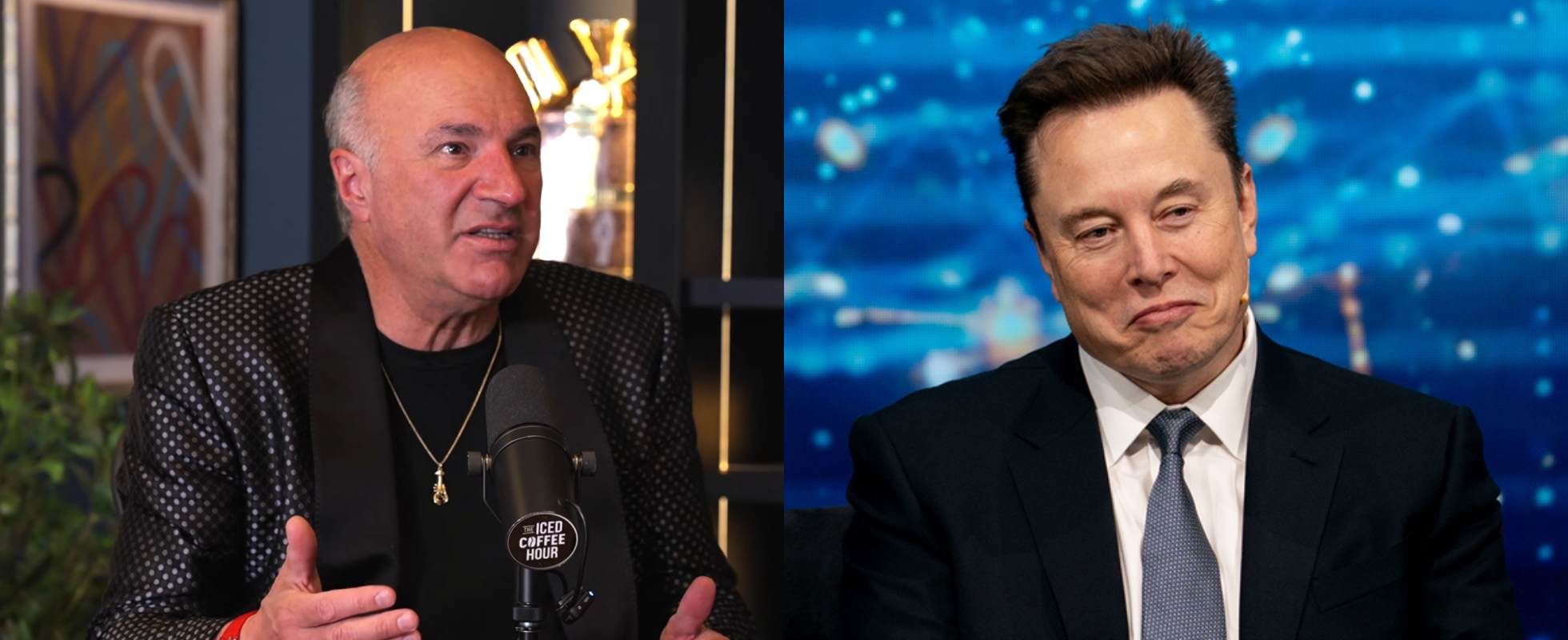
When the hosts of The Iced Coffee Hour podcast brought up the idea of a wealth tax, investor and Shark Tank personality Kevin O’Leary responded with immediate opposition. The discussion quickly turned heated as he framed the proposal as a direct threat to the principles he believes underpin the American economy.
The moment one host suggested that a wealth tax might be a reasonable policy, O’Leary fired back without hesitation. “No, no, Jack, you’re going to he ll for saying that,” he said.
When pressed further on whether there was any legitimate argument in favor of such a tax, he doubled down on his position. “No, there isn’t,” he said. “It’s un-American. It will destroy the fabric of the economy, punishing wealth and success.”
One of the hosts countered by arguing that billionaires would still retain enormous fortunes even after a modest levy. He pointed out that the difference between $5 billion and $4.5 billion would hardly change someone’s lifestyle. O’Leary rejected that framing entirely, shifting the focus to what he sees as a broken promise to entrepreneurs.
“It’s just the idea that you’re made a promise to come to America as an entrepreneur to achieve the American dream,” he said. “Then some arbitrary politician randomly decides we’re going to appropriate that from you, or steal your wealth, just because we feel that a 10% wealth tax is appropriate.”
The conversation intensified when the concept of redistribution entered the discussion. O’Leary responded by drawing comparisons to countries he believes have mishandled similar policies.
“You’re going to go to he ll, too. Both of you are going to he ll,” he said. “I’ve heard that word before in Cuba, in North Korea, in Russia. How about Venezuela? They redistribute all the time, to corruption. It’s a s**thole.”
He also expressed confidence that any attempt to implement a wealth tax in the United States would face serious legal challenges and ultimately fail in court.
“We have laws and we abide by them,” O’Leary said. “But one of those laws is you can’t steal people’s money. So this idea of a wealth tax is going to be litigated right to the Supreme Court, and it’s going to lose because it’s un-American.”
He went on to argue that large fortunes eventually return to the public through existing tax mechanisms and estate taxes, and that successful entrepreneurs should be allowed to enjoy the rewards of the risks they took.
“There is no such thing as too much wealth because it all goes back anyway,” he said. “The person dies that has that wealth, and then we hit it again with estate tax. You get it back. During their lifetime, they should be able to enjoy their success, unfettered, because they took the risk to create.”
To illustrate his point, O’Leary pointed to tech entrepreneur Elon Musk as an example of the broader economic value created by wealthy innovators.
“You know what people keep forgetting on this issue. Elon Musk is often used as the example, nearly the wealthiest man on earth now,” he said. “How many jobs has he created? How much tax has he paid? If we didn’t have him, would there be Starlink? Would there be Tesla? Would there be all this innovation in robotics? No. Let’s punish him for his success.”
“The whole issue is capital deployment,” he said. “He said this publicly. I need that capital to deploy the next mission. I want to give him as much money as possible. If you look at executional skills, show me anywhere on earth where there’s a person like that.”
He concluded with a observation about why entrepreneurs gravitate toward the United States.
“Even if you have a great idea and you’re sitting in France, you get on a plane and you go to Texas,” he said. “That’s where you make it happen. We bring the geniuses here because they want to live in freedom and be rewarded for the American dream.”


