
A study published in the Journal of Law and Economics has found that laws requiring children to use car safety seats have contributed to a measurable decline in birth rates across the United States, particularly affecting families considering a third child.
The research, conducted by Jordan Nickerson of the University of Washington and David Solomon of Boston College, analyzed household-level census data spanning from 1973 to 2017. Their findings suggest that women who already have two children both under their state’s car seat age mandate have a lower annual birth probability of 0.73 percentage points, representing a 7.8% relative drop compared to women with two children not subject to the restriction.
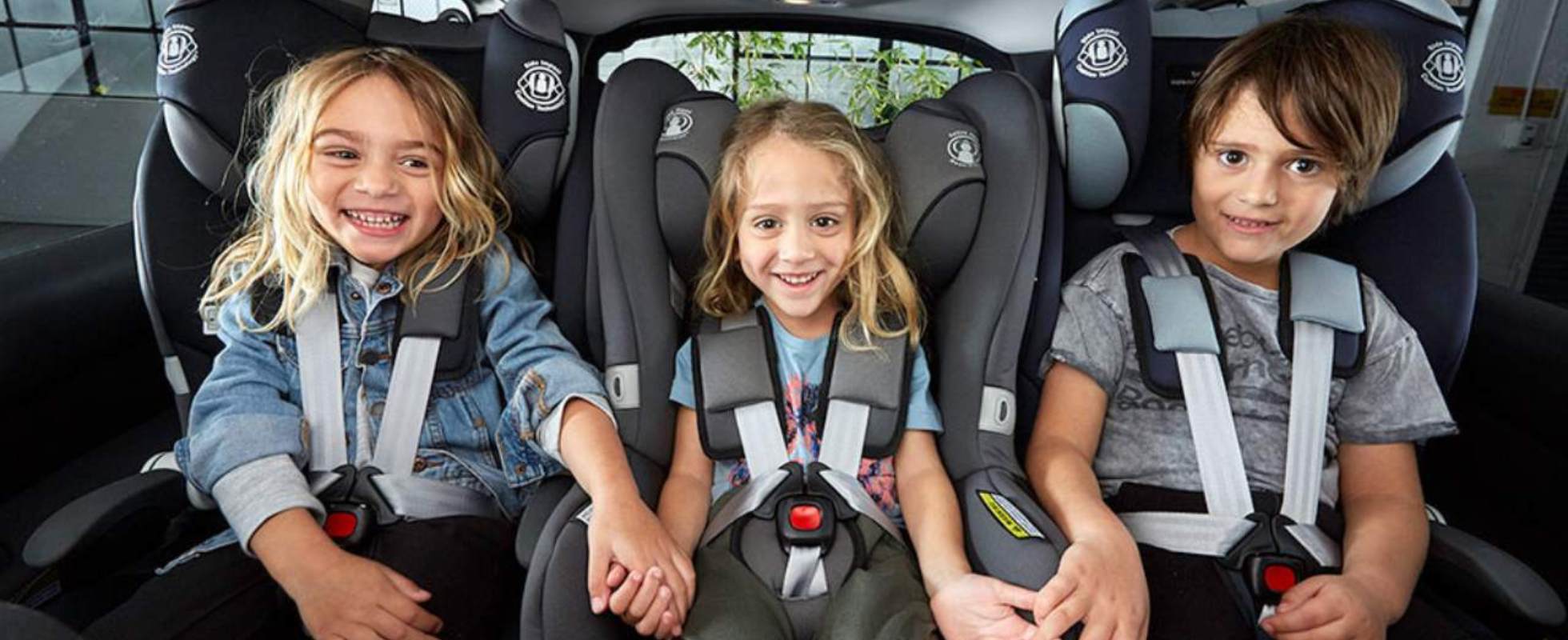
The core of the argument centers on a practical physical problem: many vehicles cannot fit three child safety seats across the back row when both front seats are occupied by adults. This creates a significant financial hurdle for families hoping to expand, as they may be forced to purchase a larger vehicle, such as a minivan or SUV, before welcoming a third child.
“Many cars cannot easily accommodate three child seats in the back row of seats, as would be needed if both front seats are occupied by adults,” the authors wrote. “This especially increases the cost of a third child for many families, by necessitating the purchase of a larger car.”
The effect was found exclusively at the third child threshold, and only among households with car access and an adult male present, where both front seats are likely to be occupied. Notably, the researchers found that higher-income households showed larger effects, suggesting that compliance rates, awareness of the law, or greater tendency to plan pregnancies may amplify the impact beyond pure financial considerations.
Since the mid-1990s, mandated car seat age limits have steadily increased across states. The median age at which children are permitted to ride using only a seat belt now stands at eight in most U.S. states, with every single legislative change having raised, rather than lowered, the required age.
The researchers estimate that car seat laws prevented approximately 57 children’s car crash fatalities in 2017. By contrast, they estimate the same laws prevented roughly 8,000 births that year, and approximately 145,000 births since 1980, with over 60% of that figure occurring between 2008 and 2017.
Survey data gathered through Amazon’s Mechanical Turk platform offered additional perspective. Of 82 parents who owned cars, 51% reported changing their vehicle following the birth of a child. Among that group, 38% said difficulty fitting car seats was either a “large factor” or “very large factor” in both their decision to change vehicles and in selecting which vehicle to purchase.