
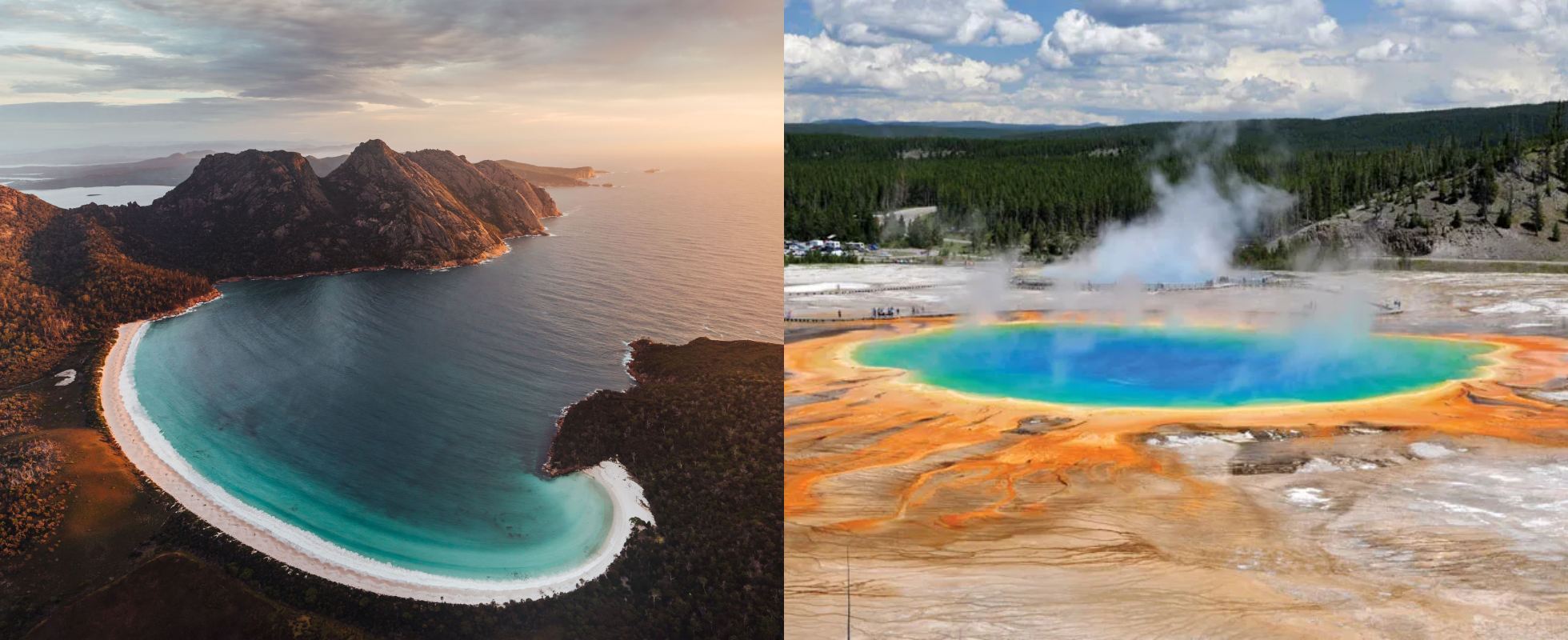
A tour operator’s artificial intelligence system created an embarrassing predicament after generating a blog post that directed visitors to hot springs in northern Tasmania that simply don’t exist.
The now-removed content on Tasmania Tours’ website promoted “Weldborough Hot Springs,” describing them as offering “a peaceful escape” nestled in the forests of northeast Tasmania. The AI-generated post characterized the location as a “tranquil haven” and claimed it was a “favourite” among hikers.
Weldborough is actually a small rural town situated approximately 110 kilometers (68 miles) from the city of Launceston.
Scott Hennessey, owner of the New South Wales-based Australian Tours and Cruises, which operates Tasmania Tours, acknowledged the error in an interview with the Australian Broadcasting Network earlier this month. “Our AI has messed up completely,” he stated.
According to Hennessey, the company had outsourced its marketing content to a third party. While he typically reviews each post before publication, this particular blog went live while he was traveling internationally. “We’re trying to compete with the big boys,” Hennessey explained. “Part of that is you’ve got to keep your content refreshed and new all of the time.”
He emphasized the company’s legitimacy, saying: “We’re not a scam. We’re a married couple trying to do the right thing by people. We are legit, we are real people, we employ sales staff.”
In a statement to CNN, Australian Tours and Cruises described the aftermath as devastating. “The online hate and damage to our business reputation has been absolutely soul-destroying,” the company said. “We are just trying to get on with our lives and put the whole thing behind us.”
The confusion manifested in real-world consequences for locals. Kristy Probert, owner of the Weldborough Hotel, began receiving inquiries about the non-existent hot springs in September. “It was only a couple of calls to start with,” Probert recalled, “but then people began turning up in droves. I was receiving probably five phone calls a day, and at least two to three people arriving at the hotel looking for them. We’re in a very remote location so it was very random.”
Probert developed a standard response to the inquiries: “If you can find these hot springs, beers are on me.”
The reality of Weldborough’s water features differs significantly from the AI’s description. The local Weld River is “freezing,” according to Probert, and typically only used by prospectors searching for sapphire and tin.
“They wear wetsuits,” she noted. “There’s a sauna in a nearby town. I guess you could jump into the freezing river after you’ve been over there.”
The incident highlights growing concerns about artificial intelligence’s role in the travel industry. Anne Hardy, adjunct professor in tourism at Southern Cross University, Australia, explained that AI has become “ubiquitous in travel and tourism,” with approximately 37% of tourists using AI for travel advice or itineraries.
“Tourists trust AI more than review sites,” Hardy said, noting that tour operators employ AI not only for blogs and marketing materials, but for itineraries and costing as well. “AI can be extremely helpful. It saves time and ultimately money.”
However, Hardy cautioned about the technology’s limitations, particularly its tendency to create inaccuracies or “hallucinations,” such as the fictitious Weldborough hot springs. According to Hardy, empirical tourism research suggests “90% of itineraries that AI generates have mistakes in them.”
The implications can extend beyond mere inconvenience. Hardy pointed to Tasmania’s remote walking trails with no services or cell coverage as examples of where AI errors could create serious problems. “I have witnessed many cases where AI has made suggestions for day walks, which are very inaccurate, ranging from the length of the walk, its difficulty level, or weather conditions,” she explained.
Hardy’s advice for travelers is straightforward: conduct independent research beyond AI-generated content. “Use trusted guidebooks, travel agents and review websites,” she recommended. “Plus ask concierges and your hosts to assess whether AI itineraries are accurate, if you do choose to use them.”
Despite the confusion caused by the incident, Probert expressed sympathy for Tasmania Tours’ owners, with whom she has spoken by phone. “It is hard to keep everything up to date and relevant as a small business,” she said. “They seem like lovely people, and we’ve all made mistakes. I think this was quite a funny one.”
Probert wanted to assure potential visitors that the area still has value. “There is plenty to do in Weldborough,” she said. “Just no hot springs.”


