
A disturbing connection between Chinese state institutions and Cambodian biotech facilities has emerged, according to new evidence circulating online. The revelations expand on earlier reports from a whistleblower who described how Chinese women were allegedly forced into surrogacy operations at scam compounds, with their babies reportedly used for bone marrow extraction and stem cell production.
Recently leaked documents show a list of 28 Chinese partner organizations working with the Academy of Cambodia Life Sciences. According to Lei’s Real Talk, these partners are not private companies but state-affiliated institutions that fall into four distinct categories. The first includes medical institutions and universities, led by Xiangya Hospital of Central South University in Changsha, known for organ transplant controversies. These hospitals reportedly collaborate with the Cambodian facility on stem cell and regenerative medicine projects.

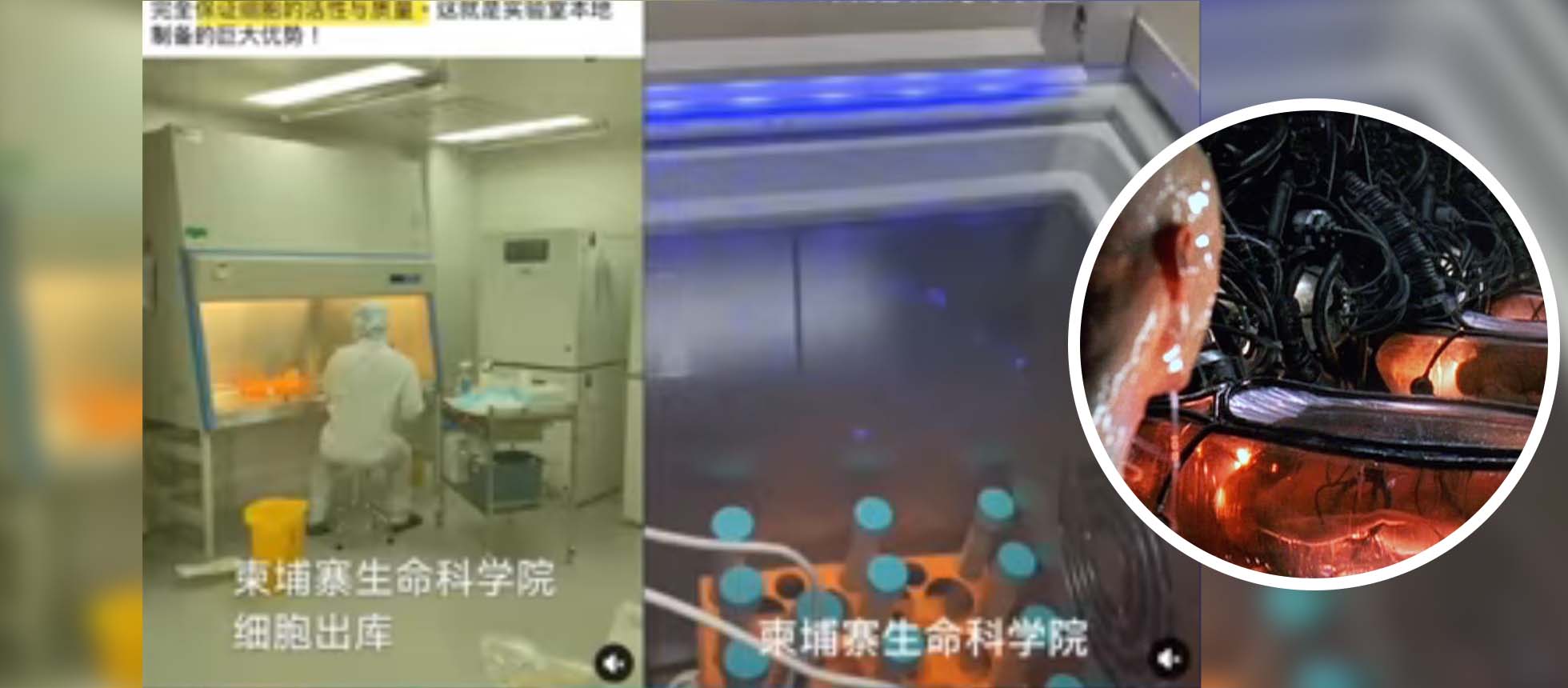
Leaked photographs allegedly taken inside the Cambodia institute show stem cell products prepared for male clients, including kidney and liver stem cells dated from earlier this year. According to the images, these products remain viable for 12 hours and ideally should be injected within 90 minutes of final production.
The second category raises significant questions. It includes the Wuhan Institute of Virology under the Chinese Academy of Sciences, along with the Hubei Provincial Center for Disease Control and Prevention. Project descriptions mention “laboratory animal cooperation,” with language suggesting virus research, infectious disease studies, and vaccine-related work. Over 80 percent of partner institutions come from Hunan and Hubei provinces, suggesting concentrated regional involvement.
The third category comprises biotech companies like Beijing Baiao Biotech Group, which partnered on biochip engineering projects. Biochip engineering combines chip technology with biological processes to monitor and intervene in human body functions. Another company, Yuexing Bio, worked on building cell tissue banks and clinical-grade cell preparation centers in Hunan.
The fourth category includes organizations like the Hunan Provincial Health Public Welfare Foundation. Despite appearing benign, these entities contribute to what analysts describe as extreme state backing across all partnership levels.
Three patterns emerge from analyzing these partnerships. First, nearly all Chinese partners maintain government links or state backing. Second, the heavy concentration of Hunan and Hubei institutions suggests specific regional focus. Third, the collaboration fields include stem cell therapy, regenerative medicine, virus synthesis, vaccine trials, and biochips, indicating sophisticated scientific operations.
What makes this arrangement questionable is the location. The academy shares an address with the Prince Group, a scam operation with reported ties to China’s state security system. The Prince Group’s founder faces U.S. Department of Justice investigation and has been sanctioned by the U.S. and U.K.
Critics question why advanced biotech research would be conducted in Cambodia alongside criminal operations. Scam compounds possess what some describe as a unique advantage: access to a controlled supply of trafficked individuals. According to the institute’s website, its main services include genetic testing, gene editing, and embryonic stem cell preparation and storage.
In regulated countries, clinical biological applications face strict legal and ethical controls. However, within lawless scam parks functioning as sealed environments, those constraints may not apply. This raises concerns about whether such facilities could serve as experimentation sites operating beyond normal oversight.
The Cambodia-Thai conflict has brought renewed attention to operations in the region, highlighting questions about the relationship between state-backed biotech initiatives and criminal networks operating in Southeast Asia.


