
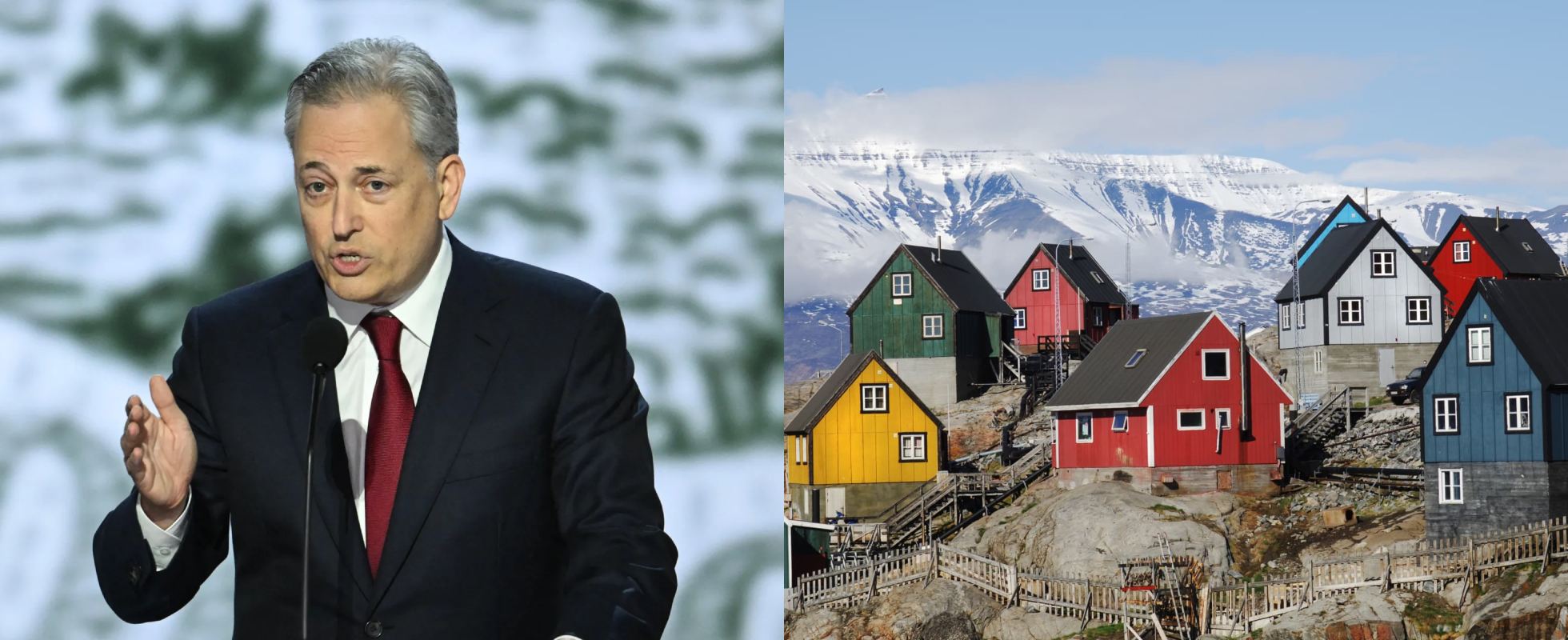
During a recent All-In Podcast episode discussing Iran’s breaking point and Trump’s Greenland acquisition, David Sacks addressed the topic of Greenland with characteristic directness and historical perspective.
When asked about the strategic importance of Greenland, Sacks provided context: “Well, it is becoming more significant from a national security standpoint as those Arctic ices melt and you have new shipping lanes that have opened up. So it is important on that dimension. But look, American politicians have wanted to acquire Greenland for a long time.”
He continued: “The great Secretary of State William Seward wanted to acquire it. He acquired Alaska. He wanted to get Greenland too, was unable to make that deal. But FDR and Truman both were interested in acquiring Greenland. It didn’t work out obviously.”
Sacks continued, emphasizing the historical precedent: “So this is an old idea that’s new again thanks to President Trump. I think he makes a great point. Why does it belong to the Danes? You know, it’s a small country in Europe. It’s not part of North America. And I think if we can acquire it for national security reasons and resource reasons, we should. And I think the odds of him pulling this off are much greater than 17%.”
When the conversation turned to how an acquisition might happen, Sacks remarked, “This is a huge piece of real estate in the Western Hemisphere. It doesn’t really make a ton of sense for Denmark to own it. It makes a lot more sense for it to be part of the US. And we’re willing to pay for it. And I think that we can make them an offer that they can’t refuse.”
He added with humor, “We’re gonna send Luca Brasi over there.”
The discussion then expanded to the broader implications of territorial expansion. Sacks noted, “I think it could be important for the US to have a new frontier. You know, maybe what we can do is send all these progressive socialists off to Greenland to tame this new frontier. We need that spirit of the frontier, of cowboys, of exploration.”
Sacks also reflected on American history and the concept of frontiers: “You know, it is kind of interesting as I remember from my high school history. I think the frontier was officially over by 1910. I think that was meaning every longitude basically had been fully explored and longitude had been sort of settled. And that is when the progressive era kind of began. And I do kind of wonder whether the frontier was this like escape valve for pressure that builds up, you know, resentments that build up in the economy. People could always just go west and become pioneers and find new territory.”
He continued this thought: “And in a way, that’s what America was for Europe, right? I mean, Europe was sort of this overcrowded place, it was oppressive and people just left that they could opt out by going to America and settling over in what would become the United States and I kind of wonder whether maybe we need something like that again.”
Throughout the discussion, Sacks maintained that acquiring Greenland represents both strategic thinking and a return to American expansionist traditions that have historical precedent.


