Whitney Cummings’ “Good for You” podcast has recently posted numbers that place it among the biggest comedy podcasts in the world, but the engagement metrics are raising serious questions. After pulling view counts comparable to Joe Rogan and double those of Matt and Shane’s Secret Podcast, many observers are openly questioning whether something unusual is happening behind the scenes.
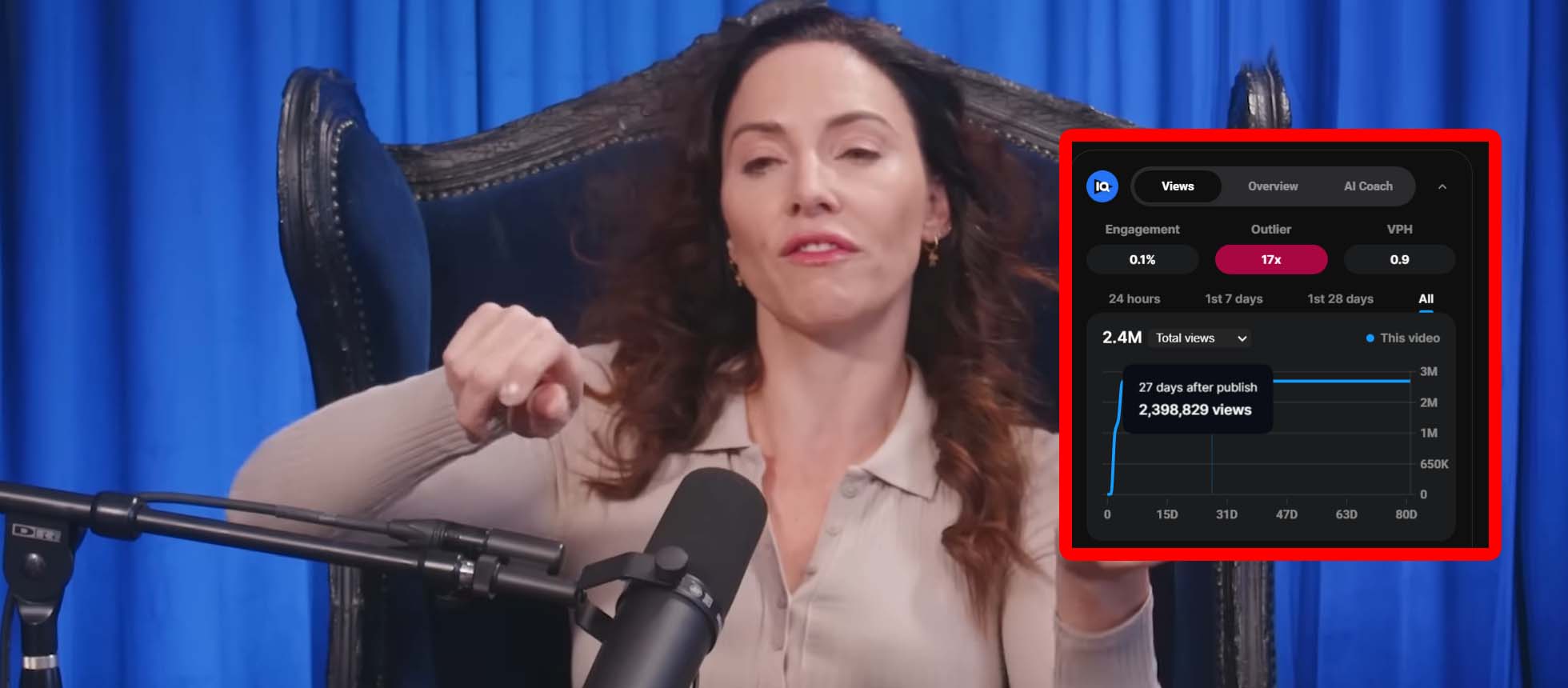
For months, Cummings’ podcast averaged several hundred thousand views per episode. Then suddenly, episodes began pulling between one and two million views. The Grace O’Malley episode currently sits at 2.4 million views, yet has only 230 comments, 1,000 likes, and 20,000 dislikes. This disconnect between views and engagement has become a pattern across multiple episodes.
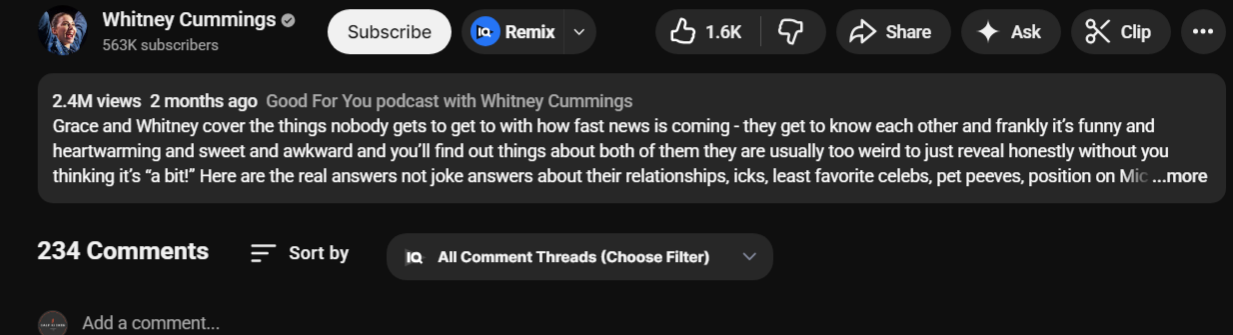
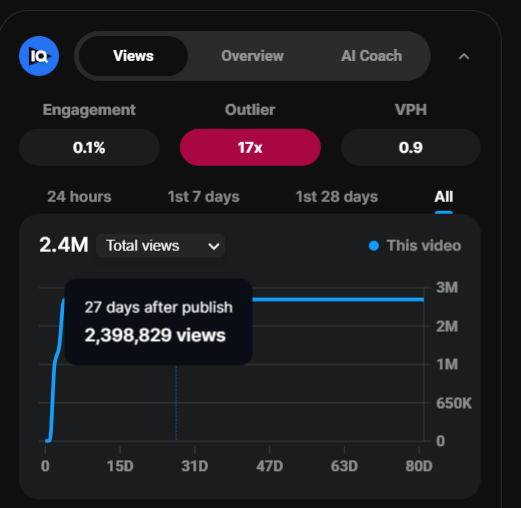
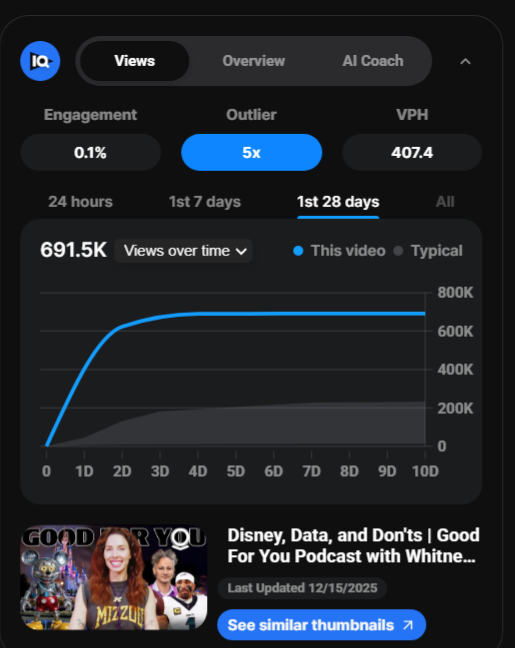
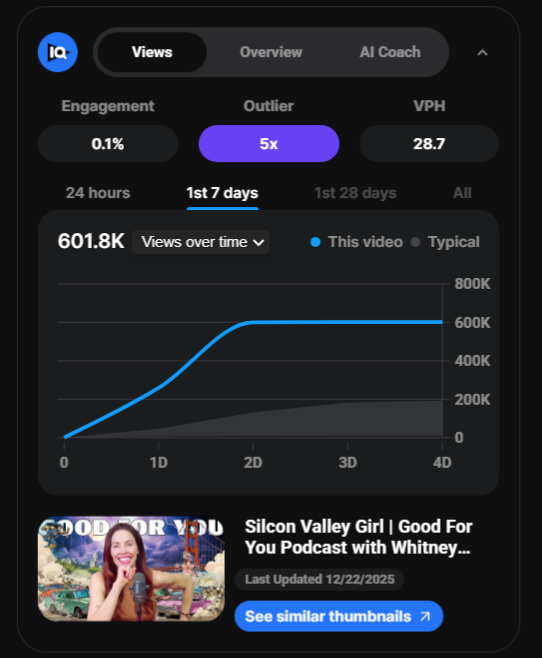
The issue becomes clearer when comparing engagement ratios. Videos with similar view counts on other channels typically show proportional increases in likes and comments. When seven-figure view counts appear alongside double-digit comments and minimal likes, it raises eyebrows. Her comedy special upload, which returned to her after Netflix’s rights expired, accumulated 1.3 million views in one month with just 93 comments and roughly equal likes to dislikes.
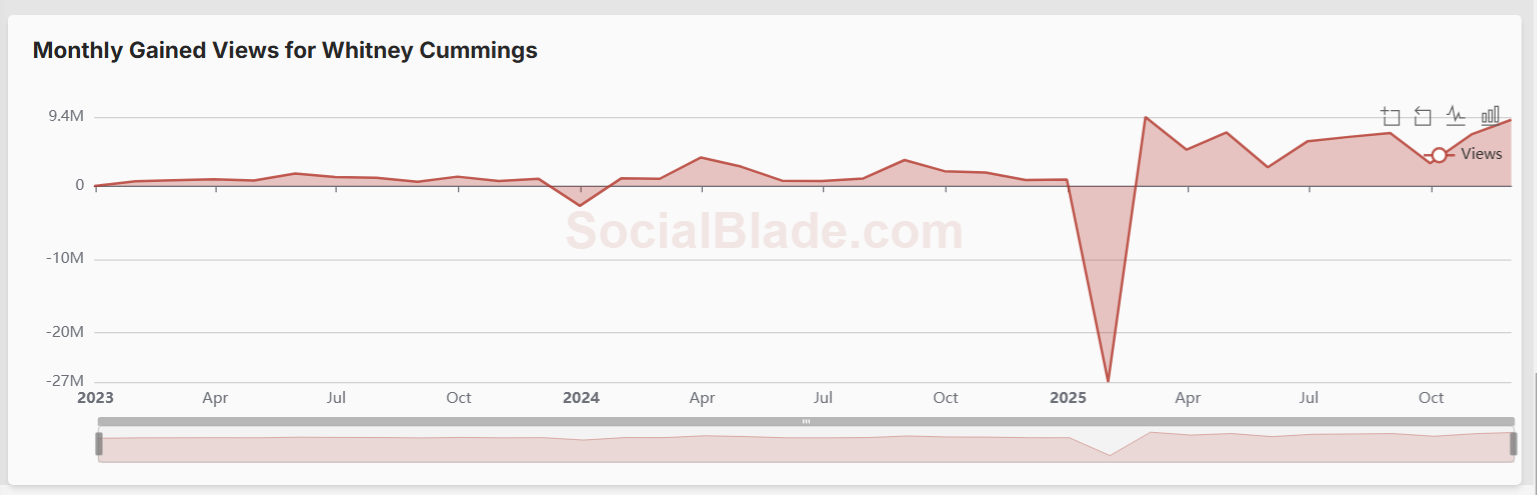
There are two primary methods for increasing YouTube views. The first involves purchasing views through services that use automated systems, which violates YouTube’s terms of service. The second, completely legitimate method involves running YouTube ads to promote videos. However, views generated through paid promotion don’t guarantee organic engagement like comments and likes. The concern arises if sponsorship deals are based on raw view counts without disclosing that views are heavily supplemented by paid promotion.
Recent episodes continue this pattern. A Thanksgiving-themed episode reached 2.1 million views in one month with just over 200 comments and a like-to-dislike ratio of 1,300 to 1,900. Another episode filmed in her living room during a self-described detox pulled 1.5 million views with 137 comments. A more recent upload achieved 1.2 million views in three weeks with only 157 comments and an almost even split between likes and dislikes.
For context, when creators have genuinely engaged audiences, the like-to-dislike ratio typically falls in the 90 to 95 percent favorable range. Cummings’ recent episodes show ratios closer to 50-50, which is highly unusual for content supposedly attracting millions of viewers.
The comment sections across these videos reflect widespread skepticism, with viewers openly questioning the authenticity of the numbers. This isn’t a definitive accusation, but rather an observation that the metrics don’t align with typical YouTube engagement patterns. If sponsors are paying based on view counts that include significant paid promotion without disclosure, they may not be getting the organic reach they believe they’re purchasing.s alike.