
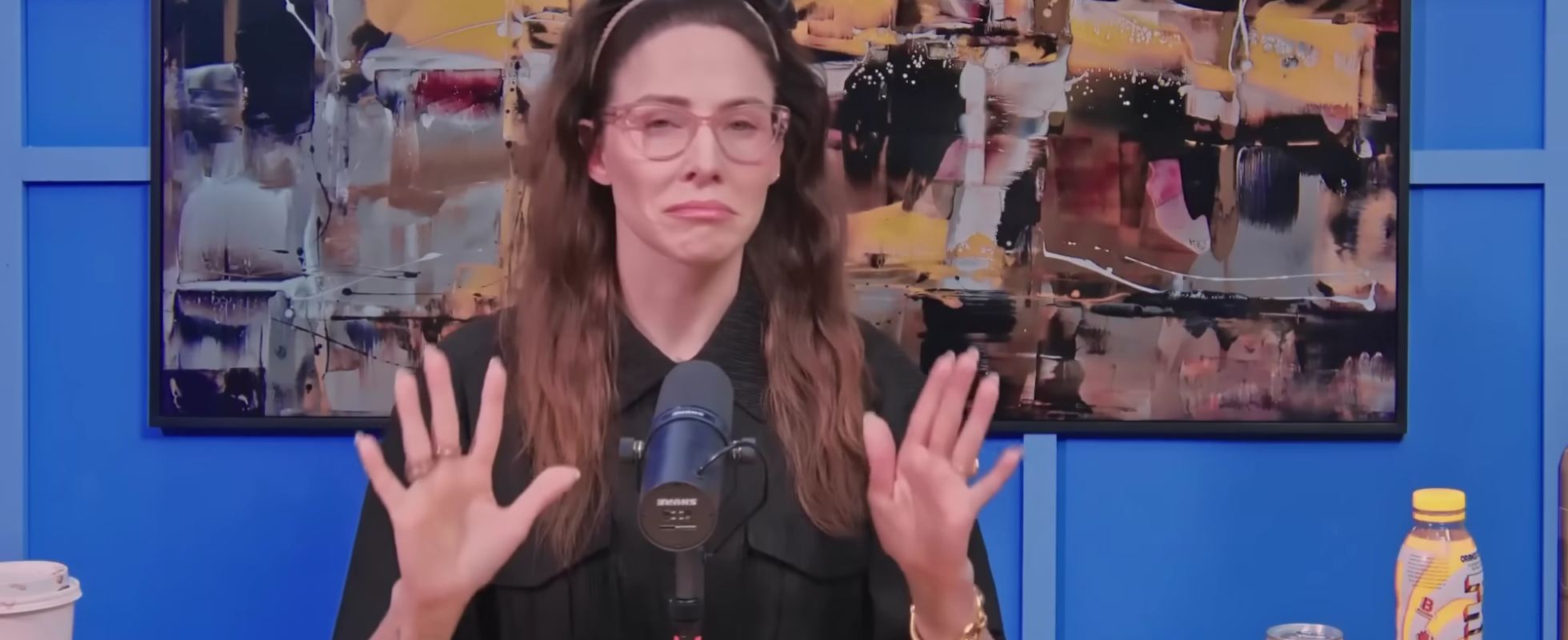
Whitney Cummings recently addressed accusations that she’s been artificially inflating her podcast numbers, and while she denied using bots, her explanation revealed something equally concerning: she’s paying Google to promote every single episode of her podcast as an advertisement.
There’s been noticeable skepticism around Whitney Cummings’ YouTube statistics because some of the patterns don’t line up with what you’d expect from genuinely viral content. Public analytics sites show her channel has a few hundred thousand subscribers with overall views in the low-hundreds of millions, but recently several episodes of her Good for You podcast reportedly hit 1–2 million views each while generating very low engagement in the form of likes and comments , sometimes only a few hundred comments on videos with millions of views, and like-to-dislike ratios much lower than typical organic hits. This disproportion — high raw view counts with minimal interaction, is unusual compared to similar channels where engagement scales up with views, and some observers have raised eyebrows that this could indicate paid promotion or artificial inflation of view numbers rather than purely organic audience growth. While there’s no definitive proof of deliberate falsification, the view/engagement discrepancy has led critics to question whether the stats fully reflect real, engaged viewership.
In a recent episode of her “Good for You” podcast, Cummings spent considerable time defending herself against claims of using bots to boost her view counts. She argued that if she were truly committing fraud, YouTube would have already removed her channel. However, her defense quickly transformed into an admission that she and her team are paying for views through Google Ads.
“We can use Google ads and pay them, which everybody pays to advertise everywhere,” Cummings explained during the episode. She compared the practice to buying a billboard for a television show, suggesting it’s a standard promotional tactic.
The distinction matters, though. According to critics analyzing her strategy, Cummings isn’t creating short promotional clips to advertise her full episodes. Instead, she’s running the entire podcast episode as an ad itself. This means every episode must meet YouTube’s advertising suitability requirements, which she confirmed when explaining they receive manual reviews from YouTube and must cut certain content to remain eligible for promotion.
This approach creates a significant problem: the podcast generates paid impressions rather than organic viewership. The vast majority of “views” come from people who click on a promoted video in their feed, watch for a few seconds, and move on. This explains why her videos receive relatively few comments and engagement compared to their view counts.
Critics point out that this strategy means Cummings is spending money rather than earning it from her podcast. Since the episodes themselves function as advertisements, she cannot generate ad revenue from them. The view counts she’s achieved are essentially purchased rather than earned through genuine audience interest.
When examining her comment sections, observers note that most engagement comes from critics rather than supporters. In at least one instance, when Cummings responded to a critic, even her own fans appeared to side against her, an unusual occurrence for any content creator.
Despite admitting to this paid promotion strategy, Cummings continued to defend her numbers, calling herself “a numbers machine” and suggesting that channels covering her controversies only succeed because they use her name. However, this defense seems to contradict her own admission that the views are paid promotional impressions rather than organic traffic from engaged viewers.
The situation has drawn comparisons to other entertainers who’ve struggled with audience perception and criticism management. Rather than addressing the core concerns, Cummings has increasingly focused on attacking her critics, often resorting to personal comments about their appearance or life circumstances.
While buying advertisements for content isn’t fraudulent, the practice of running entire podcast episodes as ads raises questions about the authenticity of success metrics.


