A groundbreaking study by Precision Strategies and Tunnl has revealed that YouTube has emerged as the undisputed center of gravity for men’s media consumption in America, fundamentally reshaping how masculinity is formed and expressed in the digital age.
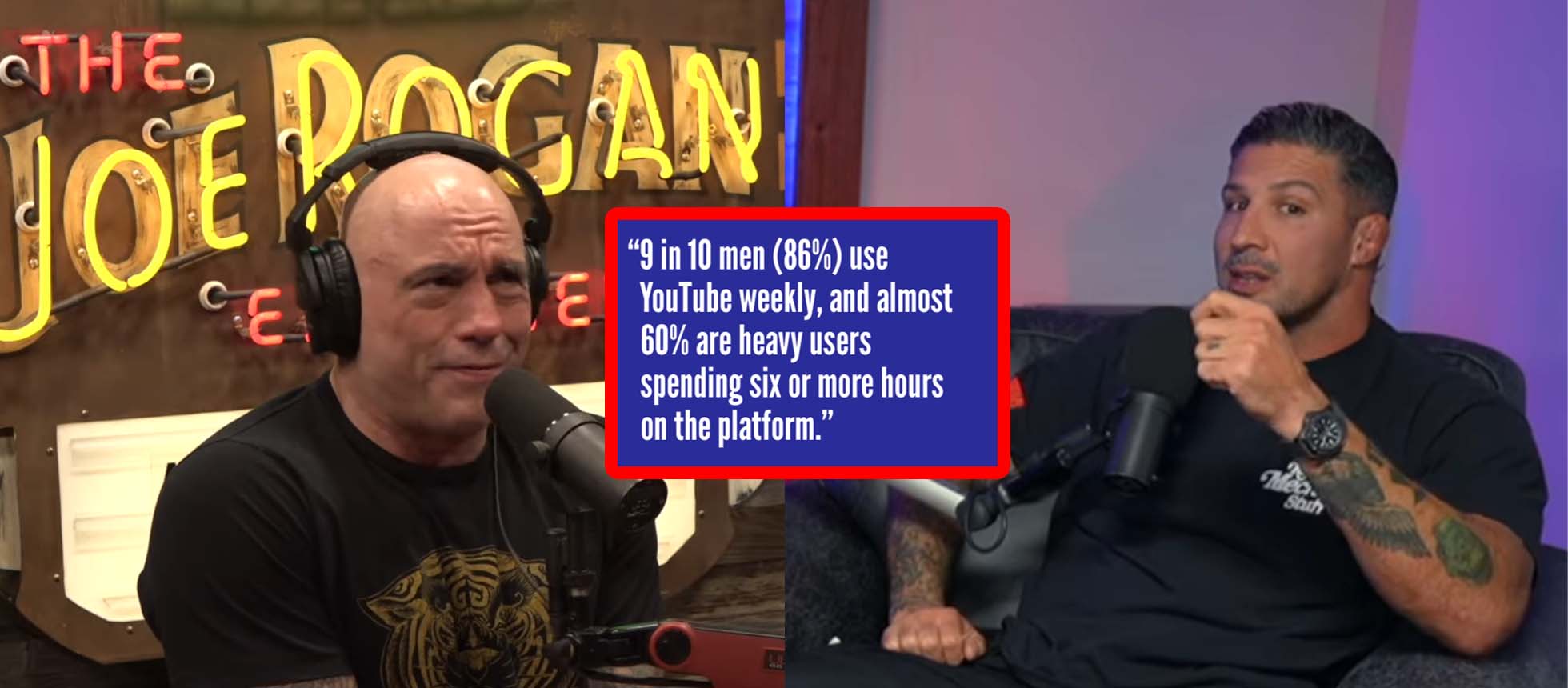
According to “The Manosphere Index,” an unprecedented comprehensive study of modern masculinity and media behavior, nearly 9 in 10 men (86%) use YouTube weekly, with almost 60% qualifying as heavy users who spend six or more hours on the platform. This dominance is particularly pronounced among Gen Z and Millennial men across every racial group, who report watching more YouTube than any other platform.

“What was once a video site now operates as a hybrid space: part news source, part classroom, part entertainment hub, and part cultural stage,”
the report states. YouTube has effectively replaced traditional prime-time television for men, becoming the place where
“information, commentary, entertainment, and identity collide.”
The research reveals a stark gender divide in digital consumption patterns. While YouTube dominates male attention, women gravitate toward Meta’s ecosystem, with Facebook serving as their primary digital hub and Instagram and TikTok anchoring younger women’s routines. This split demonstrates what researchers call Google’s ownership of male attention versus Meta’s dominance with female audiences.
Perhaps most concerning is that men are fully aware their feeds are becoming more intense (yet they don’t look away). A majority of men (57%) acknowledged that
“the content recommended to them gets more and more controversial over time,”
with Millennial and Gen Z men reporting this at the highest levels. Critically, the groups most aware of increasingly controversial content are also those most deeply immersed in these platforms, with nearly half of Gen Z Hispanic men spending six or more hours weekly online.
The rise of podcasting further cements YouTube’s influence, as the platform has become the primary venue for long-form creator commentary. Six in ten men listen to podcasts weekly, with creator-driven voices like Joe Rogan, Tucker Carlson and Ben Shapiro serving as trusted cultural interpreters. Remarkably, 47% of all men trust Joe Rogan, a figure that jumps to 66% among Millennial Hispanic men (making him the most trusted media personality in the entire dataset).
The report emphasizes that
“long-form creators now operate like informal mentors—explaining the world, contextualizing identity, and offering meaning-making at a scale traditional institutions can no longer match.”
For many men, especially younger ones, the most influential figures in their daily lives are not journalists or community leaders, but creators behind a microphone.
This shift has profound implications for anyone seeking to reach male audiences. The study warns that campaigns and brands designing content for traditional TV or static social posts while ignoring YouTube’s creator-driven ecosystem are
“effectively choosing not to show up where men’s attention actually lives.”
YouTube’s role as the primary platform shaping male identity and worldview appears only set to deepen, making it the essential battleground for cultural influence over America’s men.