
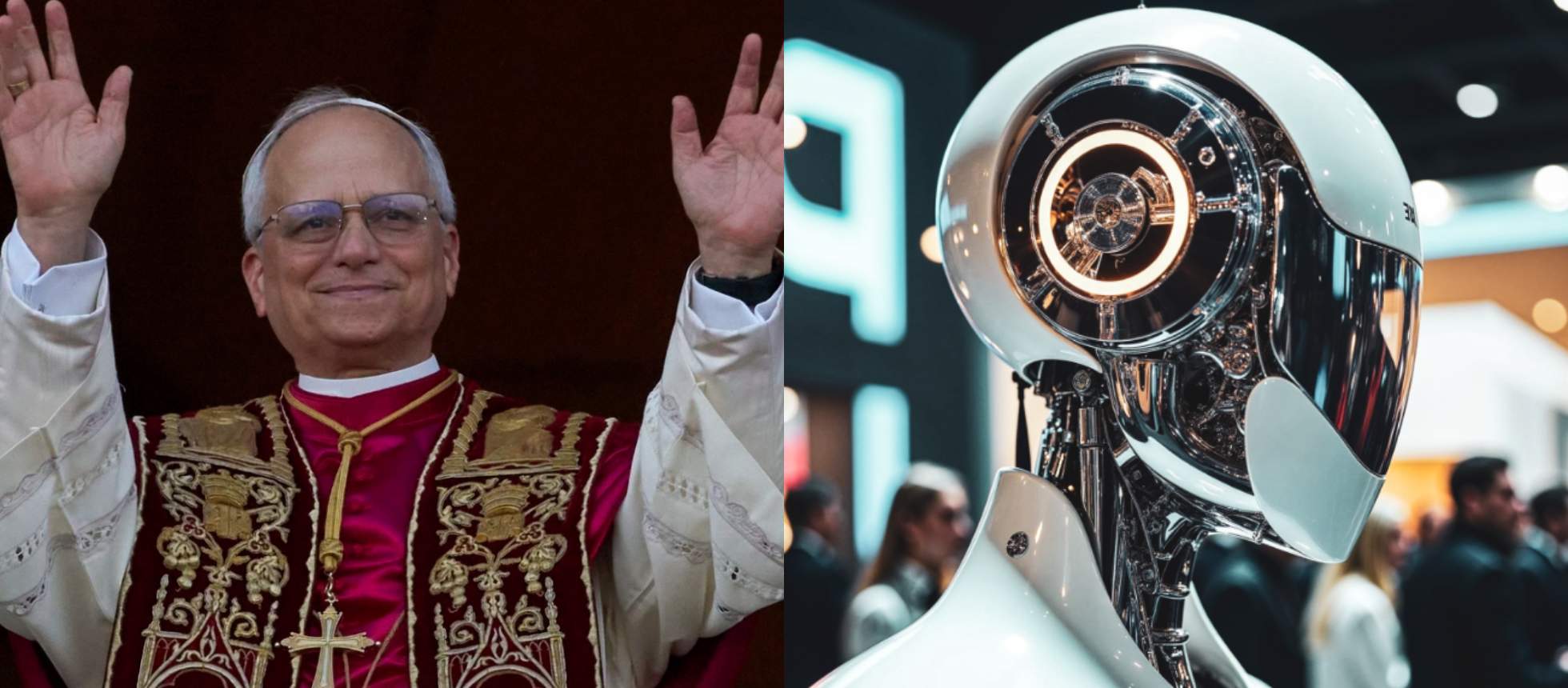
The Catholic Church is preparing to make one of its most consequential statements, positioning artificial intelligence as a moral reckoning that defines our era. Pope Leo XIV is expected to sign his first encyclical as early as this Friday, a document reportedly titled “Magnifica Humanitas,” or “magnificent humanity.”
According to sources, the document is set to be signed on the anniversary of “Rerum Novarum,” the landmark 1891 encyclical issued by Pope Leo XIII, which addressed the moral failures of the industrial revolution and became a cornerstone of Catholic social teaching. By anchoring his own document to that milestone, Leo XIV appears to be drawing a direct line between the upheavals of the 19th-century factory age and the automation wave reshaping economies and workplaces today.
Encyclicals represent some of the most authoritative teaching documents in the Catholic tradition. When a pope issues one, it carries the weight of a blueprint, shaping priorities for the Church’s 1.4 billion faithful and signaling where leadership believes moral energy must be directed.
Andrew Chesnut, chair of Catholic studies at Virginia Commonwealth University, believes the Pope’s approach reflects a deliberate and sweeping vision. “This is going to be one of the fundamental pillars of his papacy,” Chesnut said, describing Leo XIV as someone who views AI not as a passing technological trend but as a replay of the industrial revolution, with automation already causing entry-level jobs to “evaporate.”
Though the Vatican has not officially commented on the encyclical’s contents, reporting from Catholic and European media indicates the document will focus on AI’s impact on people and working conditions, with the Church expected to argue that technology must remain subordinate to human beings rather than serve as a replacement for them. Worker protections, human creativity, dignity, and moral agency are said to be among its central concerns.
The groundwork for this kind of engagement with AI has been building quietly inside Vatican City for some time. Earlier this year, the Vatican City State released a comprehensive 13-page policy on artificial intelligence, emphasizing that “technological innovation cannot and should never overtake or replace human beings.”
The guidelines, which went into effect January 1, established a framework for ethical, transparent, and responsible AI development and use within the city-state, with an aim to make “artificial intelligence a resource that, if properly regulated, will be able to foster well-being and progress, without compromising ethical and social principles.”
A five-person AI commission, presided over by the secretary-general of the governor’s office, was created to oversee the practical application of those principles. The commission is charged with preparing proposed laws and regulations, evaluating how AI systems are being used, and monitoring their effects on individuals, employment, and the environment.
The policy includes a series of prohibitions, banning AI practices that cause discrimination, demean human dignity, create social inequalities, or violate fundamental human rights. Vatican judicial offices, under the guidelines, may only use AI “for the organization and simplification” of research and work, with interpretation of law, analysis of evidence, and decisions on sentencing reserved “exclusively for the magistrate.”
The Vatican’s concern with AI predates Leo XIV’s papacy. His predecessor, Pope Francis, repeatedly raised alarms about the technology’s potential to reduce human beings to data points and accelerate inequality, surveillance, and autonomous warfare. The Holy See also backed the “Rome Call for AI Ethics,” a framework promoting transparency and human-centered development of AI systems.
Leo XIV has already begun putting his own stamp on those concerns. In February, he issued a pointed warning to priests against using AI to write homilies or chasing “likes” on platforms such as TikTok, signaling that the Church’s relationship with technology must be governed by integrity rather than convenience.
Experts see his choice of papal name as meaningful in its own right. Invoking Leo XIII, the pope who guided the Church through the moral crises of industrialization, suggests Leo XIV sees his own moment in similarly historic terms, with the Church cast once again as a moral voice during a period of technological transformation that is outpacing the institutions meant to govern it.
Organizations such as the Catholic Health Association of the United States are already examining AI’s ethical implications in fields like healthcare, extending the Church’s concerns beyond theology into some of the most consequential practical decisions of modern medicine.


